 EN
EN



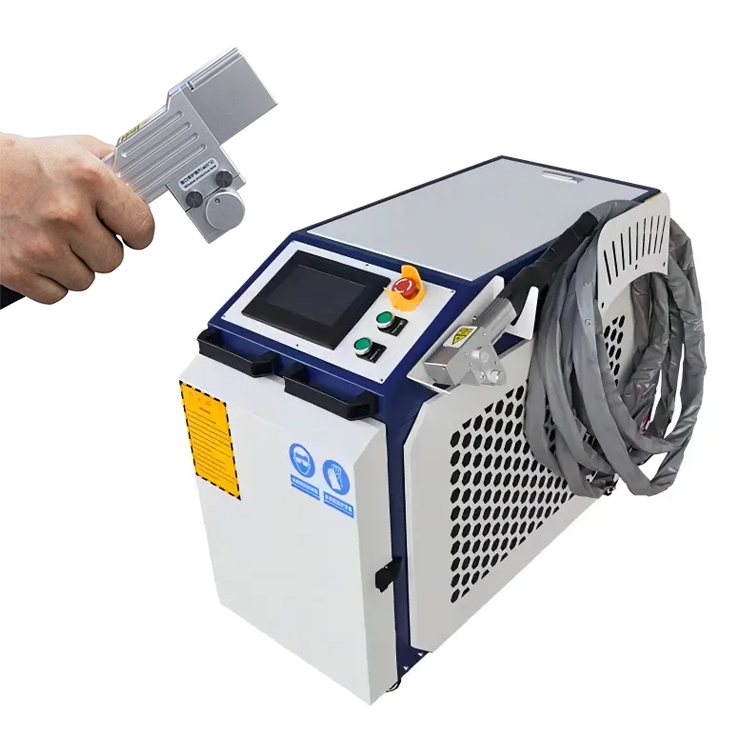
How Handheld Rust Removal Lasers Work: Precision, Safety, and Simplicity
Laser Ablation Physics: Selective Oxide Layer Removal Without Substrate Damage
Rust removal lasers work using something called laser ablation, which is basically when concentrated light energy gets rid of rust specifically without harming the metal underneath. The reason this works so well has to do with how different materials absorb light. Rust grabs about 70 to 95 percent of the near infrared laser energy around 1064 nanometers wavelength, causing it to turn directly into gas through a process known as sublimation. Clean steel or aluminum on the other hand just bounces most of that energy back because their surfaces are much more reflective. What makes these lasers really effective is their low ablation threshold for rust ranging from 1 to 20 joules per square centimeter. That number sits way below what would damage most base metals, allowing for super fine control down to the micron level without creating any heat affected areas, tiny cracks, or changes in surface hardness. According to recent research published by NACE International in 2023, these devices can eliminate all visible rust spots and take care of nearly all microscopic corrosion particles too, leaving the exposed metal exactly as it was before treatment both chemically and structurally speaking.
Key Design Features Enabling Portability and On-Site Usability
Handheld rust removal lasers designed for field work rely on three core elements that make them practical tools: smart weight balancing, built-in safety measures, and flexible power management. The ergonomic pistol grip allows these compact fiber lasers (typically under 200 watts) to stay comfortable even when working overhead or in tight spaces, thanks to both passive and active cooling systems that cut down on operator fatigue over long jobs. Every Class 4 system comes standard with essential safety gear. There are automatic shut off sensors that stop the laser if it gets too far from the target surface. Most models also feature fume extraction nozzles which capture about 95% of the particles created during the process. And don't forget the blue light filters that prevent dangerous reflections from bouncing back at workers.
| Power Flexibility Features | Field Application Benefits |
|---|---|
| Modulated pulse frequencies | Adjust cleaning intensity to match corrosion depth and substrate sensitivity |
| Interchangeable focusing heads | Maintain consistent spot size and energy density on curved, angled, or irregular surfaces |
| Hot-swappable battery modules (≤40 min runtime) | Support off-grid maintenance in remote infrastructure, offshore platforms, or emergency repairs |
Cart-mounted units weigh under 30 kg and fit through standard hatches—enabling single-operator deployment inside ship hulls, pipe interiors, and turbine casings where traditional equipment cannot reach.
Why Handheld Rust Removal Lasers Outperform Traditional Methods
Side-by-Side Comparison: Laser vs. Sandblasting, Wire Brushing, and Chemical Stripping
When it comes to getting rid of rust, handheld lasers really beat traditional methods when looking at safety issues, how fast they work, and what happens to the material afterward. Let's face it, sandblasting creates all sorts of problems with silica dust that needs special handling, proper disposal, and paperwork nobody wants to deal with. Wire brushes might seem old school but they actually create tiny scratches on surfaces which makes things corrode faster down the road and weakens metal over time. Then there's chemical stripping that leaves behind nasty stuff needing neutralization before disposal plus dealing with wastewater regulations. Laser technology works differently though. It removes rust without touching the surface at all and doesn't need any consumables because it uses light energy instead. Companies using this method report cutting their surface preparation time nearly in half compared to regular tools according to industry data from last year.
| Method | Waste Generation | Substrate Integrity Risk | Average Processing Speed |
|---|---|---|---|
| Laser Ablation | Negligible | Very Low | 40–60 sq ft/hr |
| Sandblasting | High (spent media) | Moderate | 15–20 sq ft/hr |
| Wire Brushing | Low (metal shavings) | High | 10–15 sq ft/hr |
| Chemical Stripping | High (toxic sludge) | Severe (etching, hydrogen embrittlement) | 20–30 sq ft/hr |
Eliminating Secondary Waste, Hazardous Exposure, and Surface Warping
Handheld laser tools tackle three major problems that come with old school rust removal methods. First, they cut down on those extra waste streams we get from traditional approaches. Second, workers aren't exposed to harmful stuff anymore. And third, there's no worrying about heat damage to metal surfaces. Traditional methods like sandblasting create all sorts of contaminated abrasives that need special handling. Chemical strippers produce dangerous sludge that requires proper disposal. Laser ablation works differently by turning rust into a fine vapor that can be filtered out easily. This cuts down on disposal expenses and reduces what needs to be reported environmentally. Workers also breathe easier since there's no silica dust or VOCs floating around anymore. That meets both OSHA regulations here in the US and EU REACH standards across Europe. What makes these lasers really effective is how they work. The pulsed technology sends out short bursts of energy instead of constant heat. This prevents the kind of warping, softening, or structural changes that happen when using torches or heavy grinding tools.
Tangible Gains in Maintenance Efficiency with Handheld Rust Removal Lasers
Handheld rust removal lasers deliver measurable operational improvements—not just in speed, but in workflow integration, safety compliance, and long-term asset integrity.
Reduced Equipment Downtime Through Rapid, Targeted Rust Removal
Treating corrosion right where it happens saves tons of time compared to traditional methods that need equipment taken apart or masked off first. Take sandblasting for instance it needs all sorts of setup work containment barriers, media storage, then someone has to check everything after cleaning which can push maintenance time out by almost three times normal. Laser tech does the same job in just minutes without any extra cleaning steps or surface prep afterward. Pumps, valves, those tricky flange connections and even structural welds get fixed up and back online during one regular work shift instead of causing weeks of disruption. This means plants stay productive and avoid those expensive chain reactions when downtime affects multiple operations at once.
Faster Surface Prep for Coating Adhesion and Inspection Readiness
Surfaces treated with lasers hit Sa 2.5 blast-cleanliness standards almost straight away, creating that ideal micro-roughness range of around 1 to 4 microns which really helps coatings stick better and last longer. The ablation process basically wipes out all those pesky embedded particles, leftover oils, and chemical residues, so primers can go on right away without waiting for those time-consuming degreasing steps, neutralization rinses, or going through the whole profile verification dance again. When it comes to non-destructive testing, there's no need to wait either. Lasers just don't mess with the metal's properties or create those false readings that sometimes happen. Mechanical methods often hide what's going on underneath the surface. Field crews who've switched to handheld laser systems tell us they're seeing anywhere from 50% to even 70% faster completion times on their coating jobs and inspections. Makes sense when you think about cutting out all those extra steps in the workflow.
Proven Industrial Applications of Handheld Rust Removal Lasers
Rust removal lasers fit right into those industries where getting things just right matters most. Take manufacturing shops for instance these little devices keep production lines running smoothly by cleaning molds, gears, and robot parts without messing up their dimensions or causing heat damage. Car restoration specialists love them too especially when working on old frame pieces and engine blocks in cramped garage spaces. They avoid all that grinding away material and leaving behind grit that happens so often with traditional rotary tools. For boats, marine engineers can spot treat hulls, rudders, and those hard to reach ballast tanks without having to haul the whole vessel out of water. This stops rust from spreading further and weakening the boat's structure over time. Aircraft mechanics depend on these lasers for FAA approved cleaning jobs on landing gear parts and airplane fittings where any change to the surface might mean losing important certifications. Even museums and historical sites have started using laser tech to restore ancient iron objects. Conservators carefully strip away rust layers without damaging the original look and metal characteristics of these priceless items. Labs at places like the Smithsonian then check if everything was done properly using special equipment.
FAQ
How does laser ablation work for rust removal?
Laser ablation involves using concentrated light energy to remove rust by turning it into gas through sublimation, which does not harm the metal beneath.
Are handheld rust removal lasers safe to use?
Yes, they come with various safety features such as automatic shut-off sensors and fume extraction nozzles to protect operators.
What are the advantages of using lasers over traditional rust removal methods?
Lasers offer less waste, improved safety, faster process speeds, and they maintain substrate integrity better than traditional methods.
Can handheld lasers be used in all rust removal scenarios?
They are highly versatile and can be used in many applications, although specific conditions and constraints may limit their use in certain scenarios.