 EN
EN



How Laser Cleaning Machines Remove Heavy Rust: Core Technology Explained
Photothermal ablation vs. plasma-induced spallation: mechanisms behind rust layer removal
Laser cleaning machines remove heavy rust through two distinct physical mechanisms—photothermal ablation and plasma-induced spallation—each suited to specific rust types and substrates.
In photothermal ablation, nanosecond-to-femtosecond laser pulses rapidly heat rust layers beyond their vaporization threshold, causing direct sublimation without melting the underlying metal. This mechanism excels on thick, loosely bonded oxides and organic residues like paint or grease, where precise energy control prevents substrate damage.
In contrast, plasma-induced spallation occurs when ultra-short pulses generate localized plasma at the rust–substrate interface. The resulting micro-explosions produce shockwaves that mechanically fracture and eject dense, stratified corrosion—especially effective on mill-scale and sintered iron oxides common in aged structural steel.
Unlike abrasive blasting, both methods eliminate media contamination, reduce hazardous waste volume by up to 70%, and avoid surface profiling that compromises fatigue resistance (Surface Engineering Journal, 2025).
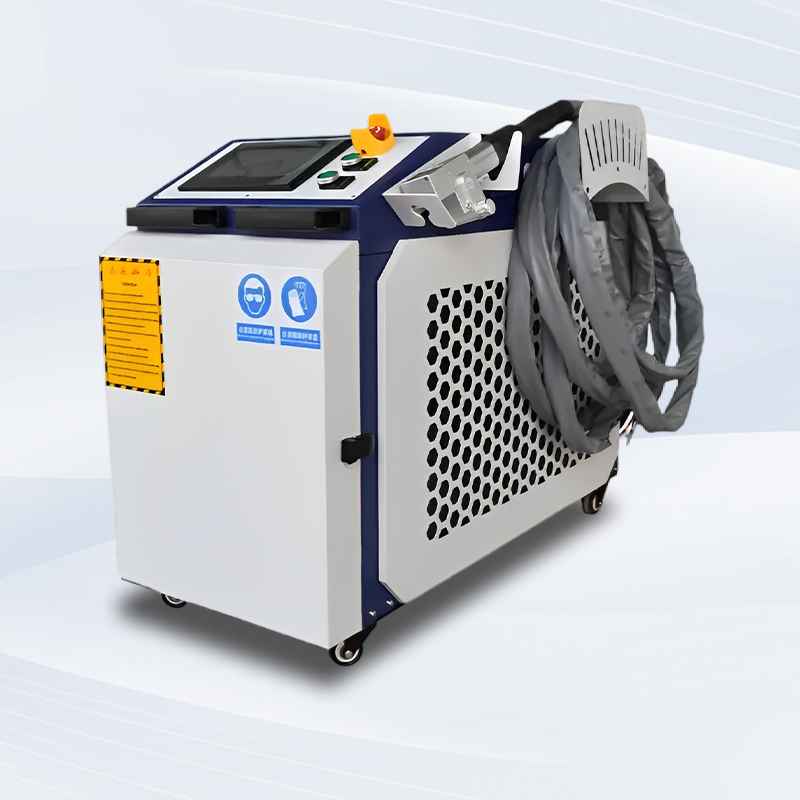
Why pulsed fiber lasers (50W+) dominate heavy-duty metal cleaning over CO₂ and continuous-wave systems
Pulsed fiber lasers are now widely accepted across industries for removing heavy rust thanks to several key benefits that set them apart from traditional methods. For starters, these lasers can adjust their pulse duration ranging from nanoseconds down to femtoseconds which means they generate intense bursts of power without building up excessive heat. This matters a lot when working with thin metal sheets or materials sensitive to temperature changes something that continuous wave systems often struggle with because they tend to warp metals or cause unwanted chemical reactions. Another big plus is how easily fiber optics can be connected to robots and handheld devices. This flexibility makes it possible to reach tricky spots on complicated parts where older CO2 laser systems just couldn't go because of their fixed optical pathways. And then there's the matter of wavelengths. The 1,064 nm wavelength used by pulsed fiber lasers gets absorbed by iron oxide about 95% of the time according to Laser Tech Quarterly from last year. That's roughly three times better than what we see with CO2 lasers operating at 10.6 microns which only manage around 30% absorption rates. Pretty impressive numbers if you ask me!
Modern 50W+ pulsed fiber systems generate peak powers exceeding 10 kW during pulses, enabling removal rates of 2 m²/hour on 500 μm rust layers while maintaining substrate ablation below 0.1%. Integrated fume extraction and Class 4 safety interlocks ensure compliance with OSHA and ISO 11553 requirements in regulated environments.
Top 5 Laser Cleaning Machines for Industrial Rust Removal (2026)
IPG YLR-1000QC (1000W): benchmark laser cleaning machine for structural steel and titanium alloy decontamination
When it comes to tough industrial jobs, the IPG YLR-1000QC stands out as a top performer. This machine packs a 1000W pulsed fiber laser that can strip away rust at impressive speeds, often clearing over 15 square meters per hour from structural steel surfaces. What makes this possible? The system uses photothermal ablation technology to completely vaporize oxide layers without changing the underlying metal properties. For those working with complex shapes, the adaptive pulse control keeps things running smoothly, maintaining just the right energy levels between 8 to 12 joules per square centimeter even around curves and tricky weld seams. At the same time, built-in thermal sensors keep watch, making sure surface temps stay under 150 degrees Celsius so delicate titanium alloys remain intact and free from brittleness issues. Throw in automated path planning capabilities, compliance with ASTM D7227 standards for quality assurance, plus robust Class 4 safety measures throughout, and we're seeing consistently high results with nearly 99.7% contaminant removal rates on critical shipbuilding parts.
CleanLase Pro-500 (500W): portable laser cleaning machine optimized for on-site rust and corrosion scale removal
Built specifically for field work, the CleanLase Pro-500 comes in at only 28 kilograms and can withstand pretty rough handling thanks to its military grade shock resistance. This makes it ideal for tough environments like bridges, pipelines, and those tricky offshore platforms where equipment gets bumped around a lot. The machine packs a 500 watt pulsed laser that strips away 0.5 mm thick corrosion layers at a rate of 3.2 square meters per hour. Pretty impressive considering it works just fine even when connected to those small 110 volt portable generators we all know and love. Speaking of safety, the device has this modular fume extraction system that grabs hold of 98 percent of particles as tiny as 0.1 microns. That's well beyond what OSHA considers safe for workers to be exposed to. And here's something else neat about this technology: it actually monitors energy levels in real time and tweaks the laser settings automatically when dealing with rusty spots or irregular surfaces. This smart adjustment cuts down on having to redo work by about 40 percent compared to traditional abrasive techniques.
Hymson LCM-300 (300W): cost-effective laser cleaning machine for mid-scale fabrication shops with integrated fume management
The Hymson LCM-300 is designed specifically for smaller job shops handling around 50 tons or less per month, offering a smart balance between what it can do and how much it costs. At its heart sits a powerful 300W pulsed fiber laser capable of clearing away rust at impressive speed rates of 1.8 square meters per hour. What really stands out though is the built-in HEPA filtration system which dramatically reduces ongoing expenses. We're talking about cutting operating costs down by nearly two thirds when compared to old school blasting methods. Operators appreciate the dual mode functionality too. Switch effortlessly from continuous wave mode ideal for getting rid of paint to pulsed mode perfect for tackling stubborn mill scale deposits. Safety features include collision avoidance sensors, plus there are handy one touch preset programs ready to go. The machine itself isn't too big either measuring just 1.2 meters by 0.8 meters making it suitable even for tight workshop environments where only one person needs to manage operations. According to recent industry data from 2026, annual maintenance typically stays below the $1,200 mark for most users.
Key Selection Criteria for Industrial Laser Cleaning Machines
Performance metrics: removal rate, substrate safety, and repeatability on oxidized ferrous alloys
When evaluating industrial laser cleaning machines, prioritize measurable performance on real-world rust—particularly thick (>500 μm), heterogeneous oxide layers on carbon or low-alloy steel. Key criteria include:
- Removal rate: ≥2 m²/hour on 500 μm rust, verified under ASTM D7227 or ISO 8502-3 conditions
- Substrate safety: Real-time temperature control limiting surface rise to <150°C; post-process hardness change <10 HV
- Repeatability: ≥5% variation in cleaning depth and residue levels across 100+ cycles on pitted or welded surfaces
- Residual oxidation: Post-cleaning iron oxide levels <0.2 mg/cm², confirmed via XRF or gravimetric analysis
These metrics reflect true process robustness—not just lab-grade peak performance.
Safety & compliance: Class 4 laser interlocks, real-time beam monitoring, and OSHA-compliant fume extraction integration
For Class 4 lasers, we need actual physical safeguards beyond just paperwork and rules. Look for equipment with those emergency shut-off mechanisms that stop the laser beam within about 100 milliseconds if someone opens the machine casing. Also check for systems that have proper beam monitoring certified under ISO 11553 standards and enclosures that meet ANSI Z136 requirements. Don't overlook something equally important: good fume extraction systems that can grab over 99 percent of those tiny nanoparticles (between 30 and 100 nanometers) created when materials get vaporized. These particles pose serious health risks during laser cleaning operations. Machines that automatically power down when air flow drops and use HEPA filters up to ISO 16890 standards follow what OSHA considers best practices for workplace safety. Considering how much money gets lost on industrial accidents averaging around $740k each time according to Ponemon Institute data from last year, investing in these safety features isn't just smart business - it's essential for any company wanting to protect both workers and bottom lines.
Operational Realities: ROI, Maintenance, and Training for Laser Cleaning Machines
Evaluating return on investment (ROI) requires looking beyond upfront cost to productivity, compliance, and lifecycle value. Industry benchmarks (2026) show laser cleaning implementations achieve payback in 6–24 months—driven by eliminated consumables, reduced labor, avoided waste disposal, and minimized downtime.
| Industry | Payback Period | Key Savings Areas | Productivity Gain |
|---|---|---|---|
| Automotive | 12–18 months | Consumables, waste disposal, labor | 20–30% |
| Aerospace | 18–24 months | Rework reduction, labor, specialized cleaning | 15–25% |
| Medical Device Manufacturing | 12–24 months | Cleaning validation, consumables, rework | 25–40% |
| Mold Cleaning | 6–12 months | Downtime reduction, labor, cleaning efficiency | 30–50% |
Preventive maintenance—including quarterly optics inspection, biannual cooling system servicing, and annual calibration—is essential to sustain performance and extend equipment life by 30–40% (2026 industry data). Unplanned failures cost 3–5× more than scheduled upkeep.
How skilled operators are makes all the difference when it comes to both product quality and workplace safety. When companies invest in proper training programs that include things like ANSI Z136 laser safety standards, figuring out the right parameters for various types of rust, and learning how to fix common issues, they see a dramatic drop in mistakes compared to just letting people learn on the job. Some studies suggest error rates can fall around 70%, though this varies depending on the specific application. Getting certified isn't just about ticking boxes either. It helps maintain consistent performance from one shift to the next and keeps everything ready for those inevitable audits. This matters a lot in industries where regulations are tight, such as making parts for airplanes or producing medical equipment where even small deviations can have serious consequences.
Frequently Asked Questions
How do laser cleaning machines work for rust removal?
Laser cleaning machines remove rust using photothermal ablation and plasma-induced spallation. These mechanisms vaporize or fracture rust layers effectively.
Why are pulsed fiber lasers preferred over CO₂ lasers for rust removal?
Pulsed fiber lasers offer better absorption rates for rust removal, can adjust pulse durations, and avoid excessive heat build-up, making them ideal for temperature-sensitive materials.
What are the key selection criteria for laser cleaning machines?
Key criteria include removal rate, substrate safety, repeatability, and residual oxidation levels, ensuring comprehensive cleaning without damaging substrates.
What safety features should a laser cleaning machine have?
Essential safety features include Class 4 interlocks, real-time beam monitoring, and OSHA-compliant fume extraction systems to protect operators.
How important is training for operators of laser cleaning machines?
Proper training is crucial for maintaining quality and safety, reducing errors, and ensuring consistent machine performance across different shifts.
Table of Contents
- How Laser Cleaning Machines Remove Heavy Rust: Core Technology Explained
-
Top 5 Laser Cleaning Machines for Industrial Rust Removal (2026)
- IPG YLR-1000QC (1000W): benchmark laser cleaning machine for structural steel and titanium alloy decontamination
- CleanLase Pro-500 (500W): portable laser cleaning machine optimized for on-site rust and corrosion scale removal
- Hymson LCM-300 (300W): cost-effective laser cleaning machine for mid-scale fabrication shops with integrated fume management
- Key Selection Criteria for Industrial Laser Cleaning Machines
- Operational Realities: ROI, Maintenance, and Training for Laser Cleaning Machines