 EN
EN



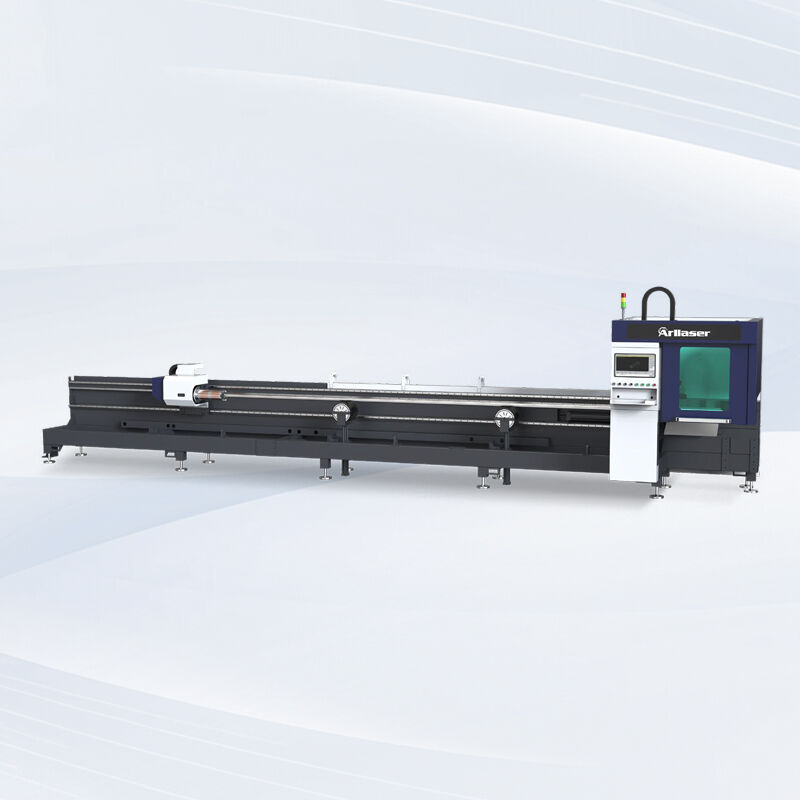
Enhancing Precision and Efficiency in Structural Component Fabrication
How Laser Tube Cutting Machines Achieve High Dimensional Accuracy
Modern laser tube cutters can achieve around 0.1 mm accuracy thanks to their smart optical systems and feedback mechanisms that tweak the laser power as needed. What makes these machines so effective is how they handle different materials. When working with varying thicknesses or when heat starts to warp things during the cut, the system adjusts itself on the fly. The computer numerical control programming takes this a step further. It basically redraws the cutting path in real time to keep everything within spec, which matters a lot when dealing with those tricky curved or irregular shaped metal tubes that show up in construction projects all the time.
Impact of Precision Cuts on Complex Structural Joints
When working with truss systems, precision cut tubes can cut down on joint assembly time by roughly 30%. This means workers spend less time doing tedious tasks like grinding or shimming parts together. For those who build bolted moment frames, laser cutting creates miters and notches that fit together smoothly without gaps. The result? Better load distribution across the structure, sometimes as much as 22% improvement over what we see with plasma cutting methods. Real world tests on hexagonal lattice structures consistently show around 99.4% conformity at the joints when these laser cut pieces are used. That kind of accuracy makes all the difference in maintaining structural integrity throughout the life of any construction project.
Data Insight: 98% Dimensional Accuracy in Field Measurements of Laser-Cut Tubes
A 2023 analysis of 1,200 structural steel projects found that laser-cut tubing maintained 98% dimensional accuracy across all axes—19 percentage points higher than traditional saw-cut methods. This level of first-time accuracy significantly reduces fit-up delays and costly field modifications during large-scale installations.
Reducing Material Waste and Improving Cost-Effectiveness
Narrow Kerf Width and Smart Nesting: Minimizing Raw Material Consumption
Laser tube cutting has this really thin cut width, about 0.2 mm which is roughly what three sheets of paper would measure together. This allows for much better part arrangement on the sheet metal, cutting down wasted material by around 34% according to Fabrication Tech Institute data from last year. The software behind these machines actually rearranges parts automatically, flipping them over or turning them sideways to make better use of space. For shops working with expensive stuff like those specialty steels that run $650 per ton or the tough alloys that resist corrosion, this kind of efficiency makes all the difference in keeping costs under control without sacrificing quality.
Quantifying Cost Savings from Reduced Scrap and Rework
Looking at some real world results from 2024, bridge part makers saw their waste drop dramatically when they switched to laser cutting technology. Scrap rates went down from around 12% all the way to just 3.8% each year, which translated into roughly $2.1 million saved on materials at one plant alone. Getting rid of those extra steps like deburring and grinding also meant workers spent about 180 fewer hours every month on these tasks. For companies making aluminum parts for airplanes, this kind of precision matters a lot. When something gets rejected in aerospace manufacturing, fixing it often costs over $950 per piece. So getting things right the first time isn't just efficient it's basically money in the bank.
Balancing Upfront Investment with Long-Term Operational Savings
Laser tube cutting does cost about 20 to 35 percent more upfront compared to plasma systems, but most shops find the extra money pays off in around 18 months because of how much better they run day to day. The energy savings alone are impressive too – roughly 42% less than traditional flame cutting methods. And manufacturers report using way less coolant as well, down around 92% which translates into real dollar savings on utilities. For a mid size fabrication shop, this means saving anywhere from $28 thousand to almost $75 thousand each year just on basic operating costs. With steel prices climbing at about 6.7% every year according to World Steel Association data from 2024, having equipment that minimizes waste isn't just nice to have anymore. It's becoming absolutely necessary if companies want to keep their profit margins intact through these rising material cost pressures.
Integrating Automation for Seamless Workflow in Structural Engineering
Modern structural engineering demands precision at every stage, making laser tube cutting machines indispensable for automated fabrication. By integrating these systems with digital tools, manufacturers achieve unprecedented coordination between design and production.
CAD/CAM and No-CAD Programming: Simplifying Machine Operation
When CAD/CAM systems work together directly, engineers can turn those intricate 3D models straight into machine code without having to write all the programming manually. Operators dealing with straightforward jobs often use No-CAD interfaces where they just enter some basic shape measurements. According to Advanced Manufacturing Research from last year, this cuts down on setup time anywhere between 40% to almost two thirds when compared with old school methods. The system handles everything from complicated custom designs right down to standard components, which means fewer mistakes get made during the coding process. Shops that implement these integrated solutions typically see better consistency across their production runs too.
Connecting Laser Tube Cutting Machines with CNC and PLM Systems
Seamless integration with CNC and PLM (Product Lifecycle Management) systems ensures continuous data flow across production stages:
| Process Stage | Manual Workflow | Automated Integration |
|---|---|---|
| Design Adjustments | 8–12 hour delay | Instant synchronization |
| Production Feedback | Weekly reports | Live performance metrics |
| Error Correction | Post-production rework | In-process adjustments |
One Midwest steel fabricator reported a 92% reduction in dimensional conflicts after linking their laser cutters to PLM software, demonstrating how automation breaks down siloed workflows.
Overcoming Industry Resistance to Digital Integration
Despite clear efficiency gains, 68% of structural engineering firms identify workforce training costs as the main barrier to automation adoption (National Association of Manufacturers, 2023). Leading companies overcome this challenge through phased training programs and real-time machine diagnostics, which reduce operator skill requirements while maintaining consistent output quality.
Streamlining End-to-End Manufacturing Processes
From Structural Design to Final Cut: Optimizing Production Flow
Laser tube cutters work hand in hand with CAD software, turning those structural blueprints into actual cuts with amazing precision around 0.1mm accuracy. What this means is we're not just talking about better results but also saving tons of time on programming tasks - somewhere around three quarters less work compared to doing everything manually. For complicated structures like space frames or cantilevers where multiple adjustments are needed during development, this speed makes all the difference. And let's not forget about material savings either. The smart nesting software gets about 93 to maybe even 94 percent efficiency when working with metals like steel and aluminum. That kind of waste reduction adds up fast on big projects needing hundreds or thousands of similar parts.
Eliminating Secondary Processing with First-Time-Accurate Laser Cuts
Laser cutting technology has brought tube manufacturing to new heights, with dimensional accuracy hitting around 98% according to Ponemon's 2023 report. That means workers no longer spend hours grinding, drilling, or adjusting parts on site. For bridges built with seismic resistant joints, connectors come ready for press fitting right off the production line. The result? Labor costs drop by roughly 40% during construction projects. And there's another benefit too. When components fit together so precisely, those frustrating tolerance issues that cause problems in complex assemblies just disappear. Steel fabricators have noticed this effect firsthand, seeing about a 30% reduction in welding mistakes needing correction since early 2020.
FAQs
What is the main advantage of using laser tube cutting machines?
Laser tube cutting machines offer high dimensional accuracy of around 0.1 mm, which reduces assembly time and waste, enhances structural integrity, and saves costs over time.
How do laser tube cutters contribute to material waste reduction?
They cut with a narrow kerf width of about 0.2 mm and employ smart nesting to optimize material use, reducing waste by up to 34%.
Can laser cutting technology reduce labor costs?
Yes, high precision cuts eliminate secondary processing such as grinding and shimming, reducing labor costs significantly.
What are challenges associated with adopting laser cutting technology?
The main challenge is the initial investment cost, which is higher than traditional methods, but this is offset by operational savings over time.