 EN
EN



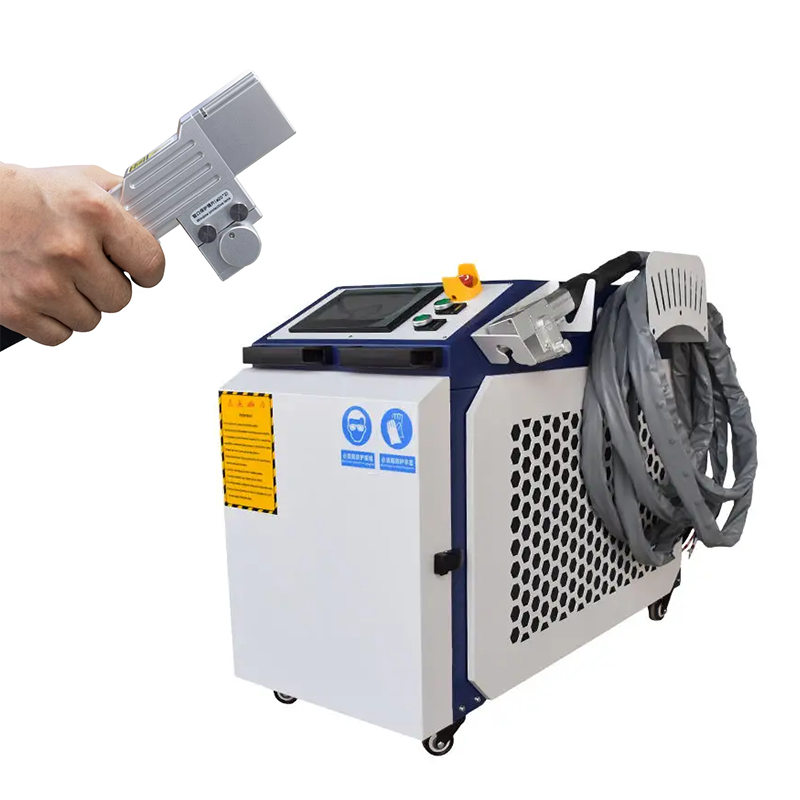
Understanding the laser ablation process
Laser rust removal works via a process called photochemical ablation. Basically, these systems use pulsed fiber lasers that shoot out focused beams of light at around 1,064 nanometers. The trick happens when the energy level goes past what's needed to start breaking down the rust layer, which typically sits between about 2 to 4 joules per square centimeter. At that point, the rust starts absorbing all those photons and basically turns into vapor right away, going straight from solid form to gas without becoming liquid first. What makes this method so good compared to traditional mechanical approaches is how it leaves the underlying metal untouched. Steel that hasn't been damaged by corrosion actually bounces back most of the laser energy, reflecting somewhere between 85% and 95% according to research published in Applied Optics last year. This means manufacturers can clean surfaces thoroughly without worrying about damaging the material underneath.
Thermal stress and selective ablation in rust removal
Pulsed lasers create microsecond-level thermal stress gradients between rust (FeO(OH)) and underlying steel. Iron oxide has a 40–60% higher thermal expansion coefficient than steel, causing selective delamination at 600–800°C—well below steel’s melting point. Operators control this with precise settings:
| Parameter | Rust Effect | Base Metal Protection |
|---|---|---|
| Pulse Duration | <100ns for thin oxidation | Prevents heat diffusion |
| Energy Density | 1.2–3.5 J/cm² | Stays below metal ablation threshold |
Laser ablation threshold and material selectivity
Each material has a distinct laser ablation threshold—the minimum energy required to disrupt atomic bonds. For common industrial materials:
- Rust layer (Fe₂O₃): 1.8 J/cm²
- Zinc coating: 0.9 J/cm²
- Carbon steel: 5.2 J/cm²
This 3:1 differential allows lasers to remove contaminants while preserving substrates, achieving <0.1% base metal loss in EPA-validated tests (Surface Engineering 2024).
Preserving base metal during laser rust removal
The latest generation of equipment employs real-time spectroscopic analysis to spot variations in how surfaces reflect light, which then triggers automatic adjustments to the power levels being used. When it comes to pulse rates, anything below 200 kilohertz helps stop heat from building up over time, so materials stay cool enough (under 150 degrees Celsius) for delicate work on things like car body panels that are only millimeters thick or priceless historical items that can't withstand high temps. Pairing these low-frequency pulses with what's called Gaussian beam shaping really narrows down where the heat actually affects the material, typically somewhere between 50 to 150 micrometers. That's way better than traditional sandblasting methods which tend to eat away at least half a millimeter into whatever they're working on.
Core Components: Pulsed Fiber Lasers and System Design
Why Pulsed Fiber Lasers Are Ideal for Rust Removal
When it comes to getting rid of rust, pulsed fiber lasers are really making waves because they offer both pinpoint accuracy and impressive results. These lasers work with ultrashort pulses ranging from nanoseconds down to femtoseconds, basically zapping away those pesky oxide layers while leaving the metal underneath intact. The trick is adjusting the pulse energy so it hits just enough power to blast through the rust layer but stops short of harming the actual material beneath. According to recent research published by IntechOpen in 2024, these advanced systems can knock out almost all rust from steel surfaces, achieving around 99% effectiveness in most cases. What makes them tick? Let's take a look at some of the main parts that make this technology possible.
- Pump sources: Diode lasers energize doped fibers to amplify light
- Fiber resonators: Maintain beam quality during high-frequency pulsing
- Beam delivery systems: Armored fiber cables transmit energy to cleaning heads with minimal loss
Precision Control Through Pulse Duration and Frequency
Adjusting pulse duration (10–200 ns) and frequency (1–1000 Hz) enables adaptation to different rust thicknesses and materials. For example:
- 100 ns pulses at 20 Hz effectively strip thick rust from marine equipment
- 10 ns pulses at 500 Hz remove thin oxidation from aerospace components without warping
Higher frequencies increase speed but require thermal management. Modern systems integrate sensors to auto-adjust parameters, optimizing ablation conditions. This precision reduces energy consumption by up to 40% compared to traditional methods while maintaining structural integrity.
The Step-by-Step Laser Cleaning Process
From Laser Emission to Rust Disintegration
Pulsed fiber lasers emit controlled bursts (typically 10–100 ns) that strike corroded surfaces. Iron oxide absorbs photons 20x faster than the base metal, generating localized heat over 3,000°C. This rapid expansion creates mechanical stress, explosively separating rust layers. Advanced systems vaporize contaminants within milliseconds, with debris removed via integrated extraction.
Non-Contact Cleaning and Real-Time Monitoring
Laser systems today can achieve sub-millimeter accuracy without touching the material at all, which means no tool wear issues or risk of contaminating what's being worked on. The system uses infrared sensors to check how reflective surfaces are, then automatically adjusts both power levels between 50 and 500 watts as well as scanning speeds that go up to around 10 meters per second to keep the ablation just right. This kind of real-time adjustment helps avoid doing too much damage, something really important when working on airplane parts or preserving historical artifacts. Technicians can actually see if everything went well right away using spectral analysis techniques, cutting down on the need to fix things later. Compared to old methods like sandblasting, this approach reduces the amount of work needing redoing by roughly three-quarters according to field reports from several facilities.
Industrial Applications of Laser Rust Removal
Automotive, Aerospace, and Marine Industry Applications
Laser technology for rust removal works by selectively ablating materials, which has really changed how maintenance is done throughout various transportation industries. Car makers are now able to bring back old vehicle frames and prepare new chassis parts while keeping about 98% of the original metal intact. That's way ahead of what sandblasting can manage at around 82%, according to research published in the Surface Engineering Journal last year. For planes, these laser systems tackle salt damage on aluminum parts without weakening their strength over time. Boat owners and crews have also started adopting smaller laser units for cleaning ship hulls and fixing deck equipment. The results? Yard workers report finishing jobs roughly 40% quicker compared to traditional grinding methods, saving both time and money during repairs.
Laser Pre-Welding and Pre-Coating Surface Preparation
Many manufacturers now turn to laser cleaning because it offers this great non-contact precision when getting surfaces ready for welding jobs and applying coatings. The process effectively takes care of mill scale and oxidation right before arc welding starts, which actually reduces weld porosity problems by around 73 percent compared with old methods like chemical pickling. When it comes to coatings, laser treatment creates what we call an ideal anchor profile with about 3 to 5 microns of surface roughness, making those polymer coatings stick much better. Some research recently showed that pipelines prepared with lasers required roughly half as many recoating touch-ups over a decade period than those treated with traditional abrasive blasting techniques.
Corrosion Removal in Infrastructure and Heritage Restoration
Bridge engineers have started using laser systems ranging from 200 to 500 watts to fix up old cables and restore historic buildings without damaging their structural integrity. Take the Eiffel Tower for instance - back in 2022 they managed to clean those rusty iron supports on the top platform without having to take anything apart. Museum restorers also love these lasers for bringing artifacts back to life. At Gettysburg National Park, workers stripped away over a century and a half of rust from Civil War era cannons while keeping all the original metal characteristics intact. Cities across the country are adopting this technique for their aging cast iron water pipes too. The numbers speak for themselves really, with reports showing nearly 92 percent less contamination problems compared to traditional sandblasting methods.
Advantages Over Traditional Rust Removal Methods
Laser vs. Sandblasting and Chemical Cleaning
Laser cleaning surpasses traditional methods in precision and efficiency. Comparative studies (2024) show:
| Factor | Laser Cleaning | Traditional Methods |
|---|---|---|
| Surface Prep Time | 0–15 minutes | 45–120 minutes |
| Waste Generated | 0.2–0.5 kg/m² | 2–5 kg/m² |
| Energy Consumption | 3–8 kWh/m² | 10–25 kWh/m² |
Sandblasting requires consumable media and generates hazardous silica dust, while chemical treatments produce toxic runoff. Laser systems eliminate both through non-contact ablation. A 2023 industry analysis found laser cleaning reduces rework by 40–60% due to consistent surface preparation.
Environmental and Safety Benefits of Laser Rust Removal
This method gets rid of those harmful chemical solvents and cuts down on airborne particles too, which according to OSHA figures from 2022 means around 78% fewer risks in the workplace. Sandblasting creates a real mess though, generating somewhere between 8 to 12 tons of contaminated waste each year just for one unit. Laser systems work differently, turning rust into something much safer - basically inert dust that filters out about 98% of what's left behind. Workers no longer have to deal with dangerous stuff like methylene chloride either. We've seen reports of over 300 cases where people got sick from this stuff back in 2023 alone, so avoiding it makes sense both for health reasons and overall safety.
Long-Term Cost Efficiency and Operational Precision
Although pulsed fiber laser systems have higher upfront costs ($65k–$120k), operational expenses are 30–50% lower over five years. Automated systems achieve 0.01 mm accuracy, limiting base metal loss to <0.1% versus 3–5% with abrasives. Facilities report 85% reductions in consumable spending after switching, with payback periods averaging 18 months in high-volume automotive operations.
FAQ
How does laser rust removal compare to traditional methods?
Laser rust removal is more precise and efficient compared to traditional methods like sandblasting and chemical cleaning. It requires less surface prep time, generates less waste, and consumes less energy. Additionally, it eliminates hazardous materials through non-contact ablation, reducing workplace risks and contamination.
Is laser rust removal safe for delicate surfaces?
Yes, laser rust removal is safe for delicate surfaces. By using precise control over pulse duration and frequency, laser systems can remove rust without damaging underlying materials, making them suitable for fragile items like historical artifacts or thin automotive panels.
What are the environmental benefits of laser rust removal?
Laser rust removal reduces harmful emissions and waste. It eliminates the need for abrasive media and toxic chemicals, turning rust into inert dust with minimal residuals. This results in a cleaner and safer environment with fewer risks to workers.
What industries benefit most from laser rust removal?
Industries such as automotive, aerospace, marine, infrastructure, and heritage restoration benefit significantly from laser rust removal due to its precision, efficiency, and ability to preserve base materials while cleaning surfaces.
Table of Contents
- Understanding the laser ablation process
- Thermal stress and selective ablation in rust removal
- Laser ablation threshold and material selectivity
- Preserving base metal during laser rust removal
- Core Components: Pulsed Fiber Lasers and System Design
- The Step-by-Step Laser Cleaning Process
- Industrial Applications of Laser Rust Removal
- Advantages Over Traditional Rust Removal Methods
- FAQ