 EN
EN



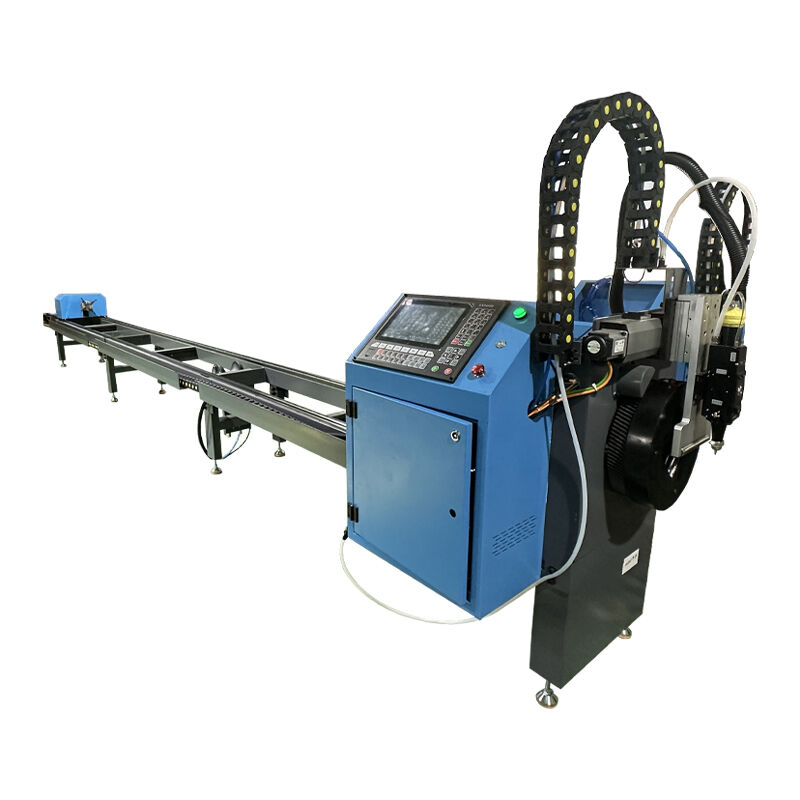
Fiber vs CO2 Laser Types for Stainless Steel Cutting
Why fiber lasers are the optimal laser cutting machine choice for stainless steel
Stainless steel fabrication is dominated by fiber lasers because their 1.06 micrometer wavelength matches right where stainless steel absorbs light most efficiently. Industrial tests show these lasers can cut thin materials under 8mm thickness three times quicker than traditional CO2 systems according to standards set by AWS and ISO 11553-1. What makes them so effective? The laser beam packs about 100 times more energy concentration than CO2 alternatives, resulting in extremely narrow cuts below 0.1mm width with very little heat damage around the cut area. Fiber lasers handle stainless steel's reflective nature much better too. They actually turn roughly 30% more of the incoming power into actual cutting action compared to CO2 counterparts, which means no more worrying about harmful reflections damaging equipment or messing up the beam quality. From an operator standpoint, there's also significant savings - about half the electricity usage and almost no maintenance required since there's no need for aligning resonators or replacing gases. Real world data from DOE studies backs this up showing operational costs drop around $35 per hour when switching to fiber laser technology.
CO2 laser limitations: reflectivity, thermal conductivity, and operational inefficiency with stainless steel
CO2 lasers work around the 10.6 micrometer mark, which stainless steel doesn't absorb very well. This means more than 40 percent of the laser energy just bounces right back off the metal surface according to research from the Ponemon Institute on material interactions in high power laser processing from last year. All this reflected energy can actually damage the optics and create unstable beams during operation. Plus, because stainless steel has pretty poor heat transfer properties (only about 15 watts per meter Kelvin), the longer wavelength struggles to cut through properly. What happens? Uneven melting pools form, there's more dross buildup, and cuts get inconsistent once we go past 6mm thick material. Manufacturers trying to work with CO2 systems end up needing way more gas flow compared to fiber lasers sometimes as much as 80% extra. And those mirrors need constant recalibration too, costing roughly $120 every hour they're down for maintenance. When all these issues stack up together, it becomes clear why most factories aren't finding CO2 technology worth the investment when setting up dedicated stainless steel production lines.
Matching Laser Cutting Machine Power to Stainless Steel Thickness and Application Needs
Power-thickness guidelines: selecting the right kW rating (1–6 kW) for 0.5 mm to 25 mm stainless steel
Choosing the right laser power is really important when working with stainless steel because it affects how good the cut looks, how fast the job gets done, and what it costs overall. Thin sheets between half a millimeter and three millimeters work best with fiber lasers rated at one to two kilowatts. These setups give fast cuts with minimal distortion, which makes them great for making precise parts. When dealing with medium thickness materials from four to eight millimeters, going up to two or three kilowatts helps keep edges looking clean and reduces those pesky bits of leftover material called dross. For thicker stuff around nine to twelve millimeters, three to four kilowatt systems do a better job maintaining proper melting action and keeping heat affected zones from getting too big. Structural pieces that go all the way up to twenty five millimeters need serious equipment though. Industrial grade lasers in the four to six kilowatt range can penetrate reliably while still keeping measurements accurate. And honestly, most shops find that using nitrogen assistance along with some kind of pulsed beam control makes a huge difference in these thicker applications.
| Thickness Range (mm) | Recommended Power (kW) | Performance Focus |
|---|---|---|
| 0.5 – 3 | 1 – 2 | Precision & speed |
| 4 – 8 | 2 – 3 | Edge quality consistency |
| 9 – 12 | 3 – 4 | HAZ minimization |
| 13 – 25 | 4 – 6 | Structural integrity |
Insufficient power results in incomplete cuts or excessive recast; excessive power wastes energy, accelerates lens wear, and broadens the HAZ—undermining ROI.
Balancing cutting speed, edge quality, and HAZ control—especially beyond 12 mm thickness
Cutting stainless steel beyond 12 mm demands deliberate trade-off management:
- Cutting speed drops sharply with thickness—requiring 4–6 kW lasers to retain throughput without sacrificing stability
- Edge quality degrades rapidly without optimized assist gas pressure and nozzle standoff; dross adhesion and micro-cracking become prevalent if pulse frequency or peak power is misaligned
- Heat-Affected Zone (HAZ) control is mission-critical: unmanaged thermal buildup compromises fatigue resistance and corrosion performance
When working with thick sections, nitrogen assist becomes pretty much mandatory for several reasons. First off, it stops oxidation from happening during the cut. But there's another benefit too: it helps with convective cooling and keeps that heat affected zone (HAZ) nice and shallow. This matters a lot in certain regulated environments, especially when dealing with those ASME BPVC Section VIII pressure vessels where specs are super strict about HAZ depth needing to stay under 0.5 mm. That's where high power fiber lasers really shine compared to older tech. These modern systems can adjust pulses in real time while controlling focus adaptively something that just wasn't possible back in the days of traditional CO2 laser setups. The difference in performance between these technologies is pretty staggering for anyone who has worked with both.
Auxiliary Gas Selection for Optimal Edge Quality and Cost Efficiency
Nitrogen: achieving oxide-free, weld-ready edges for food-grade and medical stainless steel
When using pure nitrogen during cutting operations, we get an environment that doesn't react chemically at all. This stops oxidation from happening and results in those clean, shiny silver edges that are ready for welding right away without needing any extra cleaning steps. For industries where cleanliness matters most like food processing plants, drug manufacturing facilities, and medical tool production, this really counts. Even tiny amounts of oxide buildup can become breeding grounds for bacteria or start corrosion problems down the road. Meeting those strict ASME BPE surface finish specs (around 0.4 microns Ra or better) basically requires working with nitrogen assistance. Sure, nitrogen does cost more money compared to regular compressed air or oxygen alternatives. But according to recent data from Financial Times manufacturing reports in 2023, companies save approximately $1,200 per ton when they skip all that post-cutting work like grinding, acid treatment, and passivation processes. So despite higher upfront costs, nitrogen ends up being the smartest investment for making high quality stainless steel parts.
Oxygen trade-offs: faster thick-section cutting versus post-process requirements and HAZ concerns
When using oxygen for cutting, it relies on exothermic reactions that really speed things up, especially when working with stainless steel thicker than 12 mm. The tradeoff? Edges tend to get oxidized and discolored, so they need grinding or some kind of chemical treatment prior to welding. What's even more important though, oxygen adds extra heat to the process, making the heat affected zone expand by around 40 percent according to Industrial Laser Quarterly from last year. This means higher chances of distortion and lower fatigue life overall. For these reasons, oxygen works best on parts where looks don't matter much like brackets, frames, or enclosures. These components typically don't require top notch appearance or corrosion protection since production speed takes priority. Most fabricators would be wise to skip oxygen altogether whenever there are requirements for good post weld corrosion resistance or when meeting certain regulations is necessary.
Precision, Tolerances, and Edge Standards in Industrial Stainless Steel Fabrication
Industrial stainless steel fabrication must meet stringent tolerance and edge-quality standards—directly impacting functional reliability across sectors. Fiber laser cutting machines consistently achieve standard tolerances of ±0.13 mm (±0.005") across 90% of production workloads, balancing precision with cost-efficiency. Tighter tolerances escalate complexity exponentially:
| Tolerance Class | Typical Range | Cost Multiplier | Key Requirements |
|---|---|---|---|
| Standard | ±0.13 mm (±0.005") | 1x | Standard laser equipment, sampling checks |
| Precision | ±0.025 mm (±0.001") | 3–5x | Specialized optics, environmental control |
| Ultra-Precision | ±0.010 mm (±0.0004") | 8–15x | Vibration-dampened systems, 100% inspection |
When it comes to parts used in food processing or medical applications, nitrogen assisted cutting helps meet those tough ASME BPE surface finish specs that are so important for keeping microbes from sticking around. Once we get past that 12mm mark though, staying within those tight tolerances becomes a real balancing act between power settings, pulse timing, gas flow rates, and how the machine moves. Many manufacturers fall into the trap of asking for tighter specs than actually needed, which just drives up costs without any real benefit. Precision machining can easily cost three to five times what regular fabrication does, but honestly? That extra money doesn't buy anything meaningful unless the design specifically calls for it or regulations absolutely require it.
FAQ
What are the advantages of using fiber lasers for cutting stainless steel?
Fiber lasers offer a wavelength that matches stainless steel absorption efficiently, fast cutting speed, minimal heat damage, better handling of reflective surfaces, and lower maintenance costs.
How does CO2 laser performance differ when cutting stainless steel?
CO2 lasers face challenges due to reflectivity and poor absorption, resulting in operational inefficiencies, unstable beams, and excessive maintenance requirements.
How should laser power be selected for different thicknesses of stainless steel?
For thicknesses 0.5–3 mm, use 1–2 kW; for 4–8 mm, use 2–3 kW; for 9–12 mm, use 3–4 kW; and for 13–25 mm, use 4–6 kW to balance precision and performance.
Why is nitrogen preferred for cutting stainless steel?
Nitrogen prevents oxidation and supports oxide-free edges, saving on post-processing costs and enhancing surface quality, especially for food-grade and medical applications.