 EN
EN



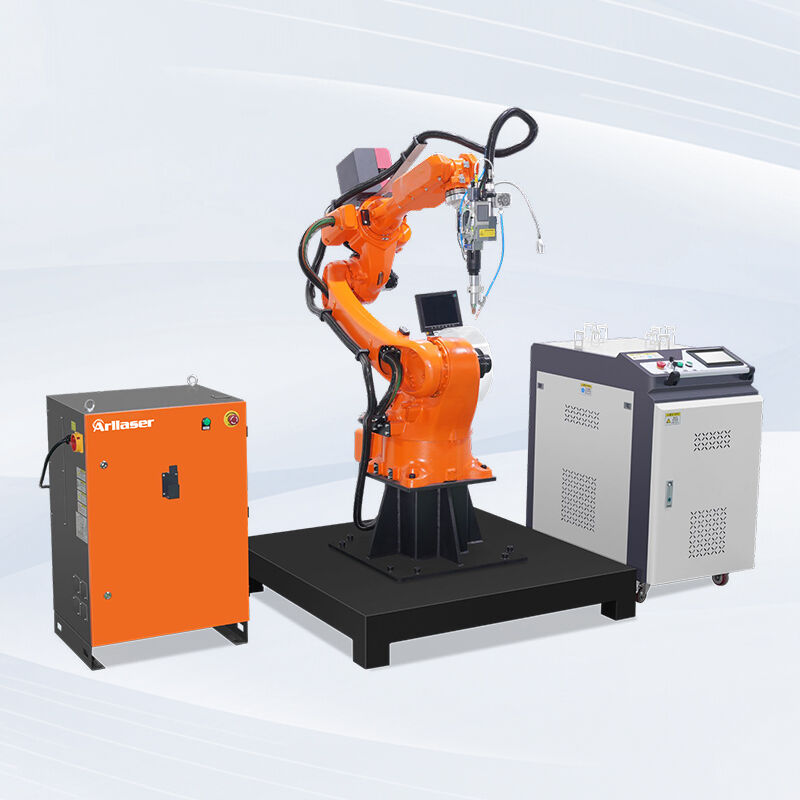
Core Physics and Operating Principles of a Laser Welding Machine
From Photons to Fusion: How Light Energy Creates Localized Heat
Laser welding equipment works by turning electricity into tightly packed beams of light through a process called stimulated emission. These intense beams focus on very small spots, usually around half a millimeter across, creating power levels exceeding one million watts per square centimeter. When this happens, the light transfers massive amounts of heat to metal atoms almost instantly, pushing temperatures past their melting point within billionths of a second. What makes this technique special is how it melts just the targeted area while leaving nearby materials relatively cool. Since there's no physical contact during welding, contamination stays minimal. The system can heat and cool at incredible speeds too, sometimes reaching changes of a thousand degrees Celsius every single second. This dramatic difference means less warping overall compared to traditional methods like arc welding. Another big advantage comes from being able to weld different kinds of metals together successfully, something that used to be nearly impossible with older technologies. Copper and aluminum combinations that once frustrated engineers are now routine thanks to these precision capabilities.
Conduction vs. Keyhole Mode: Two Distinct Welding Mechanisms Explained
Laser welding operates in two primary modes, determined by power density:
| Mechanism | Power Density | Penetration | Weld Characteristics | Applications |
|---|---|---|---|---|
| Conduction | <10 W/cm² | Shallow | Wide, smooth seams | Thin sheets (<0.5mm) |
| Keyhole | >10 W/cm² | Deep | Narrow, high aspect ratio | Thick plates (up to 25mm) |
During conduction mode operation, thermal energy moves across surfaces creating those shallow fusion areas that work great for making hermetic seals. When we talk about keyhole mode, it happens because really high energy levels actually vaporize the material, creating this plasma path that lets the heat go much deeper into the workpiece. We're talking around 15 times deeper than the actual weld width here, all while keeping within about 0.1 mm accuracy range. The latest welding equipment can actually toggle back and forth between these different modes on the fly by adjusting power levels in real time. This capability helps produce flawless welds even at pretty impressive speeds reaching 20 meters per minute, something we've seen put to good use in many automotive manufacturing plants recently.
Essential Components of a Laser Welding Machine
Laser Source Comparison: Fiber, CO₂, and Solid-State for Industrial Applications
At the core of any laser system lies the laser source itself. There are three main types commonly used today: fiber, CO₂, and solid state lasers, each with its own strengths depending on what needs to be done. Fiber lasers stand out because they convert electricity to light very efficiently, sometimes reaching around 50% efficiency rates. They also produce excellent beam quality which makes these systems great for fast welding jobs involving tricky materials like aluminum or copper that tend to reflect regular laser beams. When working with thicker steel pieces between about 5mm to 25mm thick, CO₂ lasers work better since their longer wavelength gets absorbed more effectively by the metal, allowing deeper penetration during welding processes. For extremely fine work, solid state lasers including disk lasers or those based on Nd:YAG technology come into play. These allow for precise control over individual pulses, something absolutely necessary when doing delicate micro welding tasks in electronic components or medical device manufacturing. Choosing the right laser really comes down to several factors: what kind of material is being worked on, how thick it is, and what production requirements exist. Most automotive battery manufacturers stick with fiber lasers because they just get the job done faster and more reliably day after day. Meanwhile, watchmakers and jewelers typically reach for solid state options when repairing precious items where absolute precision matters most.
Beam Delivery, Focusing Optics, and Real-Time Monitoring Systems
The laser energy gets sent through fiber optic cables or those articulated robotic arms right onto the workpiece itself. Special focusing optics, things like collimators and these F-theta lenses, help concentrate the beam down to incredibly tiny spots sometimes as small as just 0.1 millimeters across. More sophisticated setups now come equipped with real time monitoring capabilities too. They use high speed cameras along with pyrometers to watch what happens when metal melts during processing, capturing thousands upon thousands of images every single second. All this visual information goes straight into closed loop control systems which tweak various parameters on the fly whenever they detect issues such as pores forming or areas not getting filled properly. The result? Weld depths stay remarkably stable within plus or minus 0.05 mm tolerance levels. For industries where quality matters most, like aircraft construction or making medical devices, this kind of precision makes all the difference. Factories report seeing their waste material drop significantly, somewhere around 40 percent less compared to older methods without such monitoring technology.
Step-by-Step Laser Welding Machine Operation Workflow
Pre-Process Setup: Material Prep, Fixturing, and Parameter Initialization
Getting good results from laser welding starts with proper prep work. The joint areas need cleaning first either with solvents or some kind of mechanical scrubbing to get rid of all those pesky contaminants like oil, oxidation, and dirt particles that can cause holes in the weld and create weak spots. When putting the pieces together, they have to be held firmly in place with accurate fixtures so everything stays aligned even when heat causes expansion. There are several important factors to consider for successful welding including how much power the laser needs between around 500 to 6000 watts, how often it pulses from 20 to 200 times per second, how fast it moves across the material between 2 to 20 meters per minute, and where exactly the focal point is positioned. These settings depend largely on what kind of material we're working with and how thick it is. Before jumping into actual production runs, most shops do test welds on scrap material just to check if everything looks right and make adjustments as needed.
In-Process Control: Beam Positioning, Power Modulation, and Molten Pool Dynamics
In actual practice, robots or computer numerical control systems guide the laser beam along the weld path with around 50 micrometer precision. The sensors adjust laser power constantly depending on what they see happening during welding. For thicker parts, the system boosts power output while it cuts back when working with materials that get damaged easily by heat. Technicians keep an eye on the molten metal through infrared cameras, watching how the liquid behaves. A good weld usually shows a pool about half a millimeter to two millimeters wide with regular wave patterns across its surface. When something looks off track, operators jump in right away to fix issues before problems like gaps under the weld edge or unwanted metal droplets form. This real time monitoring helps maintain quality across all production runs without much variation between pieces.
Key Advantages of Laser Welding Machines in Modern Manufacturing
Laser welding offers something pretty special when it comes to precision and getting work done fast in factories everywhere. The way it focuses energy means there's much less damage around the weld area, cutting down heat-related problems by about 70% compared to old school arc welding techniques. Because of this accuracy, manufacturers can create strong bonds on delicate parts such as those used in medical devices or inside electronics where even small flaws matter a lot. Processing speed is another big plus point too; some systems can run over 10 meters per minute which really boosts production numbers while using far less power than traditional approaches, somewhere between 30 to maybe even half the energy consumption. What makes laser welding so versatile is how well it works across different materials ranging from tough titanium alloys all the way to various types of plastic, opening doors for creative combinations that weren't possible before. Pair this tech with automated systems and companies see fewer defects and less need for fixing things later on, saving them roughly quarter of their yearly operating expenses according to industry reports. No wonder then why so many forward thinking manufacturers are turning to lasers as they look to stay competitive while keeping environmental impact low in sectors where exactness counts most.
Frequently Asked Questions (FAQ)
What is laser welding?
Laser welding is a technique that uses concentrated beams of light to melt and fuse materials, typically metals, in a highly precise manner.
What are the main types of lasers used in welding?
The main types of lasers used in welding include fiber lasers, CO₂ lasers, and solid-state lasers. Each type has different applications based on material properties and thickness.
How does laser welding compare to traditional welding methods?
Laser welding offers higher precision, less warping, and the ability to weld different metals together compared to traditional welding methods like arc welding.
What are the benefits of laser welding?
Benefits include reduced heat damage, faster processing speeds, lower energy consumption, and the potential to weld a wider array of materials.