 EN
EN



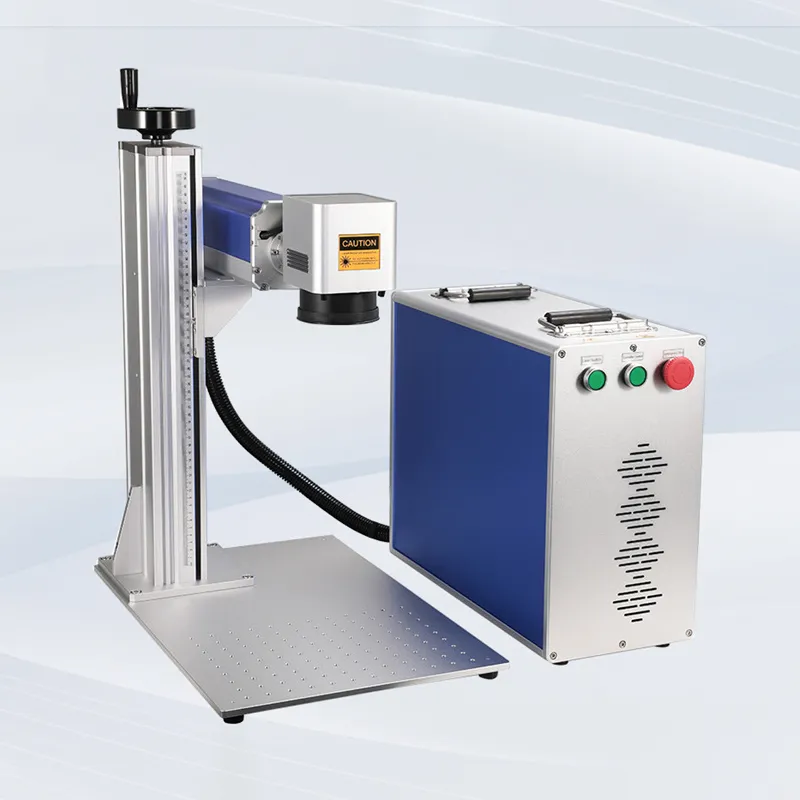
Ensuring Traceability and Compliance Across Regulated Industries
In highly regulated environments, the ability to trace every component from raw material to finished product is a legal obligation—not just a best practice. Industrial laser marking machines deliver the permanent, tamper-resistant identification required to meet stringent standards across aerospace, medical, automotive, pharmaceutical, and food industries.
Permanent Serial Numbers, UIDs, and Lot Tracking in Aerospace and Defense
Aerospace and defense manufacturers must comply with mandates like the U.S. Department of Defense’s UID (Unique Identification) program, which requires unambiguous, lifelong part identification. Laser marking machines etch permanent alphanumeric serial numbers and Data Matrix codes directly onto metal and composite components—without inks, adhesives, or surface disruption. These marks resist extreme heat, abrasion, corrosion, and repeated cleaning cycles, ensuring legibility for decades. This direct part marking (DPM) enables full lifecycle traceability, streamlines regulatory audits, and significantly accelerates root-cause analysis during recalls.
QR Codes and Data Matrix Marking for Automotive and Medical Device Traceability
Automotive and medical device manufacturers depend on high-density 2D codes—including Data Matrix and QR—to track millions of parts across global supply chains. Laser marking machines produce these compact, high-contrast codes directly on metals, plastics, and ceramics, eliminating reliance on labels that peel, smudge, or delaminate. Each code can encode batch number, production date, serial ID, and calibration data—supporting compliance with IATF 16949, ISO 13485, and FDA’s UDI (Unique Device Identification) rule. Because the mark is integral to the part, it resists counterfeiting and ensures reliable scanning at every stage—from assembly line to point-of-care.
Pharma and Food-Safe Marking: Expiry Dates, Batch Codes, and Regulatory Compliance
Pharmaceutical and food packaging demand clear, durable, and chemically inert markings for batch numbers, expiry dates, and lot codes. Laser marking achieves this without inks, solvents, or consumables—removing contamination risk entirely. The non-contact process creates high-contrast, permanent marks on cardboard, glass, PET, and laminated films, fully compliant with FDA 21 CFR Part 115 (food contact), EU Regulation (EC) No 1935/2004, and ICH guidelines for pharmaceutical packaging. This eliminates label-related failures—such as misalignment, fading, or detachment—that trigger costly recalls and compliance violations.
Material-Optimized Laser Marking with Industrial Laser Marking Machines
High-Contrast, Oxidation-Free Marks on Stainless Steel and Titanium via Annealing
Annealing—a controlled thermal process enabled by fiber lasers—produces durable, oxidation-free marks on stainless steel, titanium, and other corrosion-sensitive alloys. By precisely heating the surface below the melting point, the laser induces a stable, dark oxide layer with no material removal. Unlike engraving or etching, annealing preserves dimensional accuracy, surface finish, and fatigue strength—critical for medical implants, surgical instruments, and aircraft structural components. Marks remain legible after repeated sterilization (autoclave, gamma, EtO) and exposure to saline or acidic environments, meeting ASTM F2129 and ISO 10993 biocompatibility requirements.
Non-Destructive, Sterilization-Resistant Marking on Polymers and Biocompatible Plastics
For polymers used in disposable medical devices and drug delivery systems—such as polycarbonate, ABS, PEEK, and cyclic olefin copolymer (COC)—laser marking delivers precise, non-destructive identification. Using ultra-low thermal input and optimized pulse parameters, the system induces subtle color change (foaming, carbonization, or pigment activation) or micro-texturing without cracking, warping, or outgassing. Marks withstand 100+ autoclave cycles and aggressive disinfectants while maintaining readability under machine vision inspection. Pre-validated parameter libraries ensure consistent, repeatable results across production runs—fulfilling FDA’s expectations for “permanent” marking per 21 CFR Part 820.200 and ISO 15223-1 labeling standards.
Smart Integration: Connecting Laser Marking Machines to IIoT and Industry 4.0 Workflows
Integrating laser marking machines into IIoT-enabled infrastructure transforms them from standalone tools into intelligent nodes within end-to-end digital manufacturing systems. Embedded sensors monitor real-time operational data—including laser power stability, galvo positioning accuracy, focal distance, and environmental temperature—feeding it securely into Manufacturing Execution Systems (MES) and cloud-based analytics platforms. This connectivity supports remote diagnostics, centralized job dispatching, and automated documentation of every marked part—including timestamp, operator ID, material lot, and verification status—satisfying audit trails required by AS9100, ISO 13485, and FDA 21 CFR Part 11.
Predictive maintenance algorithms analyze sensor trends to anticipate optical degradation or motion-system drift, reducing unplanned downtime by up to 30% and extending service intervals. Machine learning models continuously refine marking parameters—adjusting pulse frequency, scan speed, and Q-switch timing—to maintain optimal contrast and depth across variable material batches and ambient conditions. As a result, laser marking becomes an adaptive, self-correcting process that strengthens traceability integrity, supports dynamic scheduling, and contributes to measurable productivity gains—up to 12% in high-mix, low-volume production environments, according to recent U.S. Department of Commerce manufacturing adoption benchmarks.
FAQ
- What industries require traceability and compliance through laser marking?
- Aerospace, medical, automotive, pharmaceutical, and food industries require laser marking to meet stringent regulatory compliance and traceability needs.
- How does laser marking ensure compliance in aerospace and defense?
- Laser marking creates permanent serial numbers and UID codes on components, adhering to mandates like the U.S. Department of Defense's UID program and ensuring lifecycle traceability.
- Why is laser marking preferred for automotive and medical device manufacturers?
- Laser marking enables clear, non-removable Data Matrix and QR codes, ensuring reliable scanning across supply chains and compliance with standards such as FDA’s UDI rule.
- What makes laser marking suitable for pharmaceutical and food packaging?
- The non-contact process eliminates contamination risks and produces high-contrast, durable batch numbers and expiry dates, complying with FDA and EU packaging regulations.
- How does annealing benefit stainless steel and titanium marking?
- Annealing provides oxidation-free, durable marks while preserving the material's dimensional accuracy and fatigue strength.