 EN
EN


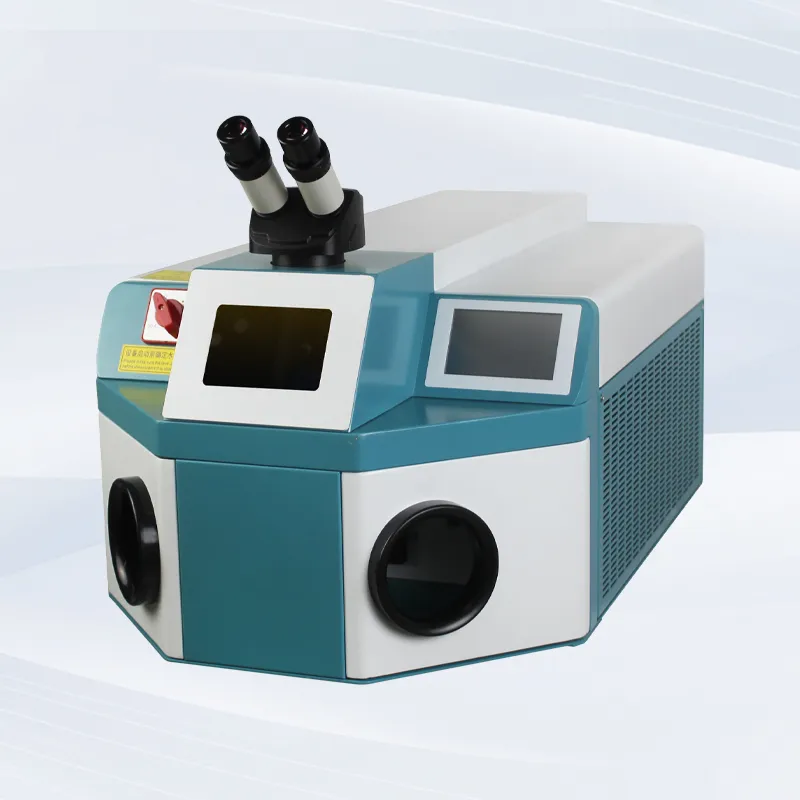
Weld Quality Failures: Surface, Optics, and Process Integrity
Surface contamination undermining fusion despite optimal settings
Surface oils, oxides, and residues prevent reliable molecular fusion in jewelry welding—even when machine parameters are precisely calibrated. These contaminants scatter or reflect the laser beam, reducing effective energy absorption and triggering spatter, porosity, and irregular weld seams. A 2023 industry report on surface pollution levels during jewelry welding confirmed this direct correlation between residue presence and fusion failure [FY2023 Report on Pollution Levels on Jewelry Pieces when Welding]. Controlled trials demonstrated that implementing a two-step pre-weld protocol—mechanical abrasion followed by solvent wiping—reduced surface-related defects by 79%. Crucially, no amount of parameter validation can override inadequate surface preparation.
Laser optics degradation and beam misalignment in precision jewelry welding machines
Thermal cycling during repeated spot welding accelerates degradation of mirrors and focusing lenses in precision jewelry welding machines, causing beam scatter and inconsistent energy density. Dust accumulation on optical paths—or even minor mechanical shocks to the chassis—can misalign the beam, resulting in undercuts or micro-cratering that escapes visual inspection but compromises subsurface integrity. Quarterly alignment verification combined with purge-gas–assisted optical enclosures reduced thermally induced distortion incidents by 66%–83%. This proactive approach prevents latent structural weaknesses and eliminates the need for post-weld non-destructive testing beyond standard visual and dimensional checks.
Mechanical Degradation: Electrode Wear, Alignment, and Pressure Control
Electrode misalignment and inconsistent clamping pressure in spot and micro-arc jewelry welding machines
Electrode misalignment is a primary mechanical root cause of weld inconsistency in spot and micro-arc jewelry welding machines. When tips deviate from coaxial alignment, arc stability suffers—leading to weak, asymmetric, or incomplete fusion. Compounding this, worn or contaminated clamping mechanisms produce inconsistent pressure: even a 10% deviation from target clamping force can reduce weld strength by up to 30%. Workpiece movement during welding may then cause burn marks, electrode sticking, or localized overheating. Daily alignment verification using a calibrated gauge—and routine cleaning and lubrication of clamping components—are essential first-line controls.
Proactive electrode maintenance protocols for long-term jewelry welding machine reliability
Sustained reliability in jewelry welding machines hinges on disciplined electrode maintenance—not reactive replacement. Electrode tips should be redressed or replaced after every 500 welds (adjusted for material type and current density), with cooling protocols strictly enforced to prevent thermal distortion. A clear, objective replacement threshold—such as a 15% increase in tip diameter or visible pitting—ensures consistency. Automated wear monitoring systems can log usage metrics and trigger alerts, supporting data-driven scheduling. When integrated into standardized checklists and time-based inspections, these practices cut unplanned downtime by up to 40% while preserving weld repeatability across thousands of cycles.
Thermal & Power Instability: Overheating, Energy Delivery, and System Shutdowns
Cooling system failure due to dust accumulation in jewelry welding machine heat sinks and vents
Dust clogging heat sinks and air vents impedes convective cooling, trapping heat near power electronics and control boards. In jewelry welding machines—where thermal stability directly governs arc consistency—even modest temperature rises degrade sensor accuracy and destabilize spark timing. Left unaddressed, this leads to performance throttling, erratic output, or emergency shutdowns. Monthly cleaning of intakes and fins using compressed air or soft brushes maintains airflow integrity without risking component damage, extending system life and preserving weld fidelity.
Erratic energy delivery causing sparking, burn marks, or incomplete welds
Inconsistent energy delivery—often traced to aging capacitors, degraded power modules, or corroded wiring—causes arc misfiring, voltage sag, or current spikes. In fine jewelry applications, this manifests as visible sparking at the electrode, thermal burn marks on gold or platinum surfaces, or partial fusion that fails tensile testing. Such instability not only wastes precious materials but also damages delicate features like filigree or stone settings. Routine inspection of power circuitry—including thermal imaging of connections and ESR testing of capacitors—ensures stable, repeatable energy transfer and safeguards both workpiece integrity and machine longevity.
Post-Weld Defects: Solder Flow, Oxidation, and Precision Accuracy Loss
Post-weld defects in jewelry welding extend beyond the weld zone itself, threatening aesthetic continuity and functional performance. Solder dewetting—failure of solder to wet uniformly across gold or silver substrates—creates micro-gaps that weaken joints and invite corrosion. Metallurgical studies show oxidation at joint interfaces forms copper-rich intermetallics that promote dendritic growth, increasing electrical resistance by up to 85% and accelerating fatigue failure. Precision accuracy loss appears as unintended solder bridges between micro-settings or chain links, necessitating labor-intensive micro-polishing. Residual contaminants further elevate surface insulation resistance (SIR), particularly problematic in articulated pieces where conductivity and movement must remain uncompromised. Critically, unresolved thermal shock can initiate micro-fractures in gemstone-bearing prongs—defects that propagate over time—underscoring the need for systematic post-weld assessment aligned with ASTM F2628 and ISO 13934-1 standards for jewelry integrity verification.
FAQ
What are the main factors affecting weld quality in jewelry welding?
Key factors include surface contamination, laser optics degradation, electrode misalignment, inconsistent clamping pressure, and thermal or power instability in welding systems.
How can surface contamination during jewelry welding be addressed?
A two-step pre-weld protocol—mechanical abrasion followed by solvent wiping—can reduce surface-related defects by up to 79%, ensuring cleaner surfaces for better molecular fusion.
What are the signs of laser optics degradation in welding machines?
Signs include beam scatter, inconsistent energy density, undercuts, and micro-cratering, which compromise weld integrity. Quarterly maintenance is recommended to prevent these issues.
Why is electrode maintenance important in jewelry welding?
Regular electrode upkeep prevents misalignment, sticking, and localized overheating. Proper maintenance can reduce unplanned downtime and enhance weld repeatability across cycles.
How can thermal instability be mitigated in welding machines?
Maintaining clean heat sinks and air vents, as well as inspecting power components like capacitors, are key strategies to sustain thermal and power stability during operations.
What types of post-weld defects occur in jewelry welding?
Common issues include solder dewetting, oxidation at joints, precision accuracy loss, and residual contaminants, which may weaken joints and compromise conductivity.