 EN
EN



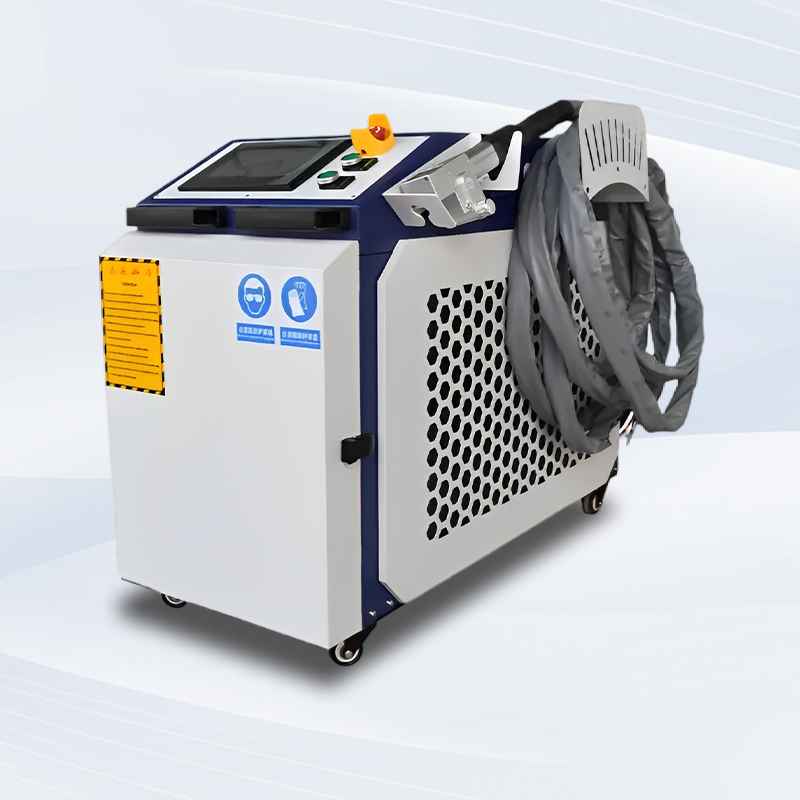
Cost Analysis and ROI of Wholesale Fiber Laser Cleaning Machine Purchases
High Initial Cost vs. Long-Term Total Cost of Ownership (TCO)
Buying fiber laser cleaning machines in bulk definitely brings down what each unit costs, but let's face it, the price tag is still pretty hefty when making the initial purchase. Looking at just the money spent upfront misses the bigger picture though. When we talk about total cost of ownership, we're really talking about everything from how much power they consume day to day, regular maintenance needs, replacement parts, and even how efficiently workers can operate them. Fiber lasers are actually pretty efficient in terms of energy consumption, hitting around 40 percent wall plug efficiency according to some studies from Ponemon Institute back in 2023. That translates to saving anywhere between eight hundred to twelve hundred dollars every year on electricity alone for each machine. And if we compare maintenance costs to older methods like sandblasting, companies typically save another four hundred to six hundred bucks annually. If we look at the big picture over five years, all these savings start adding up fast enough to cover most of what was originally paid for the equipment in the first place.
ROI Calculation Framework for Bulk Purchases: Payback Periods and Throughput Scaling
ROI for wholesale deployments hinges on three scalable factors:
| Factor | Impact on ROI | Bulk Purchase Consideration |
|---|---|---|
| Throughput Gain | 20–50% higher output per machine | Scales linearly across units |
| Labor Reduction | Saves $3,000–$5,000/unit annually | Training costs amortized fleet-wide |
| Material Savings | 10–50% less waste via precision cleaning | Cumulative scrap reduction |
Use this formula:
ROI (%) = [(Annual Savings × Machine Count) / Total Investment] × 100
Facilities deploying three or more units typically achieve payback in 18–24 months, as fixed overheads—like engineering support and integration—distribute across the fleet.
The Hidden Trade-Off: How Lower Unit Prices Can Increase TCO Due to Inconsistent Specifications
Bulk discounts often conceal specification variances between units—especially in pulse energy (e.g., 20J vs. 25J) or beam quality (M² ≠ 1.3 vs. ≠ 1.5). These differences trigger operational inefficiencies:
- Custom calibration per unit (+15% labor time),
- Non-standard spare parts inventory (+$2,000/year),
- Throughput imbalances that reduce line efficiency.
One automotive OEM reported a 22% TCO increase despite paying 30% less per unit—due to inconsistent duty cycles extending project timelines by 17%. Leading suppliers mitigate this risk through batch performance testing and enforceable output warranties.
Performance and Industrial Applications of Fiber Laser Cleaners at Scale
Pulse vs. Continuous Wave: Effectiveness Across Metal, Composite, and Coated Substrates
Pulsed fiber lasers have become the go to solution for high precision industrial cleaning tasks. These lasers work with nanosecond pulses ranging from 1 to 100 nanoseconds that zap away contaminants without harming the underlying material. This makes them especially useful for delicate aerospace aluminum applications where the beam quality needs to be really good, typically below an M squared value of 1.3, so it can focus tightly and manage heat properly. When dealing with carbon steel covered in thick rust layers, these pulsed systems manage about half a square meter per hour cleaning rate while keeping the base metal intact. Continuous wave lasers operating between 500 and 3000 watts are generally better for bigger jobs on conductive materials such as ship hulls though. But watch out because those constant beams can actually warp composite materials or mess up coatings on titanium parts. According to research published last year in a reputable journal, pulsed laser technology cuts down coating damage on titanium aerospace components by around three quarters compared to traditional continuous wave methods.
Case Study: Automotive OEM Cuts Blasting Waste by 92% After Bulk Deployment
One big car maker swapped out 16 old-school blasting stations at three different plants for new fiber laser equipment. This switch made getting rid of rust on car frames much easier, saving around 480 tons of silica sand every year and reducing dangerous waste by almost 92%. Production speed went up about 40% too since there was no more messing with media, dealing with clogged systems, or waiting around for setups. The whole project cost $2.1 million but paid itself back within 14 months thanks to cheaper materials, better EPA compliance, and safer working conditions as workers weren't breathing in all those harmful particles anymore.
Maintenance, Support, and Operational Risks in Bulk Procurement
Hidden Failure Modes: Calibration Drift and Optical Degradation Across Identical Units
When purchasing equipment in bulk, reliability becomes a real headache. Even when buying multiple identical units from the exact same manufacturing run, each tends to degrade differently over time. Take laser alignment accuracy for instance it typically drifts somewhere between 15% to 30% per year if not properly recalibrated. And don't get me started on those optical parts like lenses and mirrors their performance varies around plus or minus 20% even when everything else stays exactly the same. These kinds of hidden problems lead to all sorts of headaches including inconsistent cleaning outcomes and unexpected shutdowns along the production line. The aerospace industry knows this all too well. One misaligned component can send rework rates skyrocketing by almost half in some cases. That's why smart shops invest in predictive maintenance strategies that include constant power monitoring and regular beam checks. Catching these issues early saves both time and money down the road.
Spare Parts and Consumables: Ensuring Long-Term Serviceability for Wholesale Buyers
Getting spare parts right matters a lot when deploying multiple units. Businesses should focus on getting long term access to those special optical modules and cooling system parts that can take anywhere between 18 to 24 months to arrive. Smart companies negotiate inventory agreements that cover their needs for around seven years or so. Looking at the numbers, consumables like protective window slides actually make up about a third of all maintenance expenses. When these items are standardized across every unit, it makes buying easier and cuts down on running out of stock. Setting up a central system to track when parts need replacing helps avoid situations where several units break down at once and nobody knows what's missing. With good planning like this, most operations manage to keep their equipment running smoothly for over 90% of the time throughout the entire lifespan of the system.
Selection Criteria for Wholesale Fiber Laser Cleaning Machines
Critical Specifications: Minimum Pulse Energy, Beam Quality (M²), and Duty Cycle Consistency
When procuring wholesale fiber laser cleaning machines, insist on three non-negotiable technical benchmarks:
- Minimum pulse energy ≥100 mJ, which directly determines rust and paint removal speed—insufficient energy increases required passes by 40% (Industrial Laser Applications Consortium, 2022);
- Beam quality M² < 1.3, ensuring precise ablation without thermal damage—especially vital for composites and thin-walled aerospace structures;
- Duty cycle consistency ≥80% at rated power, preventing thermal throttling during extended shifts—variance here can cut throughput by 35% in high-volume production.
Verify all three metrics via third-party test reports—not just manufacturer datasheets—since published specs frequently overstate real-world performance.
Vendor Evaluation: Warranty, Training, and Technical Support for Bulk Orders
Technical specs alone don’t guarantee success. Evaluate vendors through operational rigor:
- Warranty: Require a minimum 3-year comprehensive warranty covering optical components—calibration drift affects ~20% of identical units within 18 months (Laser Institute of America, 2023);
- Training: Demand structured, hands-on programs covering safety, preventive maintenance, and troubleshooting—proven to reduce operator-induced errors by 60%;
- Support: Prioritize suppliers offering 24/7 multilingual technical assistance and regional spare parts depots—bulk deployments suffer 22% longer downtime without localized service networks.
Always formalize expectations in binding service-level agreements before finalizing wholesale orders.
FAQ
1. What are the benefits of purchasing fiber laser cleaning machines in bulk?
Purchasing these machines in bulk can reduce the initial unit cost and comes with long-term savings through lower energy consumption and maintenance costs. Over several years, these savings can recoup the initial investment.
2. How do fiber laser cleaners compare to older methods like sandblasting?
Fiber laser cleaners offer significant energy efficiency, consume less power, and incur lower maintenance costs. Unlike sandblasting, they generate less waste and require fewer consumables, making them more environmentally friendly and cost-effective long-term.
3. What are the main operational risks when buying in bulk?
One of the main risks is inconsistent specifications across units, which can lead to inefficiencies such as custom calibration requirements, additional spare parts inventory, and throughput imbalances.
4. What should companies consider when selecting vendors for fiber lasers?
Companies should consider warranty terms, training programs, and technical support availability. It's crucial to evaluate vendors based on their ability to provide comprehensive support and guarantee consistent performance across all units.