 EN
EN



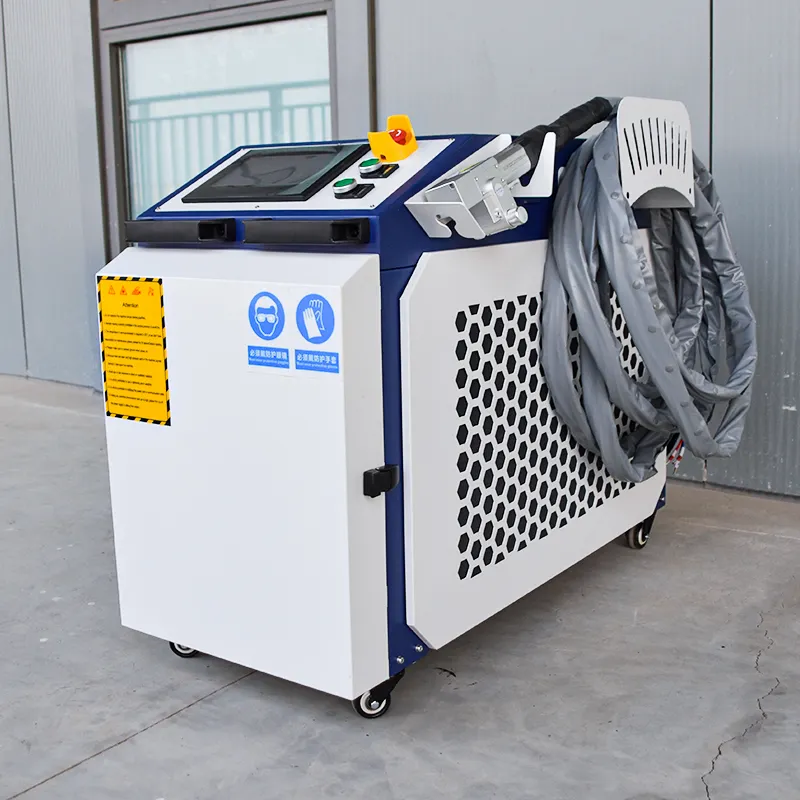
Understanding Laser Safety Features and Risk Mitigation
Class-1 vs Class-4 Laser Safety Ratings and Their Implications
The ANSI standards categorize laser cleaning equipment into four different danger categories. The lowest risk comes from Class 1 lasers which aren't really dangerous when operated normally. But things get serious with Class 4 systems that dominate most industrial cleaning operations. These bad boys can cause instant skin burns and even permanent eye injuries if someone gets too close. A look at recent safety data shows something alarming too. The 2022 industrial safety report found that Class 4 lasers were responsible for about 92% of all laser accidents in workplaces. That statistic alone makes it clear why proper warning labels matter so much, along with making sure operators know exactly what they're dealing with before turning these powerful tools on.
Integrated Safety Interlocks and Emergency Stop Mechanisms
Today's laser cleaning setups come with built-in safety measures like motion sensors that shut things down automatically and those dual key switches that need both hands to start. The emergency stop buttons should be placed where operators can reach them easily from any angle during operation. These buttons are wired into special circuits designed to kill the power in half a second flat. Looking at actual shop floor data from recent safety checks, facilities report about a two thirds drop in unexpected laser beams escaping when they upgrade to these newer systems with proper safeguards.
Controlled Access Zones, Warning Signs, and Beam Exposure Risks
Work areas should follow a three-tiered access protocol:
- Restricted zones: A minimum 1.5m radius around the operating laser, protected by light-curtain barriers
- Visual indicators: Amber strobe lights during standby and red lights during active emission
- Exposure limits: Maximum permissible exposure (MPE) maintained below 100mJ/cm² on reflective surfaces
Operators must perform daily infrared leakage checks, as undetected collateral radiation accounts for 38% of beam exposure incidents.
Balancing Usability and Safety in Handheld Laser Cleaning Machine Design
Recent improvements in ergonomics for portable units feature pressure sensitive grips which automatically shut off the laser if it gets dropped. There's also auto dimming focus systems that stop those intense stationary beams from forming, plus haptic feedback triggers letting operators know they're getting close to dangerous temperature levels. A lot of companies are switching to magnesium alloy cases these days because they can handle heat up to around 260 degrees Celsius while still keeping the whole unit under 2.5 kilograms weight limit needed for accurate work. The results speak for themselves too field tests showed almost half (about 41%) fewer mistakes caused by operator fatigue since these new designs came into play.
Essential Personal Protective Equipment (PPE) for Laser Cleaning Machine Operators
Laser-Specific Protective Eyewear: Matching Wavelength and Power Output
Operators must wear eyewear specifically rated for the laser’s wavelength to prevent retinal injury. For example, a 1064nm fiber laser requires optical density (OD) 5+ glasses compliant with EN 207 standards. Using mismatched filters can reduce protection effectiveness by 94%, according to ILSC 2023, emphasizing the need for manufacturer-specific calibration.
Flame-Resistant Clothing and Respiratory Protection During Operation
Full-body flame-retardant suits certified to EN ISO 11611 minimize burn risks from sparks or molten debris. When removing paint or coatings, operators should also wear NIOSH-approved N95 respirators to guard against toxic nanoparticles smaller than 2.5 microns. In Europe, PPE selection and testing must comply with EU Regulation 2016/425.
PPE Compliance Protocols and Operator Accountability
Daily inspections and quarterly fit-testing reduce exposure risks by 62% compared to inconsistent practices. Facilities should implement LOTO (Lockout/Tagout) procedures with RFID-tagged PPE to monitor usage. Mandatory certification programs—including annual emergency scenario simulations—help ensure accountability across shifts.
Creating a Safe and Effective Work Environment for Laser Cleaning
Ventilation and Fume Extraction Systems for Hazardous Byproducts
Proper handling of fumes matters a lot when running laser cleaning machines. The best setups include ventilation systems with those HEPA filters that trap around 99.97% of stuff floating in the air. For areas where there might be flammable dust buildup, we need explosion proof extractors instead. Getting good results means placing intake vents no more than three feet away from where actual work happens. This helps grab those tiny particles before they spread around, especially since some contain dangerous heavy metals. Following these guidelines keeps things safe according to what OSHA says about acceptable levels of exposure for workers.
Fire Safety Precautions When Operating Near Flammable Materials
Keeping at least fifteen feet between the laser cleaning equipment and anything flammable like solvents or oily materials is pretty much non-negotiable. Most shops also need to get those Class K fire extinguishers installed somewhere nearby, along with heat resistant barriers that can stand up to around 1800 degrees Fahrenheit if something goes wrong. The barriers help contain any sparks or heat that might escape during operation. According to some recent numbers from last year's industrial safety reports, facilities that actually implemented these laser specific fire curtains saw about sixty two percent fewer problems with overheating situations compared to places sticking with regular safety measures. Makes sense when you think about it really.
Electrical Safety, Proper Grounding, and Environmental Controls
All equipment should meet NFPA 70E standards for arc flash protection. Grounded workstations reduce stray voltage risks by 89%. Use voltage regulators with ±2% tolerance to stabilize power supply and protect sensitive laser diodes. Maintain ambient humidity below 60% RH to prevent condensation that could lead to electrical faults.
Work Area Organization and Controlled Access Protocols
Adopt a three-zone system:
- Red Zone: Active laser operation—restricted to authorized personnel only
- Yellow Zone: Equipment staging for pre- and post-processing tasks
- Green Zone: Administrative or observation areas
Use interlocked gates with RFID authentication and floor markings that meet ANSI Z535.1 visibility requirements. Facilities using this layered approach experienced a 78% reduction in unauthorized access incidents (National Safety Council, 2022).
Machine Setup, Calibration, and Operational Best Practices
Proper Laser Cleaning Machine Setup and Workpiece Stabilization
Make sure the laser cleaning machine sits on something that won't shake around too much so the beam stays consistent throughout operation. Workpieces need to be clamped down tight because even tiny movements, maybe half a millimeter or so, can really mess up the cleaning job by cutting precision almost in half sometimes. The nozzle should point straight at what needs cleaning, not angled at all. Keep it at whatever distance the maker suggests, usually somewhere between 150 and 300 millimeters away from the surface. Getting this right makes all the difference for focusing the laser properly and getting good results.
Calibration for Optimal Beam Parameters: Power, Frequency, and Scan Speed
When dealing with different kinds of contamination, it's important to tweak the power output accordingly. Lower frequencies in the range of around 20 to 50 kHz work best against those stubborn thick rust layers that just won't budge. For more delicate surfaces and coatings though, going up to about 100-200 kHz makes much more sense. The scan speed needs adjusting too, somewhere between 500 and 5000 mm per second basically depends on how hard the material is. Always good practice to run some test patches first before committing to full scale operations. Believe it or not, most problems with ineffective cleaning actually come down to getting these parameters wrong. That's why professionals spend so much time fine tuning their setups through multiple rounds of calibration until everything clicks into place properly.
Startup and Shutdown Procedures for Safe Operation
Always hit the emergency stop button first when turning on the control panel so nothing starts running accidentally. After making sure all those safety locks and air vents are actually working properly, run a quick low power diagnostic beam check. When shutting things down, let the cooling system bring the laser diode temp down under 40 degrees Celsius before cutting power completely. Sudden shutdowns without proper cooling cause about a quarter of all diode problems we see in factories these days according to industry reports.
Real-Time Process Monitoring and Performance Adjustments
Infrared thermal sensors are really useful for spotting when surface temperatures deviate beyond plus or minus 10 percent. These kinds of fluctuations often indicate something's wrong with the ablation process. When working with lasers, it makes sense to adjust those pulse durations between fifty and two hundred nanoseconds so we can maintain heat affected areas below twenty micrometers. For anyone running these systems, checking how fast debris gets removed every fifteen minutes is pretty important. There are standard benchmarks out there for comparison. The thing is, if too much residue builds up over time, it actually changes how well the laser works. We've seen cases where absorption drops by around thirty five percent after extended operation periods because of this buildup issue.
Operator Training, Maintenance, and Long-Term Efficiency
Comprehensive operator training and certification standards
Safe and efficient operation of a laser cleaning machine requires structured training covering laser physics, hazard recognition, and equipment-specific protocols. Certification should align with ANSI Z136.1 laser safety standards, ensuring operators understand power thresholds, reflection hazards, and material compatibility. Facilities implementing tiered certification report 23% fewer safety incidents (OSHA, 2022).
Hands-on simulation, competency assessments, and emergency drills
VR-based simulations replicate 97% of real-world laser cleaning scenarios, enabling safe practice of responses to beam misalignment or fire emergencies. Monthly emergency drills improve response times by 41% in controlled studies, reinforcing rapid shutdown and evacuation coordination.
Routine maintenance schedules and component inspections
| Maintenance Task | Frequency | Critical Components |
|---|---|---|
| Optical Inspection | Daily | Lenses, mirrors, beam delivery |
| Cooling System Check | Weekly | Chillers, filters, tubing |
| Power Calibration | Monthly | Laser source, power supply |
Following this schedule prevents 82% of common performance issues in industrial environments.
Data point: 78% of laser downtime linked to neglected preventive maintenance (OSHA, 2022)
Operational logs indicate that skipping quarterly alignment checks leads to 3.2 times more unplanned outages. Proactively replacing high-wear components like galvanometer motors extends machine lifespan by 15–20% compared to reactive maintenance strategies.
FAQ Section
What are the main safety concerns with Class 4 lasers?
Class 4 lasers pose significant risks, including instant skin burns and permanent eye injuries. They account for about 92% of all laser accidents in workplaces, emphasizing the importance of proper safety protocols.
How do integrated safety features in laser setups help?
Integrated safety features like motion sensors and emergency stop mechanisms help prevent accidental laser operation and ensure quick power cut-off in emergencies, reducing the risk of unexpected laser beams escaping.
What personal protective equipment is essential for laser operators?
Essential PPE includes laser-specific protective eyewear, flame-resistant clothing, and N95 respirators to protect against retinal injuries, burns, and toxic nanoparticles during laser cleaning operations.
Why is regular maintenance of laser equipment crucial?
Regular maintenance like optical inspection and power calibration prevents common performance issues and reduces laser downtime, ensuring efficient and safe operation in industrial settings.
Table of Contents
- Understanding Laser Safety Features and Risk Mitigation
- Essential Personal Protective Equipment (PPE) for Laser Cleaning Machine Operators
- Creating a Safe and Effective Work Environment for Laser Cleaning
- Machine Setup, Calibration, and Operational Best Practices
- Operator Training, Maintenance, and Long-Term Efficiency
- FAQ Section