 EN
EN



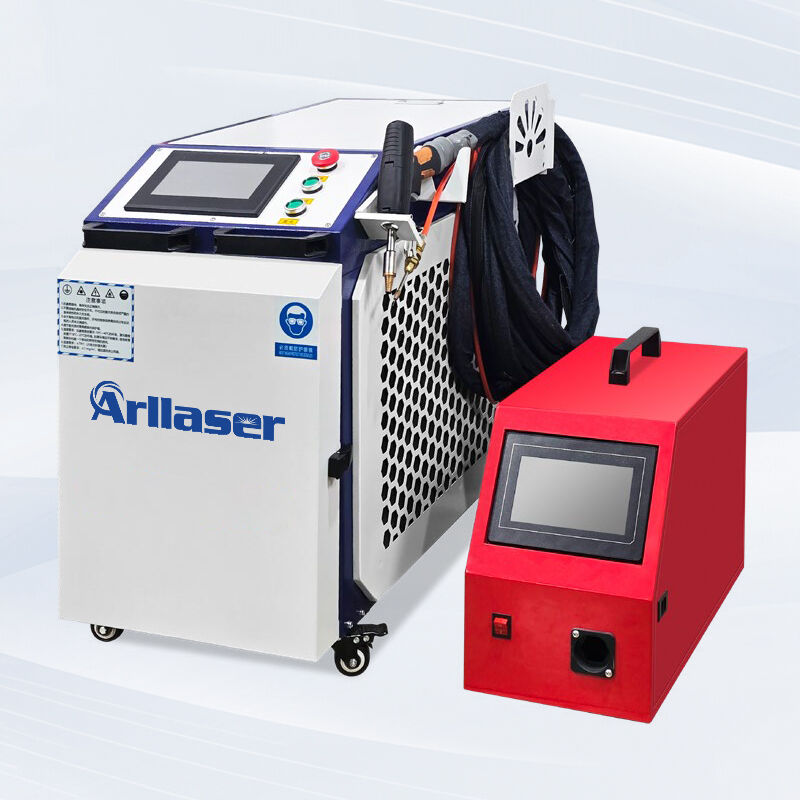
Rising Demand for Speed and Efficiency in Industrial Welding
The industrial world has really ramped up its demands for faster welding these days, especially among companies focused on lean manufacturing practices. With handheld laser welders hitting speeds between 14 to 22 inches per minute according to Fabrication Tech Report from last year, factories can cut down their production cycles by almost half. Big names in automotive and aerospace have seen dramatic improvements too. One industry insider mentioned that project delays dropped by around 72% once they switched over. Why? Because these new tools let workers join different kinds of metals together in just seconds flat. Think about it: something that used to take a trained welder 15 whole minutes with TIG equipment can now be done practically instantaneously. This kind of speed revolution is changing how manufacturers approach metal joining across multiple industries.
How Handheld Laser Welders Transform Traditional Workflow Dynamics
These systems cut down on non-welding labor significantly because they don't require those costly consumable electrodes anymore and streamline the setup process. According to recent studies published in Welding Journal last year, this approach saves around two thirds of what used to be spent on non welding tasks. Take one factory in the Midwest for instance they saw their job switching speed jump almost tenfold after swapping out those bulky fixed robotic setups for portable laser equipment. Setup times dropped dramatically from about 45 minutes down to just over five minutes now. What makes these new tools so effective? Their six axis movement lets them reach into all sorts of tricky spots where traditional rigid arms simply can't go. As a result, many companies working with structural steel report roughly a third fewer instances of having to fix things twice. This kind of improvement matters a lot when dealing with tight deadlines and quality control requirements.
Growing Adoption in High-Volume and Precision-Driven Production Environments
According to recent data from NIST in 2023, handheld laser welders make up around 38 percent of all new welding systems bought for medical devices and electronic manufacturing. These tools have a beam precision down to 0.1 mm which cuts down on weld defects by about three quarters when compared with older plasma arc techniques. Take one manufacturer of stainless steel enclosures as an example they saw their monthly production jump by nearly two thirds after switching over. What used to take workers eight whole hours of grinding after welding? Now it's finished in just twenty minutes per batch, saving both time and money across operations.
Labor Cost Reduction Through Enhanced Operational Efficiency
Lower Labor Costs with Handheld Laser Welder Automation and Simplicity
These tools automate repetitive tasks previously requiring manual arc welding expertise. With preset parameters and guided interfaces, setup time is reduced by 40-60% (Fabrication Institute 2023). Operators achieve production-ready welds in 5-10 minutes—a 70% improvement over conventional systems—freeing certified welders for complex assignments while less-experienced staff manage routine work.
Case Study: Labor Savings in Automotive Component Fabrication
A Tier 1 auto parts supplier cut welding labor hours by 45% after adopting handheld laser systems for exhaust component production. Portability enabled operators to complete 12.3 joints/hour versus 4.7 with TIG welding, reducing reliance on overtime. Post-implementation data revealed a $18.50/hour savings per workstation, amounting to $389,000 annually across 23 production lines.
Optimizing Workforce Allocation by Reducing Dependency on Highly Skilled Welders
Cutting back on those advanced welding certs let manufacturers move around their workforce pretty dramatically according to a recent 2023 survey across aerospace factories. About two thirds of certified welders got reassigned to research and quality control positions instead. And guess what? The teams noticed something interesting - way fewer defects needing fixes. Around 8 out of 10 times there was no need to redo work, which saved everyone headaches and money down the line. What's really cool is how this approach makes scaling production easier without hiring tons of specialists. Training new people? That used to take half a year but now they can get up to speed on basics in just three weeks flat.
Faster Welding Speeds and Higher Job Completion Rates
Handheld Laser vs. Traditional Arc Welding: A Speed Comparison
Laser welders held in hand work anywhere from half to double the speed of traditional arc welding techniques because they don't need multiple passes and create much smaller heat affected areas. Take MIG welding for instance it forces operators to move slower just to manage those big molten pools. But with laser systems, most welds get done in one smooth motion at speeds reaching 30 millimeters per second. Another major plus point is practically no spatter or slag formation, which cuts down on all that tedious preparation and cleaning work that usually takes forever. Industry reports suggest this alone saves about two thirds of what would otherwise be spent on post weld maintenance.
Realizing 3x Faster Processing Times in Metal Fabrication Shops
Shops report completing projects three times faster when using handheld laser welders. A 2023 case study involving stainless steel enclosures showed a 70% reduction in cycle times due to faster weld speeds and automated precision. These gains allow shops to meet tight deadlines without sacrificing quality, especially in high-volume runs.
Improving Throughput with Scheduling Optimization Based on Speed Gains
Integrating laser welding speeds into production planning increases daily output by 20-35%. Automotive part producers, for example, reallocated saved time to downstream processes like assembly, easing bottlenecks. This synchronization ensures consistent throughput during peak demand.
| Metric | Handheld Laser Welder | Traditional Arc Welding |
|---|---|---|
| Average Travel Speed | 20-30 mm/s | 5-10 mm/s |
| Post-Weld Cleanup Time | 10-15 minutes | 45-60 minutes |
| Heat Input per Weld | Low | High |
Laser welding’s precision reduces rework rates by up to 40%, further accelerating completion.
Superior Weld Quality and Reduced Post-Weld Finishing
Precision Control Delivers Consistently High-Quality Welds
The handheld laser welder cuts down on welding defects by around 60 percent compared to old school arc welding techniques according to the Industrial Welding Report from last year. This happens because these devices align their beams so precisely and control heat input much better than traditional methods do. As a result, problems like porosity and undercutting become far less common. Even when working with really thin materials under half a millimeter thick or dealing with complicated joint designs, these welders maintain consistent quality. For companies that need to work with corrosion resistant alloys, the results are impressive too. Most manufacturers report getting close to 99 percent success rate on their first attempt at welding, which means dramatically reduced costs for fixing mistakes later on.
Minimal Grinding and Cleanup Required After Handheld Laser Welding
Laser welds are spatter-free, with surface roughness values (Ra) averaging 3.2 μm—70% smoother than MIG welds. A 2024 analysis found 73% less grinding time and 90% fewer abrasive disc replacements due to the narrow fusion zone (0.1-0.3 mm), which prevents excessive material buildup.
Case Study: Improved Surface Finish in Stainless Steel Enclosures
A manufacturer of food-grade processing equipment reduced post-weld polishing labor by 40% after switching to handheld laser welding for 316L stainless steel joints. Final finishes met ISO 2143:2019 sanitary standards without manual blending—critical in industries where hygiene and aesthetic consistency are paramount.
Easier Training, Lower Fatigue, and Improved Operator Retention
Reduced Learning Curve Accelerates New Welder Onboarding
Handheld laser welders simplify training by reducing dependence on advanced skills. New operators typically reach proficiency 60% faster thanks to intuitive controls and automated guidance. Standardized parameters ensure consistent results, allowing manufacturers to scale quickly without compromising quality.
Ergonomic Design Reduces Operator Fatigue Compared to Traditional Tools
Studies show a 40% reduction in operator fatigue versus arc welding torches. Weighing under 4 lbs with balanced design, these tools minimize wrist strain during extended use. Integrated cooling eliminates bulky external equipment, enhancing mobility in confined spaces. As a result, eight-hour shifts require 22% fewer rest breaks.
Improved Worker Retention Due to Less Physical Strain and Safer Operation
Factory managers have noticed around a third better retention rates among welders who switch over to laser welding equipment. Without all those harmful fumes hanging around and the blinding UV light exposure, workers face fewer long term health issues. Plus, the machines don't vibrate nearly as much as traditional setups, staying well within what OSHA considers safe limits. What really matters for many shops is that older welders can keep working longer too. Most stay on the job about six to eight extra years because their bodies aren't taking such a beating anymore. That kind of longevity helps fill gaps when finding qualified welders has become so tough these days.
FAQ
What are handheld laser welders typically used for?
Handheld laser welders are commonly used in industries like automotive, aerospace, medical devices, and electronics manufacturing to join various metals due to their speed and precision.
How do handheld laser welders improve production efficiency?
They reduce setup and welding times, lower reliance on experienced welders, and avoid multiple passes, contributing to faster production cycles and lower labor costs.
Can handheld laser welders be used for high-precision work?
Yes, they are capable of high-precision welding with beam accuracy down to 0.1 mm, reducing weld defects significantly.
Are handheld laser welders safe to use?
Yes, they are safer compared to traditional methods as they produce fewer fumes and minimize UV light exposure, reducing long-term health risks.
Table of Contents
- Rising Demand for Speed and Efficiency in Industrial Welding
- How Handheld Laser Welders Transform Traditional Workflow Dynamics
- Growing Adoption in High-Volume and Precision-Driven Production Environments
- Labor Cost Reduction Through Enhanced Operational Efficiency
- Faster Welding Speeds and Higher Job Completion Rates
- Superior Weld Quality and Reduced Post-Weld Finishing
- Easier Training, Lower Fatigue, and Improved Operator Retention
- FAQ