 EN
EN


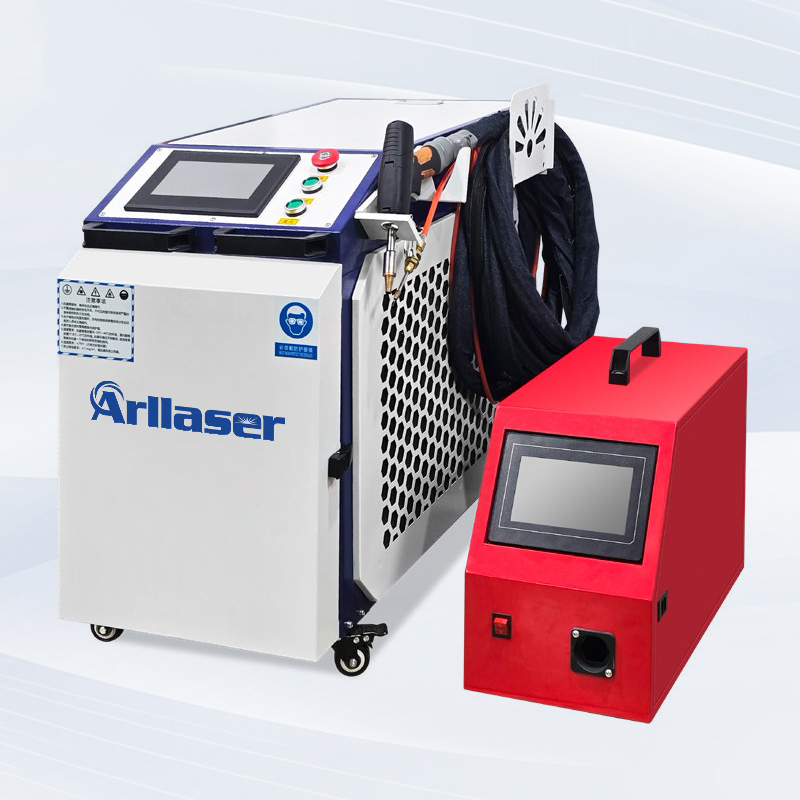
How Industrial Laser Welding Machines Improve Production Quality
Modern manufacturing has entered a dynamic era where speed and precision are not merely goals but absolute requirements for maintaining a competitive edge in the global market. As industrial sectors shift away from traditional manual techniques toward automated, high-precision alternatives, the widespread adoption of industrial laser welding technology has become a definitive benchmark for operational quality. Achieving consistent, high-level results in metal fabrication is no longer simply about relying on human intuition; it is about harnessing the physics of concentrated light and the undeniable reliability of advanced machinery. Arllaser continues to drive this technological evolution, providing the technical infrastructure that allows diverse manufacturing enterprises to meet the stringent demands of global industry standards.
Technical Superiority Through Advanced Fiber Laser Systems
At the core of superior production quality lies the fundamental mechanism of heat application. Unlike legacy welding methods like TIG or MIG, which typically rely on broader and less focused heat sources, modern fiber laser welding concentrates intense energy into an incredibly microscopic point. This high energy density allows for rapid melting and instantaneous solidification, which significantly narrows the heat-affected zone within the metal. By drastically minimizing the thermal deformation of the surrounding base material, laser systems ensure that the intrinsic mechanical properties of the metal are preserved throughout the joining process. This preventative approach avoids the common warping, buckling, and structural fatigue frequently associated with older, more aggressive thermal joining processes. Furthermore, the localized nature of the laser beam allows for welding in tighter, more complex geometries that were previously considered impossible or overly risky for standard manual techniques.
Achieving Consistent Quality Through Microscopic Fusion
Practical manufacturing experience consistently demonstrates that maintaining uniformity across high-volume production cycles is the greatest challenge for factory managers. Laser welding systems excel by providing repeatable, surgical precision that remains stable across thousands of continuous cycles. The ability to control weld depth and width with extreme accuracy means that every single joint possesses identical structural integrity, effectively reducing the variance that often leads to internal inspection failures. For manufacturers producing critical components, medical devices, or high-end electronics, this level of microscopic fusion is essential. Reliable, uniform welds eliminate the common risks of leakage and fatigue failure, providing a level of quality assurance that traditional methods simply cannot replicate. The deep penetration achieved by fiber lasers also ensures that joints are structurally sound from root to surface, creating a seamless bond that stands up to severe environmental and mechanical stress tests over extended periods of operation.
Driving Operational Efficiency and Reducing Downstream Costs
Improving production quality is intrinsically linked to the ability to reduce the need for secondary rework. Traditional welding techniques often require extensive and time-consuming secondary processes, such as aggressive mechanical grinding, polishing, or intensive chemical cleaning to remove oxidation and splatter. Industrial laser welding, by contrast, delivers exceptionally clean and aesthetically pleasing welds that often require little to no finishing. This operational efficiency drastically shortens the overall production cycle. By integrating sophisticated laser solutions, manufacturers reduce their reliance on highly specialized labor for finishing tasks, lower the consumption of expensive consumables, and significantly decrease the total cost per unit while simultaneously elevating the market value of the final product. Beyond the immediate labor savings, the reduction in scrap rates and material waste represents a substantial improvement in resource management and environmental responsibility, which are increasingly important considerations for modern, sustainable manufacturing operations.
Reliability as the Foundation of Long-Term Industrial Success
Advanced technical performance remains meaningless without sustained, long-term operational stability. A machine that delivers high-quality welds on the first day but experiences unpredictable performance fluctuations after a few weeks becomes a liability rather than an asset. Professional-grade laser systems are engineered to withstand the rigorous demands of continuous industrial use. These systems feature high-performance cooling units, stable power distribution systems, and robust optical protection mechanisms. Investing in equipment that maintains perfect optical alignment and beam quality throughout its entire lifespan is the primary method for ensuring that production quality remains a constant, rather than a variable, in the broader manufacturing equation. Stability in the beam profile translates directly into stability in the weld quality, which is the cornerstone of trust between manufacturing suppliers and end-market consumers.
The Arllaser Advantage in Precision Manufacturing
The most effective strategy for guaranteeing consistent production quality is to partner with a manufacturer that prioritizes industrial-grade reliability starting from the initial design phase. Arllaser bridges the critical gap between complex laser physics and the practical, day-to-day requirements of the modern factory floor. By continuously refining laser welding systems to meet stringent international standards, Arllaser provides high-performance equipment that stands up to the heavy demands of automotive, aerospace, and general metal fabrication sectors. Through a robust global supply chain and precise manufacturing capabilities, Arllaser delivers durable, efficient, and high-precision tools tailored to meet specific industrial needs. By offering comprehensive post-sales support—including expert online technical assistance, remote diagnostics, and detailed installation training—Arllaser empowers manufacturing partners to focus on what matters most: scaling operations and achieving sustainable business success. Choosing Arllaser signifies a commitment to long-term manufacturing excellence and reliable, high-performance production cycles that define the future of precision welding and industrial assembly.
Table of Contents
- How Industrial Laser Welding Machines Improve Production Quality
- Technical Superiority Through Advanced Fiber Laser Systems
- Achieving Consistent Quality Through Microscopic Fusion
- Driving Operational Efficiency and Reducing Downstream Costs
- Reliability as the Foundation of Long-Term Industrial Success
- The Arllaser Advantage in Precision Manufacturing