 EN
EN



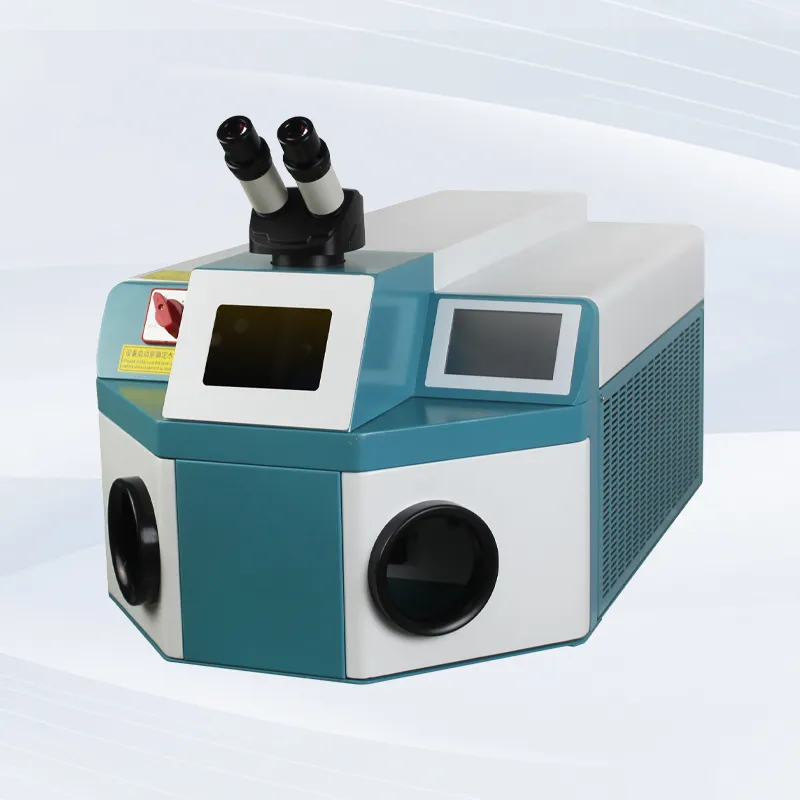
Boosting Efficiency and Precision with Robot Welding
Cycle Time Reduction Through Continuous, Optimized Robotic Operation
Robot welding systems operate continuously without fatigue, maintaining steady throughput that manual welders cannot sustain. Running 24/7 with minimal downtime for parameter adjustments, they compress cycle times significantly. Real-time sensors and adaptive control algorithms dynamically optimize travel speed and arc characteristics—eliminating wasted motion and unnecessary pauses. Integrated seam tracking compensates for part-to-part variation on the fly, reducing rework loops. As a result, production rates commonly increase by 30% or more, enabling manufacturers to scale output and meet tight deadlines without adding labor.
Sub-Millimeter Accuracy and Repeatability in High-Volume Production
Precision is foundational to robot welding. Programmed control over torch angle, travel speed, and heat input delivers repeatable welds with tolerances measured in tenths of a millimeter. In high-volume settings, every joint matches the last—ensuring consistent fusion and minimizing porosity. This accuracy stems from rigid mechanical arms combined with closed-loop feedback from laser or vision-based seam tracking systems. The outcome is uniform quality across thousands of parts, lowering post-weld inspection costs and scrap. For industries like automotive and aerospace—where dimensional integrity and structural reliability are non-negotiable—robot welding is not just advantageous but essential.
Ensuring Consistent Quality and Reducing Waste via Robot Welding
Real-time data logging transforms robot welding into a proactive quality assurance system. By capturing weld current, voltage, travel speed, and other critical parameters for every pass, the system enables Statistical Process Control (SPC). Operators detect deviations instantly and adjust before defects accumulate—reducing scrap, rework, and material waste. One leading tractor manufacturer reported a 22% drop in material waste after implementing robotic welding with real-time monitoring and SPC-driven feedback.
Statistical Process Control Enabled by Real-Time Robot Welding Data Logging
SPC depends on high-frequency, accurate process data—and modern robot welding cells deliver it. Each weld generates a parametric profile and, in many cases, a signature image from integrated sensors. When trends emerge—such as gradual voltage drift—the controller can flag anomalies, pause production, or auto-correct setpoints. This prevents defective batches from advancing to downstream processes. Over time, the accumulated data supports predictive maintenance and continuous process refinement, further stabilizing quality and yield.
72% Average Reduction in Rework Rates Across Tier-1 Automotive Suppliers (2023 SME Benchmark)
A 2023 benchmark study by SME found that tier-1 automotive suppliers achieved a 72% average reduction in rework rates after integrating real-time SPC into their robot welding lines. Because defects like porosity, lack of fusion, and spatter are identified at the moment of occurrence—not during post-weld inspection—fewer parts require grinding, repair, or scrapping. The result is lower consumable use, reduced labor for rework, faster throughput, and stronger compliance with OEM quality standards—translating to multimillion-dollar annual savings for high-volume facilities.
Enhancing Workplace Safety and Enabling Human-Robot Collaboration
Elimination of Arc Flash, Fume Exposure, and Ergonomic Hazards
Robot welding removes workers from direct exposure to arc flash, ultraviolet radiation, and hazardous fumes—including ozone, nitrogen oxides, and metal particulates linked to occupational respiratory disease. It also eliminates repetitive strain injuries associated with holding heavy torches, maintaining awkward postures, or performing sustained overhead welding. By automating these high-risk tasks, manufacturers significantly reduce incident rates, improve long-term workforce health, and strengthen compliance with OSHA and ISO 45001 safety standards.
Collaborative Robotics (Cobots) for Flexible, Rapidly Reconfigurable Welding Cells
Collaborative robots (cobots) extend automation’s reach into low-volume, high-mix environments where traditional fixed cells lack flexibility. Equipped with force-limiting joints, collision detection, and intuitive programming interfaces, cobots operate safely alongside humans—no safety cages required. Technicians can collaborate directly during tool changes, setup, or inline quality verification. According to the International Federation of Robotics (2023), global cobot shipments rose 25% year-on-year, reflecting growing adoption for rapid cell reconfiguration. A single cobot can be redeployed across multiple stations in hours—not weeks—accelerating changeovers and supporting agile manufacturing strategies.
Integrating Robot Welding into End-to-End Automated Manufacturing Systems
PLC- and MES-Level Synchronization for Seamless Production Monitoring and Traceability
True operational value emerges when robot welding cells integrate natively with factory-wide control systems. Synchronizing with programmable logic controllers (PLCs) and manufacturing execution systems (MES) enables real-time production monitoring, automated data logging, and full weld traceability. Every weld’s parameters, cycle time, and error status feed directly into the MES—supporting root-cause analysis, quality audits, and lean performance metrics. This end-to-end connectivity transforms the welding station from an isolated workstation into an intelligent node within a responsive, data-driven production network—enhancing both operational agility and regulatory compliance.
FAQ
What are the primary benefits of robot welding?
Robot welding offers numerous benefits, including reduced cycle times, high precision, consistent quality, lower material waste, enhanced workplace safety, and integration into automated manufacturing systems.
How does real-time data logging improve robot welding processes?
Real-time data logging enables statistical process control (SPC) by capturing critical weld parameters, allowing for immediate detection of deviations and adjustments. It also supports predictive maintenance, reducing rework rates and material waste over time.
What industries commonly rely on robot welding?
Industries such as automotive, aerospace, and heavy machinery manufacturing commonly rely on robot welding due to its precision, repeatability, and ability to meet stringent quality standards.
What safety advantages does robot welding provide?
Robot welding eliminates direct worker exposure to arc flash, hazardous fumes, and ergonomic strain, thereby improving workplace safety and reducing the risk of occupational injuries or illnesses.
What are collaborative robots (cobots), and how are they used in welding?
Cobots are robots designed for direct human collaboration. In welding, they allow for flexible, reconfigurable automation, particularly in low-volume, high-mix production environments, without requiring safety cages.