 EN
EN



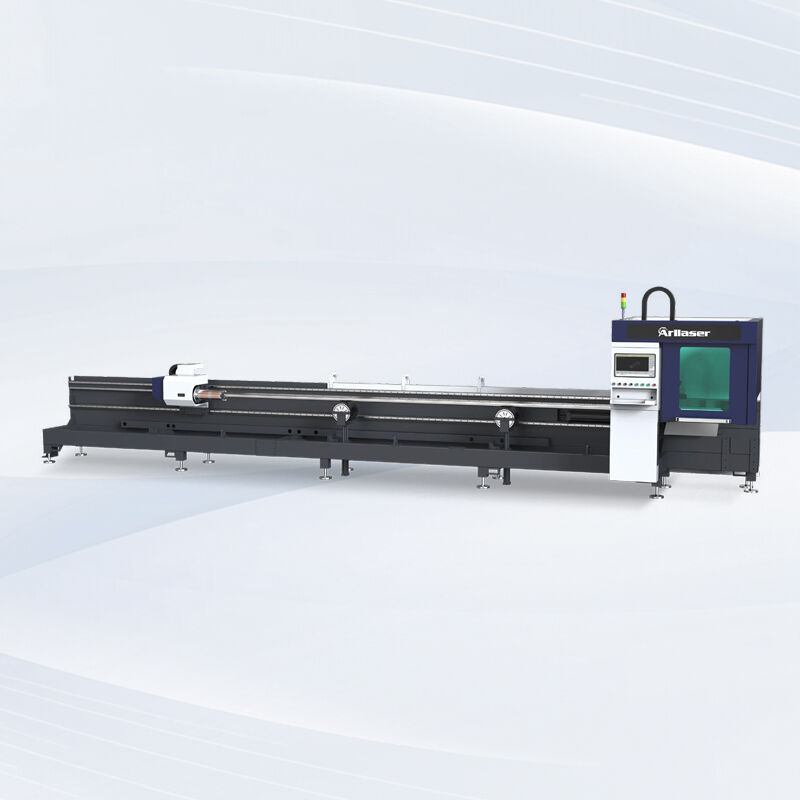
Core Preventive Maintenance Schedule for Laser Tube Cutting Machines
Daily, Biweekly, and Monthly Maintenance Tasks to Prevent Degradation
A tiered maintenance schedule is essential to prevent premature wear and sustain cutting accuracy in laser tube cutting machines.
Daily tasks focus on early issue detection:
- Visually inspect mechanical components (screws, hoses, drive belts) for looseness, cracks, or deformation
- Clean optics—including focus lens, protective window, and nozzle—with manufacturer-approved anhydrous alcohol and lint-free wipes before operation
- Verify coolant levels and confirm chiller temperature remains within the 15–25°C operating range
Biweekly routines maintain motion system efficiency: lubricate X/Y-axis rails and gears using rail-safe grease to reduce friction-induced wear and positional drift.
Monthly protocols safeguard system integrity: check electrical connections for corrosion or overheating, replace compressed-air filters to prevent moisture ingress into pneumatic systems, and drain/refill auto-lube reservoirs to ensure consistent lubrication delivery.
Consistent execution of this schedule reduces emergency repairs by 40% and extends machine service life by 2–3 years compared to reactive-only approaches.
Annual System Audits: Critical Checks for Optics, Cooling, and Motion Systems
Annual audits serve as a comprehensive health check—validating precision, thermal stability, and structural reliability across core subsystems.
Technicians perform full geometric calibration of motion axes to correct positioning drift exceeding ±0.1 mm. Optics audits assess beam alignment accuracy and replace protective windows when contamination exceeds 5% visible residue or micro-cracks appear. Cooling systems undergo complete flushing with fresh coolant, conductivity testing (<20 µS/cm), and thermostat recalibration to maintain stable 15–25°C operation. Motion system verification includes ball screw tensioning, servo motor response validation, and thermal imaging to detect latent issues like winding degradation or resistive heating in connections.
Facilities conducting structured annual audits report 30% fewer unplanned downtimes and sustain cutting precision within ±0.05 mm tolerance over five or more years.
Optics Care and Beam Alignment for Consistent Cut Quality
Optical integrity directly governs beam quality, cut consistency, and edge finish. Contamination on lenses or mirrors degrades beam transmission and focus stability by up to 30%, according to Industrial Laser Review (2023). Left unaddressed, even minor residue accelerates thermal lensing and increases focal spot size—reducing power density and compromising material penetration.
Cleaning and Inspection Protocols for Focus Lens, Protective Window, and Nozzle
Daily inspection and cleaning are the first line of defense:
- Clean the focus lens with anhydrous alcohol and lint-free wipes before each shift—never after operation, when residual heat may cause solvent streaking
- Inspect nozzles for spatter buildup exceeding 0.5 mm thickness; clean or replace to maintain gas flow symmetry and assist gas pressure consistency
- Replace protective windows showing clouding, micro-cracks, or permanent etching—even if visually subtle—as they scatter beam energy and increase thermal load on downstream optics
Maintain a dated logbook tracking contamination frequency, severity, and replacement intervals to identify root causes such as inadequate air filtration or misaligned assist gas nozzles.
Mirror and Lens Contamination Thresholds and Realignment Best Practices
Realign optics proactively—not reactively—when contamination reaches >5% surface coverage or when cut quality declines (e.g., inconsistent kerf width, increased dross, or reduced edge squareness).
Best practices include:
- Using calibrated alignment targets and low-power (<10% nominal) test pulses to verify beam centering at all optical junctions
- Adjusting mirror mounts in precise 1/8-turn increments while monitoring beam path deviation with a thermal paper or IR viewer
- Measuring final focal spot size and symmetry post-realignment to confirm diffraction-limited performance
For CO₂ lasers, schedule professional beam alignment quarterly due to thermal drift from repeated heating/cooling cycles. Facilities performing structured annual audits reduce unscheduled realignments by 40%, per findings in the Precision Engineering Journal.
Chiller and Coolant Management to Sustain Laser Tube Thermal Stability
Stable thermal management is non-negotiable for laser tube longevity and beam consistency. Coolant degradation—through biological growth, particulate accumulation, or ionic contamination—directly impairs heat transfer, increasing tube operating temperature and accelerating electrode erosion.
Industry standards (ISO 11553-1, ANSI Z136.1) recommend replacing coolant every 3–6 months, depending on ambient conditions and usage intensity. Conduct weekly conductivity checks: values exceeding 20 µS/cm signal dissolved solids buildup that promotes corrosion and scaling. Quarterly thermostat calibration ensures chiller output stays within the critical 15–25°C window—deviations beyond this range induce beam defocusing during extended cuts and elevate electrode stress by up to 40%. In CO₂ lasers, sustained operation above 25°C can cause irreversible crystal lattice damage within just 50 hours.
Mechanical and Electrical Integrity Checks for Reliable Operation
Mechanical and electrical integrity underpins repeatable motion control, safety compliance, and long-term reliability.
Electrical inspections must verify contact integrity across power terminals, grounding bonds, and safety interlocks—including functional monthly testing of emergency stop circuits. Per the Industrial Safety Journal (2023), this practice reduces electrical fire risk by 30%.
Mechanically, inspect bearings, linear guides, and drive belts for abnormal wear, pitting, or slack every 500 operating hours. Calibrate torque settings on structural fasteners quarterly: vibration-induced loosening accounts for 17% of positional inaccuracies in high-duty-cycle environments.
Functional load testing—performed annually—validates cutting head alignment, axis synchronization, and dynamic repeatability under real-world feed rates and acceleration profiles. Combined with thermal imaging to detect hidden resistance hotspots or motor winding anomalies, these checks preserve dimensional accuracy while minimizing unplanned downtime.
FAQ
Q: How often should optics be cleaned on a laser tube cutting machine?
A: Optics, including the focus lens and protective window, should be cleaned daily using anhydrous alcohol and lint-free wipes before operation to maintain beam quality and cutting precision.
Q: How frequently should coolant be replaced?
A: Coolant should be replaced every 3–6 months, depending on ambient conditions and machine usage intensity. Conduct weekly conductivity checks to monitor dissolved solids buildup.
Q: What are signs that optics alignment is required?
A: Declines in cut quality such as inconsistent kerf widths, increased dross, or reduced edge squareness indicate optics alignment may be necessary. Additionally, contamination exceeding 5% surface coverage warrants realignment.
Q: Why are annual system audits important?
A: Annual audits validate the overall health of the machine—ensuring precision, thermal stability, and integrity across subsystems. These audits reduce unplanned downtime and enhance long-term accuracy.
Q: What impact does coolant temperature have on laser performance?
A: Maintaining coolant temperature within the 15–25°C range is critical. Deviations can lead to beam defocusing, electrode stress, and increased wear, compromising performance and longevity.