 EN
EN



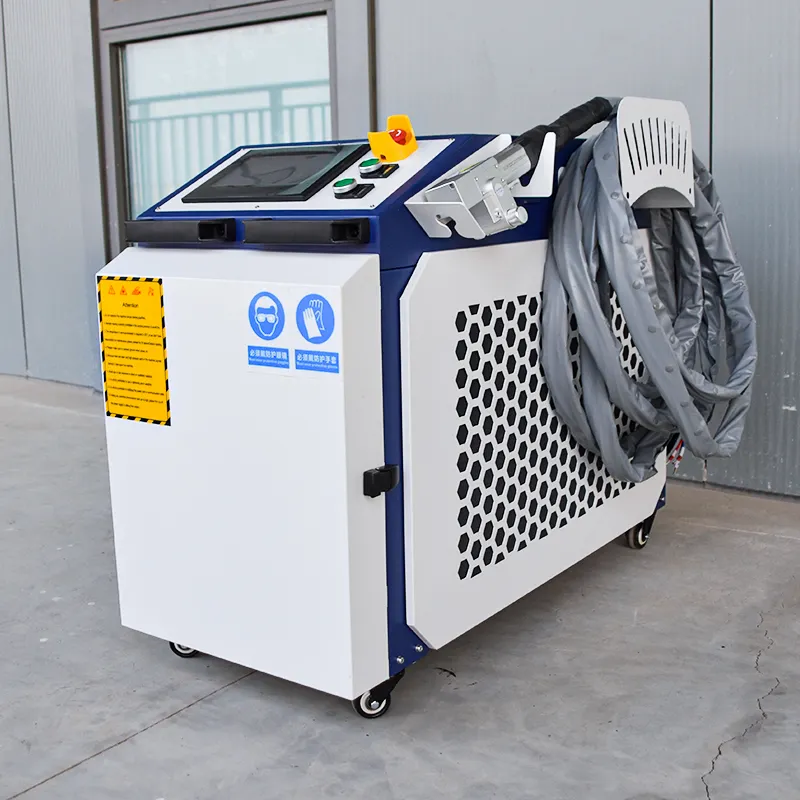
How a Laser Cleaning Machine Works: Precision, Non-Contact Ablation
Selective Ablation Mechanism: Removing Contaminants Without Damaging the Substrate
A laser cleaning machine removes surface contaminants—such as rust, paint, oxides, and organic residues—through selective ablation. This process exploits differences in optical absorption between the contaminant layer and the underlying substrate. Short, high-intensity laser pulses rapidly heat only the contaminant, causing instantaneous vaporization, sublimation, or explosive detachment. Because the substrate either reflects the laser wavelength or absorbs it below its damage threshold, its integrity remains fully preserved. This enables precise coating removal without altering metallurgical properties—a fundamental limitation of mechanical methods. In heritage conservation, for example, laser systems safely eliminate centuries-old soiling from limestone and marble sculptures without micro-etching or thermal stress, demonstrating true non-destructive capability.
Photothermal and Plasma-Induced Removal: Why Laser Cleaning Machines Excel on Sensitive Surfaces
Laser cleaning operates through two complementary physical mechanisms—especially critical for heat- or structure-sensitive substrates:
- Photothermal ablation, where rapid energy absorption vaporizes organic contaminants (e.g., oils, greases, thin polymers)
- Plasma-induced shockwaves, generated when intense pulses ionize surface air or residue, producing transient micro-plasmas that launch mechanical shockwaves to lift inorganic particulates (e.g., rust, scale, ceramic dust)
On conductive surfaces like aluminum alloys or copper traces, plasma formation is especially efficient—and because nanosecond-scale pulses limit heat diffusion, thermal damage to adjacent polymers, composites, or thin-film electronics is avoided. Unlike abrasive techniques that inherently increase surface roughness, laser cleaning maintains original topography within ±2–5 μm tolerances—making it the preferred method for aerospace turbine blades, semiconductor tooling, and precision medical devices.
Sandblasting Fundamentals: Efficiency vs Inherent Limitations
Mechanical Erosion Process: How Abrasive Media Alters Surface Topography and Integrity
Sandblasting removes contaminants by propelling abrasive particles—steel grit, garnet, glass beads, or walnut shells—at high velocity onto a surface. Impact energy fractures and dislodges material layers through mechanical erosion. While effective for heavy rust or thick paint on structural steel, this process unavoidably modifies the substrate’s micro-topography: peaks and valleys form, increasing surface roughness (Ra) by 1–10 μm depending on media and pressure. Such texturing can improve coating adhesion—but at the cost of dimensional accuracy and fatigue resistance.
Key limitations include:
- Unintended material loss: Aggressive media may erode base metal, compromising wall thickness in piping or pressure vessels
- Subsurface damage: Repeated impacts can induce micro-fractures, residual stress, or work hardening in aluminum or titanium alloys
- Geometric distortion: Critical features—threads, seals, or tight-tolerance bores—risk over-erosion or profile deviation
These trade-offs make sandblasting poorly suited for precision components. Though media selection and pressure modulation help mitigate risk, outcomes remain operator-dependent—unlike the repeatable, programmable control offered by laser cleaning.
Head-to-Head Comparison: Precision, Safety, and Environmental Compliance
Precision & Repeatability: Micron-Level Control with a Laser Cleaning Machine vs. Operator-Dependent Sandblasting
Laser cleaning machines deliver consistent, micron-level removal—typically within ±3 μm—across complex geometries and sensitive substrates. This repeatability stems from digital pulse control, fixed wavelength targeting, and real-time monitoring integration. In contrast, sandblasting relies on manual technique, nozzle distance, angle, and media flow consistency—factors that introduce variability. Independent testing shows laser-treated surfaces achieve 97% dimensional and morphological consistency across batches; abrasive methods average just 68%, with higher standard deviations in Ra and coating adhesion readiness.
Worker Safety & Regulatory Risk: Dust Inhalation (Sandblasting) vs. Fume Management (Laser Cleaning Machine)
Sandblasting generates respirable crystalline silica dust—a known human carcinogen linked to silicosis, lung cancer, and COPD. OSHA estimates 15,000 new occupational illnesses annually from silica exposure, mandating costly engineering controls (e.g., blast rooms, HEPA filtration, PPE compliance programs). In 2023 alone, silica-related regulatory fines totaled over $1.5 million industry-wide. Laser cleaning eliminates airborne particulates entirely. While vaporized organics or metal oxides require fume extraction, these systems are simpler, quieter, and incur 74% lower compliance overhead than full-silica containment setups.
Environmental Impact: Zero Consumables and No Wastewater with Laser Cleaning Machines
Conventional abrasive blasting consumes 300–500 kg of media per operational hour—generating contaminated slurry that requires hazardous waste classification, treatment, and landfill disposal. It also demands large volumes of water for wet-blast variants or post-cleaning rinsing, contributing up to 40,000 liters weekly per unit in industrial settings. Laser cleaning uses electricity as its sole consumable. With no media, no wastewater, and no secondary waste streams, it aligns with ISO 14001 environmental management standards and supports zero-liquid-discharge (ZLD) facility goals.
When to Choose a Laser Cleaning Machine — And When Sandblasting Still Makes Sense
Selecting the optimal surface preparation method depends on four critical factors: precision requirements, material sensitivity, environmental regulations, and budget constraints.
Choose a laser cleaning machine when:
- Working with delicate or high-value substrates—such as aerospace alloys, electronic circuit boards, or historic artifacts—where micron-level accuracy prevents irreversible damage
- Operating under strict environmental or safety regulations (e.g., EPA, REACH, or facility ZLD policies) that prohibit hazardous media, wastewater discharge, or silica generation
- Prioritizing long-term operational economics: though initial investment is higher, laser systems reduce consumable, disposal, labor, and compliance costs by up to 60% over five years
Sandblasting remains viable for:
- Large-scale, low-precision applications on robust materials—such as structural steel bridges, concrete facades, or cast iron machinery—where controlled surface profiling is acceptable or even beneficial
- Projects with immediate capital constraints and short timelines, where rapid throughput outweighs long-term TCO considerations
- Environments with existing blast infrastructure and trained personnel, provided silica mitigation and waste handling protocols are rigorously maintained
Ultimately, the shift toward laser cleaning reflects broader industry priorities: tighter tolerances, sustainability mandates, and workforce safety. Yet sandblasting retains utility where speed, scalability, and cost-per-square-meter outweigh the need for substrate fidelity—making both technologies complementary rather than mutually exclusive.
FAQs
What is selective ablation in laser cleaning?
Selective ablation refers to a process where laser energy specifically targets and removes contaminants by exploiting their optical absorption differences, leaving the underlying substrate unharmed.
How does laser cleaning compare to sandblasting in precision?
Laser cleaning offers micron-level precision and repeatability, whereas sandblasting depends on manual techniques and can create variability in results.
Is laser cleaning safer for workers compared to sandblasting?
Yes, laser cleaning does not generate harmful silica dust, reducing occupational health risks compared to sandblasting, which can lead to silicosis and other respiratory issues.
What are the environmental benefits of using laser cleaning systems?
Laser cleaning has minimal environmental impact as it does not require consumables, generates no secondary waste, and aligns with ISO 14001 sustainability standards.
When is sandblasting preferable over laser cleaning?
Sandblasting is preferable for large-scale, low-precision projects on durable materials, especially when budget constraints and immediate results are priorities.
Table of Contents
- How a Laser Cleaning Machine Works: Precision, Non-Contact Ablation
- Sandblasting Fundamentals: Efficiency vs Inherent Limitations
-
Head-to-Head Comparison: Precision, Safety, and Environmental Compliance
- Precision & Repeatability: Micron-Level Control with a Laser Cleaning Machine vs. Operator-Dependent Sandblasting
- Worker Safety & Regulatory Risk: Dust Inhalation (Sandblasting) vs. Fume Management (Laser Cleaning Machine)
- Environmental Impact: Zero Consumables and No Wastewater with Laser Cleaning Machines
- When to Choose a Laser Cleaning Machine — And When Sandblasting Still Makes Sense
- FAQs