 EN
EN



Match Laser Type to Your Materials and Applications
Choosing the right laser cutting machine starts with matching the laser source to your primary materials and intended applications. Misalignment here causes poor cut quality, slow production, and wasted resources. Different laser types interact uniquely with material properties like reflectivity and thermal conductivity.
Fiber vs. CO2 Lasers: Material Compatibility and Thickness Limits
When it comes to metal processing, fiber lasers have become the go-to choice for many manufacturers these days. They can slice through stainless steel and aluminum sheets as thick as 30mm pretty quickly, which makes production lines much faster. The reason? Well, their 1-micron wavelength gets absorbed really well by conductive materials, so energy transfer is much more efficient compared to other laser types. On the flip side, CO2 lasers with their longer 10.6-micron wavelength work better with non-metal stuff. These babies handle wood, acrylic, and even leather beautifully, cleanly cutting through 25mm plywood without issue. But try using them on metals thicker than about 6mm and things start getting tricky fast. That's why shops often stock both kinds depending on what they need to cut on any given day.
| Aspect | Fiber Laser | CO2 Laser |
|---|---|---|
| Optimal Materials | Metals, dense plastics | Wood, leather, polymers |
| Thickness Limit | Up to 30mm (steel) | Up to 25mm (non-metals) |
| Cutting Speed | 3x faster on metals | Slower on metals |
Power requirements vary: cutting 10mm aluminum requires at least 1.5kW for fiber lasers, while CO2 systems need higher wattages for comparable non-metal thicknesses.
Diode Lasers and Emerging Hybrid Systems: Niche Use Cases
Diode lasers work great for hobbyists and small scale manufacturing when working with thin woods, fabrics, or engraving acrylics thinner than 5mm. The low power versions below 60 watts tend to be budget friendly options, though they just can't cut through thicker metals effectively. We're seeing some interesting new hybrid laser systems now on the market that mix CO2 and fiber technology together. These hybrids open up all sorts of possibilities for different materials - someone might cut metal brackets in the morning then switch to making wooden signs in the afternoon. Some even allow marking glass with special UV diodes at the same time they're engraving steel parts. While these combined systems save space by replacing multiple machines, operators need to know what they're doing since setup is more complicated. Job shops dealing with all kinds of different materials will find them particularly useful. But before jumping in, it's wise to test how well these systems handle specific projects with actual material samples first.
Assess Core Performance of Your Laser Cutting Machine
Power vs. Material Thickness: Real-World Cut Capacity Data
Laser power (measured in kW) directly dictates your machine’s material-handling capabilities. While manufacturers advertise maximum thicknesses, real-world cutting capacity varies significantly by material type and desired cut quality. For example:
- A 3kW fiber laser cuts 20mm mild steel at 0.8 m/min with clean edges
- A 6kW machine handles the same 20mm steel at 2.5 m/min and can pierce 25mm stainless steel
Higher wattage enables faster speeds on thin materials and feasible processing of thicker metals—but power alone doesn’t guarantee efficiency. Cutting 1mm aluminum with a 12kW laser wastes energy and increases operating costs by 15–20% compared to a 4kW system.
Precision, Kerf Width, and Beam Quality (M²) — What Specs Don’t Reveal
Precision hinges on beam quality (M²), where lower values indicate tighter focus. An M² ≤1.3 achieves kerf widths under 0.1mm in thin metals, enabling intricate designs. Yet published specs often omit critical real-world variables:
- Kerf consistency: Varies ±0.05mm across a sheet due to focal drift
- Heat distortion: Low M² beams reduce thermal spread, minimizing warping in <3mm acrylic
- Edge roughness: Rz ≤12µm requires optimized gas pressure and pulse frequency
Test cuts remain essential—spec sheets rarely reflect how assist gas purity or lens wear degrade precision over time.
Evaluate Automation, Integration, and Shop Floor Readiness
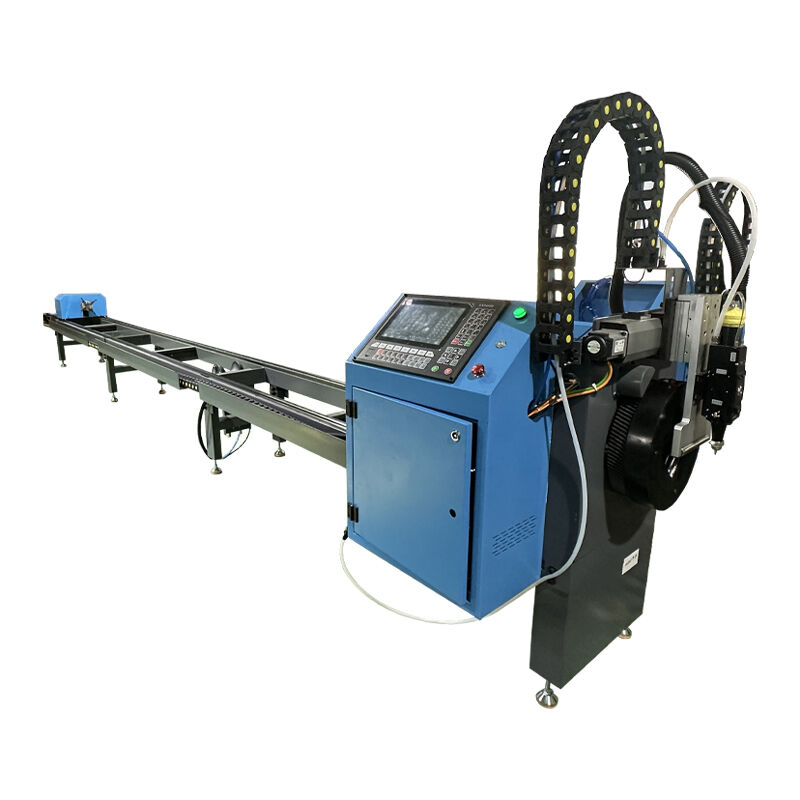
Sheet & Tube Integration: ROI for Multi-Format Laser Cutting Machine Setups
When sheet metal and tube processing happen on the same laser cutting machine, shops save time because they don't have to move materials back and forth between different machines. Changeover times drop somewhere between 30 to 50 percent, which makes a big difference when dealing with all sorts of materials in one day's work. The setup also takes up less room on the shop floor while still letting workers handle everything from building frames to electrical boxes without constantly adjusting fixtures. Many manufacturing plants see their return on investment within about 18 months thanks to streamlined training programs for operators, consistent maintenance routines, and better use of production capacity throughout shifts. Before buying though, make sure the control software actually works well together for both sheet and tube jobs. We've seen cases where poor synchronization between different cutting modes created serious delays down the line.
Prioritize Support, Service, and Lifecycle Value
The sticker price when buying a laser cutting machine actually accounts for just around 20 to 30 percent of what it will really cost over time. Most of the money ends up going towards things like regular maintenance, fixing problems as they come up, and dealing with those frustrating periods when the machine isn't working at all. Look for companies that offer good service packages where they promise to respond within 25 hours or less and keep spare parts nearby so there's less downtime. Check the warranty coverage too, especially for important parts such as the laser itself and the moving parts of the system, ideally getting at least three years protection. Many businesses find that spending a bit more initially on a machine can pay off big time in the long run. Machines that cost about 15 to 20 percent more upfront but need less maintenance each year tend to give back around 35 percent better returns after five years of operation. Don't forget about training for operators and remote diagnostic capabilities either. These features help keep the equipment running smoothly and productive day after day.
FAQ Section
What materials are fiber lasers best suited for?
Fiber lasers are ideal for cutting metals, such as stainless steel and aluminum, and dense plastics.
What materials work well with CO2 lasers?
CO2 lasers are perfect for non-metal materials like wood, leather, and polymers.
Is it possible to use a diode laser for metal cutting?
Diode lasers are not effective for cutting thicker metals and are better suited for thin woods, fabrics, or engraving tasks.
Can hybrid laser systems handle multiple material types?
Yes, hybrid systems can handle various materials by combining CO2 and fiber laser technologies, allowing for versatile material processing.
What factors should be considered before purchasing a laser cutting machine?
Consider material compatibility, power requirements, automation capabilities, integration for sheet and tube processing, and support services.