 EN
EN



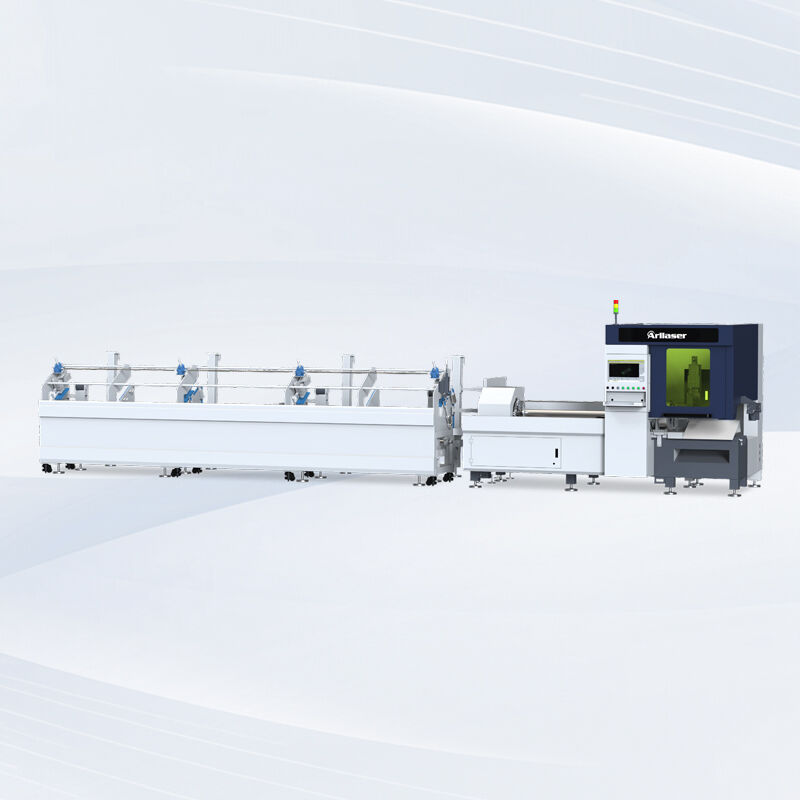
The Labor Cost Crisis in Manual Tube Fabrication
Manual tube fabrication faces unsustainable labor cost pressures across three critical dimensions. First, demographic shifts have created a severe skilled labor shortage, with the U.S. manufacturing sector projected to face a shortfall of 2.1 million workers by 2030. Second, wage inflation and retention challenges compound expenses—competitive hiring markets drive up base pay, while high turnover triggers constant retraining cycles that cost up to 1.5–2× an employee’s annual salary.
Most critically, human-driven errors in manual processes inflict profound hidden costs:
| Cost Factor | Impact | Source |
|---|---|---|
| Quality failures | $740k average annual rework expense | Ponemon Institute 2023 |
| Material waste | 12–18% higher scrap rates | Industry benchmarks |
| Production delays | 22% slower throughput vs. automation | AMT 2024 |
These vulnerabilities converge in operations like exhaust system fabrication, where hand-measured cuts and saw setups commonly result in dimensional inaccuracies requiring rework. As manufacturers struggle with profitability, laser tube cutting machines emerge as a strategic solution to counter these compounding labor cost pressures.
How Laser Tube Cutting Machines Automate Labor-Intensive Processes
Eliminating Manual Layout, Marking, and Sawing
Laser tube cutting machines eliminate three labor-intensive steps—layout planning, surface marking, and sawing—that traditionally consume 45–60 minutes per setup per operator. Instead, CAD file uploads trigger fully automated clamping and high-precision laser cutting (±0.1mm), removing reliance on manual measurement or physical marking. This not only eradicates material waste from marking errors but also reduces handling-related injuries by 31% year-over-year.
Reducing Operator Dependency Through Intelligent Nesting and Collision-Free Motion
Intelligent nesting algorithms optimize material usage—achieving up to 92% utilization—and collision-free motion planning enables continuous, unattended operation. Sensors detect obstacles and adjust cutting paths dynamically, allowing one technician to oversee 3–4 machines simultaneously. Compared to plasma cutting, this slashes labor hours per unit by 70%. Real-time thermal compensation maintains ±0.25mm tolerances even during high-speed processing.
Quantifying Labor Savings: Real-World ROI of Laser Tube Cutting Machines
Case Study: 62% Labor Cost Reduction in Automotive Exhaust Production
A major automotive supplier achieved a 62% reduction in labor expenses by transitioning from manual fabrication to automated laser tube cutting for exhaust systems—translating to $187,000 in annual savings by eliminating two full-time positions previously dedicated to measuring, marking, and sawing. Production errors decreased by 34% due to consistent precision, and throughput increased by 28% with uninterrupted 24/7 operation.
Benchmark Data: 3.8× Faster Setup vs Plasma/NC Saw
AMT’s 2024 Fabrication Technology Report documents laser tube cutting machines requiring just 12 minutes for job setup versus 46 minutes for plasma or NC saw alternatives—a 3.8× improvement. This stems from automated nesting software eliminating manual programming and collision-free motion systems removing trial runs. As a result, changeover labor costs per job drop from $38.50 (plasma) to $9.80 (laser) at standard shop rates.
Strategic Automation Adoption: Fully Automatic Loading and Beyond
When Zero-Tail Cutting and Smart Unloading Justify the Investment
Fully automated laser tube cutting systems deliver maximum labor savings when integrated with intelligent material handling. Zero-tail cutting technology eliminates inter-part waste by precisely positioning each tube segment, while automated unloading transfers finished components directly to sorting stations or conveyors. This end-to-end automation reduces manual intervention to near-zero—especially valuable in high-volume environments like automotive frame manufacturing, where 24/7 operation is critical.
The investment becomes strategically justified when operational analysis shows:
- Material savings exceeding 15% through zero-waste nesting
- Labor reduction of 2–3 operators per shift
- Throughput increases of 40%+ from continuous processing
For manufacturers processing over 10,000 tube parts monthly, these integrated features typically achieve ROI within 18 months—by eliminating both direct labor costs and secondary handling operations.
FAQ
What are the main drivers of labor cost increases in tube fabrication?
The main drivers include a skilled labor shortage, wage inflation, and high turnover rates, which lead to increased training costs and inefficiencies.
How do laser tube cutting machines reduce material waste?
Laser tube cutting machines use intelligent nesting algorithms and zero-tail cutting technology to maximize material utilization and eliminate inter-part waste.
What labor savings can manufacturers expect by automating manual tube fabrication?
Manufacturers can achieve labor cost reductions of up to 62%, eliminate multiple full-time positions, and reduce setup times by up to 3.8× compared to manual methods.
When is automation most beneficial for tube fabrication?
Automation is most beneficial for high-volume operations processing over 10,000 parts per month, where material savings, labor reductions, and throughput improvements can justify the investment.
How quickly can manufacturers achieve ROI on a laser tube cutting system?
Manufacturers can typically achieve ROI within 18 months through reduced labor costs, material savings, and increased productivity.