 EN
EN



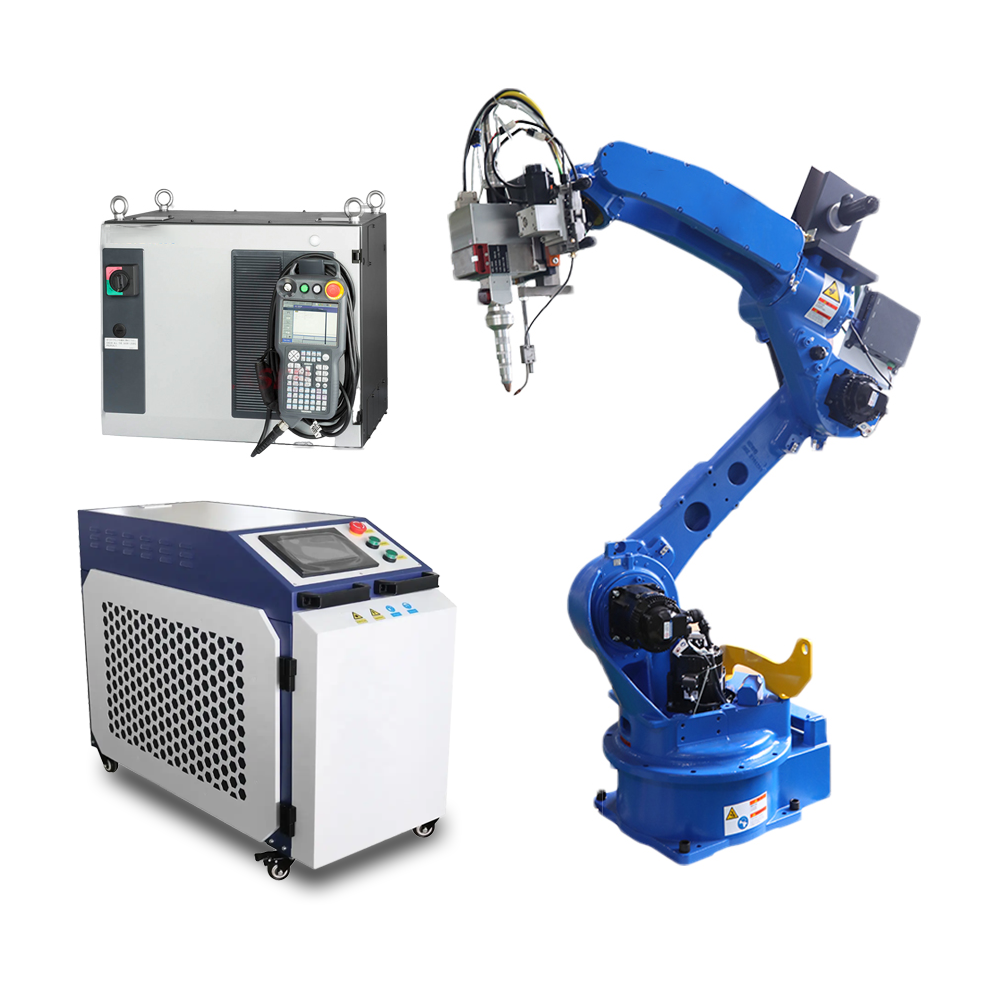
Arc-On Time: The Defining Productivity Advantage of Robot Welding
Why Arc-On Time Is the Most Reliable Indicator of True Welding Efficiency
Arc-on time—the percentage of time the welding arc is actively engaged versus total production time—is the most objective, field-validated measure of real-world welding efficiency. Manual welders typically achieve only 20–50% arc-on time due to inherent human constraints: fatigue, breaks, repositioning, and setup delays. In contrast, robotic systems sustain up to 95% arc-on time by operating continuously with precise repeatability. This isn’t theoretical—it directly drives throughput. A sustained 10-percentage-point increase in arc-on time can yield over 200 additional parts per month in high-volume applications. Unlike nominal travel speed or deposition rate claims, arc-on time captures the full operational reality—factoring in part handling, torch positioning, and workflow interruptions—making it the gold standard for benchmarking true productivity.
How Robot Welding Eliminates Non-Value-Added Time (Setup, Repositionment, Inspection)
Robot welding transforms workflow efficiency by systematically eliminating non-value-added tasks:
- Automated setups: Programmable, sensor-guided fixtures reduce part-loading time by up to 70% compared to manual clamping
- Continuous operation: Multi-axis robot motion enables seamless torch repositioning without stopping the arc—no workpiece rotation or fixture adjustment required
- Real-time quality control: Integrated seam tracking and thermal monitoring detect inconsistencies during welding, reducing post-weld inspection time by 90%
The result is a dramatic shift in time allocation: while manual welders spend roughly 55% of their shift on ancillary tasks, robots redirect that time to active deposition. This translates to 3–5× higher effective throughput per shift—without adding labor or overtime.
Throughput Metrics: Travel Speed, Deposition Rate, and Cycle Consistency in Robot Welding
Consistent Travel Speeds Enable Predictable, Scalable Output with Robot Welding
Robotic welding maintains programmed travel speeds within ±2% tolerance across shifts, weeks, and part batches—a level of consistency unattainable with manual processes. Human welders inevitably vary speed due to fatigue, joint geometry changes, or instinctive pacing adjustments; robots do not. This stability ensures uniform heat input, consistent penetration, and repeatable bead profiles. More critically, it delivers predictable cycle times—enabling production planning accurate to within 5%. That precision supports scalable growth: adding a second or third robot cell multiplies output linearly, without the bottlenecks of hiring, training, or skill variability. What was once an unpredictable craft becomes a quantifiable, controllable manufacturing stream.
Higher Metal Deposition Rates Reduce Pass Count While Maintaining Quality
Robots achieve up to 30% higher metal deposition rates than manual welding—thanks to precise, synchronized control of wire feed speed, voltage, and shielding gas flow. This enables fewer passes per joint without sacrificing integrity. For example, a 12mm fillet weld requiring four manual passes routinely completes in two robotic passes. Fewer passes mean less cumulative heat input, shorter interpass cooling windows, and significantly reduced distortion risk—preserving base metal metallurgy and dimensional accuracy. Crucially, this acceleration doesn’t compromise quality: parameter optimization algorithms maintain defect rates below 0.5%, even at peak deposition. The net effect is up to 40% faster joint completion—while meeting ASME Section IX and AWS D1.1 structural acceptance criteria.
Quality & Reliability: How Robot Welding Reduces Rework and Maximizes Effective Uptime
85% Lower Defect Rates Translate Directly to Higher Labor-Adjusted Productivity
Robot welding delivers 85% fewer defects than manual methods, according to industry analysis published in MTW Magazine (2024). This reliability stems from deterministic path execution, real-time closed-loop parameter control, and elimination of human variables—including technique drift, inconsistent gun angles, and fatigue-induced errors. Lower defect rates directly reduce rework: grinding, gouging, and repair welding consume significant labor hours and disrupt flow. A 30-ton structural fabricator, for instance, reclaimed 17% of weekly technician time previously spent on weld corrections. That freed capacity was redirected toward value-added activities like fit-up, pre-qualification, and preventive maintenance. When defect rates fall below 1%, unplanned stoppages for quality interventions become rare exceptions—not routine occurrences—maximizing effective equipment uptime and sustaining throughput momentum.
Scalability and Flexibility: When Robot Welding Delivers ROI Across Batch Sizes and Industries
Modular Fixturing and Programming Enable Profitable Robot Welding in High-Mix/Low-Volume Settings
The outdated notion that robot welding only suits high-volume, low-mix production has been overturned by advances in flexible automation. Modern modular fixturing—featuring quick-change clamps, standardized kinematic mounts, and integrated part sensing—enables changeovers between dissimilar parts in under 15 minutes. Offline programming tools, combined with 3D simulation and collision-avoidance validation, cut teach time by 70% versus traditional “teach pendant” methods. These capabilities make robotic cells economically viable for batches as small as 50 units, with ROI now achievable at fewer than 500 annual welds for standardized joints.
In high-mix environments—such as custom fabrication shops producing stainless enclosures one day and aluminum chassis the next—standardized tool interfaces and pre-validated weld libraries accelerate setup without sacrificing quality. Cloud-based recipe management ensures instant recall of proven parameters across shifts and operators. For large-scale producers, scalability emerges through synchronized multi-cell architecture: a single operator can oversee 4–6 robotic welding stations, multiplying output without proportional labor cost increases. Automotive suppliers using this model report 300% higher throughput per square foot compared to manual bays. Critically, the same modular platform that supports agile small-batch production also enables seamless capacity expansion—future-proofing capital investment against shifting demand.
FAQ
What is arc-on time in welding?
Arc-on time refers to the percentage of time during which the welding arc is actively engaged in a welding operation, as opposed to downtime for setup, repositioning, or other tasks.
How does robot welding improve productivity?
Robot welding enhances productivity by maintaining high arc-on time, consistent travel speeds, and higher metal deposition rates, which result in increased throughput, reduced rework, and higher quality welds.
Can robots handle high-mix/low-volume welding production?
Yes, advances in flexible automation, modular fixturing, and offline programming enable robots to effectively manage high-mix/low-volume welding production.