 EN
EN



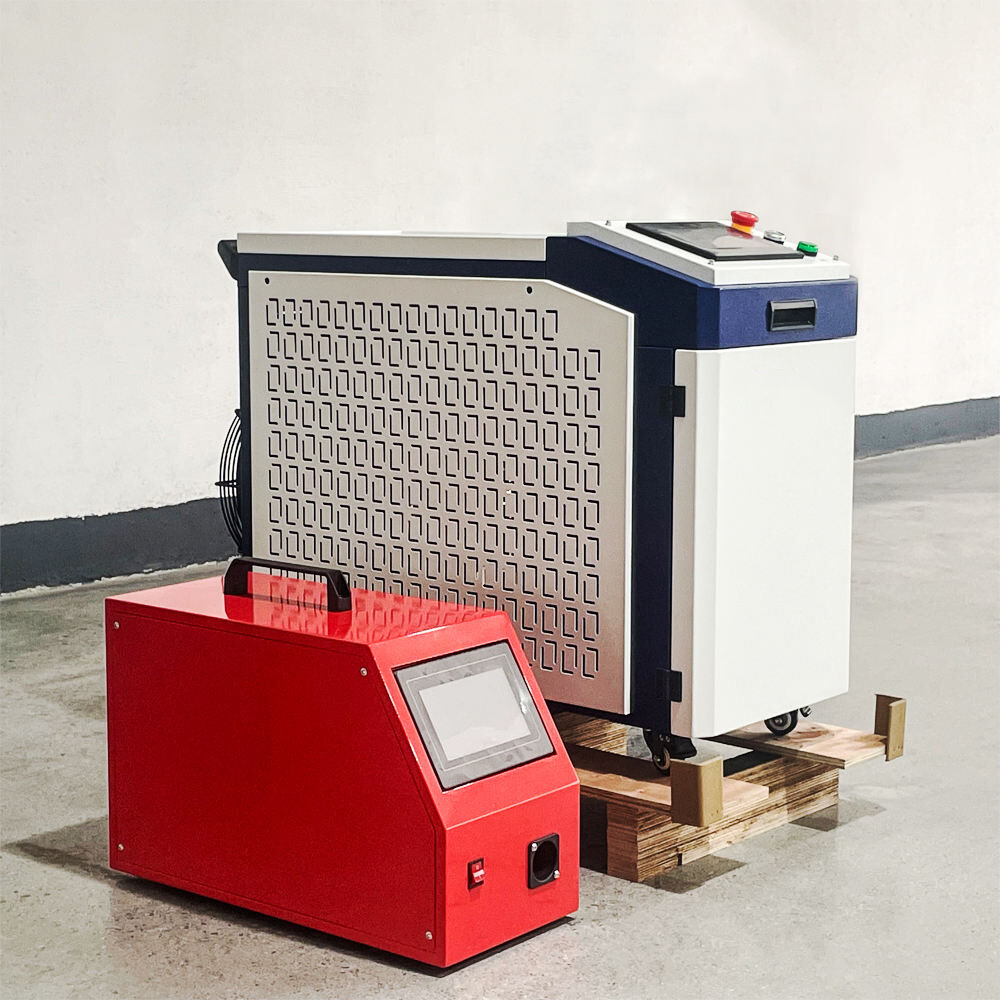
Diagnosing and Resolving Poor Weld Quality
Identifying Signs of Poor Weld Quality in Laser Welding Machine Output
Visual inspection reveals critical flaws: cracks along seams, porosity clusters (>0.5 mm diameter), or irregular bead geometry. Operators report incomplete fusion in overlapping joints or variable penetration depths—deviations exceeding 10% signal systemic issues. Secondary indicators include excessive spatter (>15% coverage area) and heat-affected zones (HAZ) widening beyond material specifications.
Key Parameters Affecting Weld Quality: Power, Speed, and Focus Alignment
A 2023 materials study showed that 5% power deviations cause 18% strength reductions in stainless steel welds. Optimal performance requires balancing:
- Power: Maintain ±2% stability (3 kW systems need ¢60W fluctuation)
- Speed: 2–5 m/min for 1mm steel, adjusted for melt pool viscosity
- Focal alignment: 0.1mm Z-axis drift increases porosity risk by 30%
These parameters form the foundation of consistent weld integrity across high-precision applications.
Case Study: Fixing Inconsistent Weld Bead Appearance in Automotive Component Manufacturing
One major automotive parts manufacturer cut down on waste dramatically when they tackled beam alignment issues in their 6kW fiber lasers. Scrap rates plummeted from around 12% all the way down to just 2.8%. They used coaxial cameras for real time monitoring and noticed those tiny 0.25mm focal shifts happening throughout an entire 8 hour shift. The solution? Automated recalibration set to kick in after every 500 production cycles. This kept the weld bead widths consistently tight within about ±0.08mm. What does this mean for the bottom line? Simply put, better precision equals fewer rejects and higher overall productivity across the shop floor.
Strategy: Optimizing Laser Settings for Consistent, High-Quality Welds
Develop parameter matrices using 10–10 test grids—vary power (80–120% baseline) and speed (50–150% baseline) across material batches. Closed-loop systems with pyrometers maintain ±15°C pool temperature, crucial for aluminum alloys. Weekly calibration of collimation lenses prevents 92% of focus-related defects according to weld analytics platforms, ensuring long-term repeatability without manual intervention.
Preventing Porosity and Gas Entrapment in Laser Weld Joints
Recognizing Porosity and Gas Entrapment in Laser Welding Seams
Porosity appears as clustered voids or wormhole-like imperfections visible through X-ray inspection or cross-sectional analysis. A 2023 survey found 37% of laser welding defects in thin-gauge metals stem from gas entrapment. Irregular bead surfaces and inconsistent penetration depth are early warning signs of compromised joint integrity.
How Shielding Gas Selection and Contamination Impact Pore Formation
Nitrogen and oxygen contamination causes 58% of gas-related defects in laser welding. Using argon-helium blends reduces pore formation by 41% compared to pure argon, according to the Journal of Advanced Manufacturing. Maintaining gas purity above 99.995% is essential to prevent moisture-induced hydrogen bubbles that create subsurface voids.
Case Study: Reducing Porosity in Battery Tab Welding With Optimized Gas Flow
One battery company managed to cut down porosity problems significantly, going from about 12 percent all the way down to just 2.3 percent. They achieved this by boosting gas flow speed from 15 meters per second up to 25 m/s, started using real time pressure checks during production, and adjusted those gas nozzles so they pointed at around seven degrees off straight up. The results were pretty impressive too, with weld conductivity jumping nearly 20 percent higher. Plus everything still met those tough aerospace quality requirements. So what does this show? Well, when manufacturers get creative with how gases are delivered during the process, they can actually improve both how strong the parts are and their ability to conduct electricity properly.
Strategy: Proper Nozzle Alignment and Closed-Loop Gas Delivery Systems
Calibrate gas nozzle standoff distance regularly to maintain a 1–3mm range, ensuring uniform shielding coverage. Advanced systems use pressure sensors and flowmeters to automatically adjust parameters during welding cycles, reducing human error by 63% in mission-critical applications where consistency is non-negotiable.
Managing Cracks and Material Defects Caused by Thermal Stress
Understanding crack formation due to thermal stress and material mismatch
Thermal stress cracks happen mostly when different metals expand at different rates during quick temperature changes. Take for instance what happens when someone welds aluminum, which expands about 23.1 micrometers per meter per degree Celsius, onto stainless steel that only expands around 17.3 micrometers under similar conditions. The difference causes stress points that can reach over 400 megapascals as things cool down, often leading to fractures in various alloy types. According to recent studies from ASM International published last year, nearly seven out of ten of these cracks start forming just half a millimeter away from where the actual weld was made.
Role of heat-affected zone (HAZ) and distortion in cracking
The heat affected zone or HAZ is basically the area where temperatures go above 450 degrees Celsius but don't actually melt the material. What happens here is pretty significant though grain structures grow larger and there are changes in material phases which can cut down on ductility somewhere around 30 to maybe even 40 percent. At the same time, all this heating causes some warping and creates those pesky residual stresses inside the metal. If the distortion gets worse than about 1.2 millimeters per meter length, things start going wrong pretty fast with failure rates jumping up over half according to recent studies from Journal of Materials Processing back in 2023. Because of these combined effects, cracks tend to start forming right at the HAZ first making it one of the weakest spots in any welded joint.
Case Study: Preventing hot cracking in high-strength steels using preheating
One manufacturer saw significant improvements in their 960MPa tensile strength steel welds after implementing preheating between 150 and 200 degrees Celsius prior to laser welding operations. The slower cooling rate dropped from around 350 degrees per second down to approximately 85 degrees per second, which made a big difference in reducing cracks. Before this change, there were roughly 12.7 cracks per square centimeter, but after implementation it went down to just 3.1 cracks per square cm. Following up with post-weld heat treatment at 300 degrees Celsius for nearly an hour and a half cut residual stresses by about three quarters. These results clearly show how proper temperature control during manufacturing plays a critical role in preventing defects that can compromise structural integrity.
Strategy: Controlling cooling rates and optimizing joint design
Implement two complementary approaches:
- Cooling control: Use pulsed laser welding with 30–50ms dwell times between pulses to enable graduated cooling
- Joint optimization: Design scarf joints with 15° angles instead of square butt joints to distribute thermal stresses
Together, these methods reduce crack initiation likelihood by 81% while preserving 98% of required joint strength (Welding in the World 2023).
Reducing Spatter and Oxidation Through Process Control
Spotting Excessive Spatter and Oxidation (Black Welds) in Laser Welding
Excessive spatter and oxidation—visible as blackened surfaces—compromise both strength and appearance. Look for irregular bead edges, discoloration, or pitting, which indicate unstable conditions. A 2023 Materials Processing Journal study found 37% of laser welding defects arise from uncontrolled spatter and oxidation, underscoring the need for proactive process control.
Root Causes: Improper Shielding Gas, Contamination, and Pulse Settings
Three main factors drive these defects:
- Shielding gas issues: Flow rates below 15 L/min (for argon) or incorrect mixtures fail to protect molten pools
- Surface contamination: Oils, oxides, or zinc coatings vaporize explosively at temperatures over 1,500°C
- Pulse mismatch: 5–8 ms pulse durations provide optimal melt pool stability in 1.5mm stainless steel
Addressing these root causes eliminates most surface-level inconsistencies before they impact final quality.
Case Study: Eliminating Spatter in Thin-Sheet Welding Using Pulse Shaping
A leading automotive parts manufacturer reduced spatter by 85% in 0.8mm galvanized steel welds through adaptive pulse shaping. By implementing a 3-stage ramping profile (pre-heat, weld, cool) and precise gas nozzle alignment, they achieved Class A surface finishes while maintaining 95% joint efficiency—an ideal balance of aesthetics and function.
Strategy: Adjusting Laser Pulses and Improving Cleaning Protocols
Adopt a dual strategy:
- Pulse optimization: Apply 0.5–2.5 kW peak power with 50–200 Hz frequency ranges tailored to material thickness
- Cleaning protocols: Combine mechanical brushing (Ra ¢3.2µm) with acetone wiping before welding
Supplement with beam path alignment checks every 40 operating hours and real-time melt pool monitoring to sustain stable conditions and prevent recurrence.
Ensuring Consistent Penetration and Depth Control
Addressing Lack of Penetration Despite Correct Power Settings
Even with proper power settings, inadequate penetration often stems from beam focus misalignment. An International Welding Institute 2023 analysis revealed that 25% of penetration defects result from focal errors under 0.15mm. Weekly verification of collimation alignment and lens contamination levels is critical, as residue can shift focal length imperceptibly over time.
Beam Focusing Accuracy and Its Effect on Weld Depth
Focal accuracy directly controls penetration depth—a 0.1mm shift reduces it by 22% in stainless steel welds (Smithson Materials Journal 2023). Closed-loop monitoring systems tracking M² factor and BPP (Beam Parameter Product) help maintain beam quality. For multi-material jobs, use separate presets calibrated for differing thermal conductivities to ensure consistent results.
Case Study: Achieving Uniform Penetration in Multi-Pass Pipe Welding
One pipeline equipment company managed to cut down on penetration variation by almost 60 percent when working with 316L stainless steel joints. They did this by fine tuning where they focused their welding equipment. For the initial tack welds, they kept the laser beam right on the surface, but then adjusted it slightly for the fill passes, using what's called a -0.8mm defocus setting. This approach gave them consistent 3.2mm penetration throughout those long 18 meter sections. After running tests with ultrasound equipment over several months, they found defects were happening at less than 0.3% rate, which pretty much proves their method works well in practice despite some early skepticism from the engineering team about whether such precise control could be maintained across such large structures.
Strategy: Regular Calibration of Focal Position and Beam Quality Checks
Establish a three-tier calibration protocol:
- Daily: Verify focal position using pyroelectric beam profilers
- Weekly: Measure beam divergence with CCD-based analyzers
- Monthly: Conduct full optical path inspections for lens degradation
Follow ISO 11145:2022 standards for beam characterization to keep M² values within 10% of OEM specifications. Integrate beam monitoring sensors that trigger automatic shutdown upon threshold breach, preventing rework caused by undetected focus drift.
FAQ
-
What are the signs of poor weld quality in laser welding?
Poor weld quality in laser welding is indicated by visual flaws such as cracks, porosity clusters, incomplete fusion, variable penetration depths, excessive spatter, and widened heat-affected zones.
-
How can I prevent porosity in laser welds?
To prevent porosity, select appropriate shielding gases and maintain their purity. Argon-helium blends are effective, and preventing nitrogen and oxygen contamination is vital.
-
What causes thermal stress cracks in welds?
Thermal stress cracks occur due to differences in thermal expansion rates between metals during rapid temperature changes, resulting in stress points that cause fractures.
-
How can spatter and oxidation in welds be reduced?
Spatter and oxidation can be reduced by ensuring proper shielding gas flow, eliminating surface contamination, and applying correct pulse settings during welding.
-
Why is consistent penetration important in welding?
Consistent penetration ensures the structural integrity of a weld, preventing defects and ensuring the weld meets quality standards.
-
How often should welding equipment parameters be checked?
Welding equipment parameters should be calibrated daily for focal position, weekly for beam divergence, and monthly for full optical path inspections.
Table of Contents
-
Diagnosing and Resolving Poor Weld Quality
- Identifying Signs of Poor Weld Quality in Laser Welding Machine Output
- Key Parameters Affecting Weld Quality: Power, Speed, and Focus Alignment
- Case Study: Fixing Inconsistent Weld Bead Appearance in Automotive Component Manufacturing
- Strategy: Optimizing Laser Settings for Consistent, High-Quality Welds
- Preventing Porosity and Gas Entrapment in Laser Weld Joints
- Managing Cracks and Material Defects Caused by Thermal Stress
- Reducing Spatter and Oxidation Through Process Control
- Ensuring Consistent Penetration and Depth Control