 EN
EN



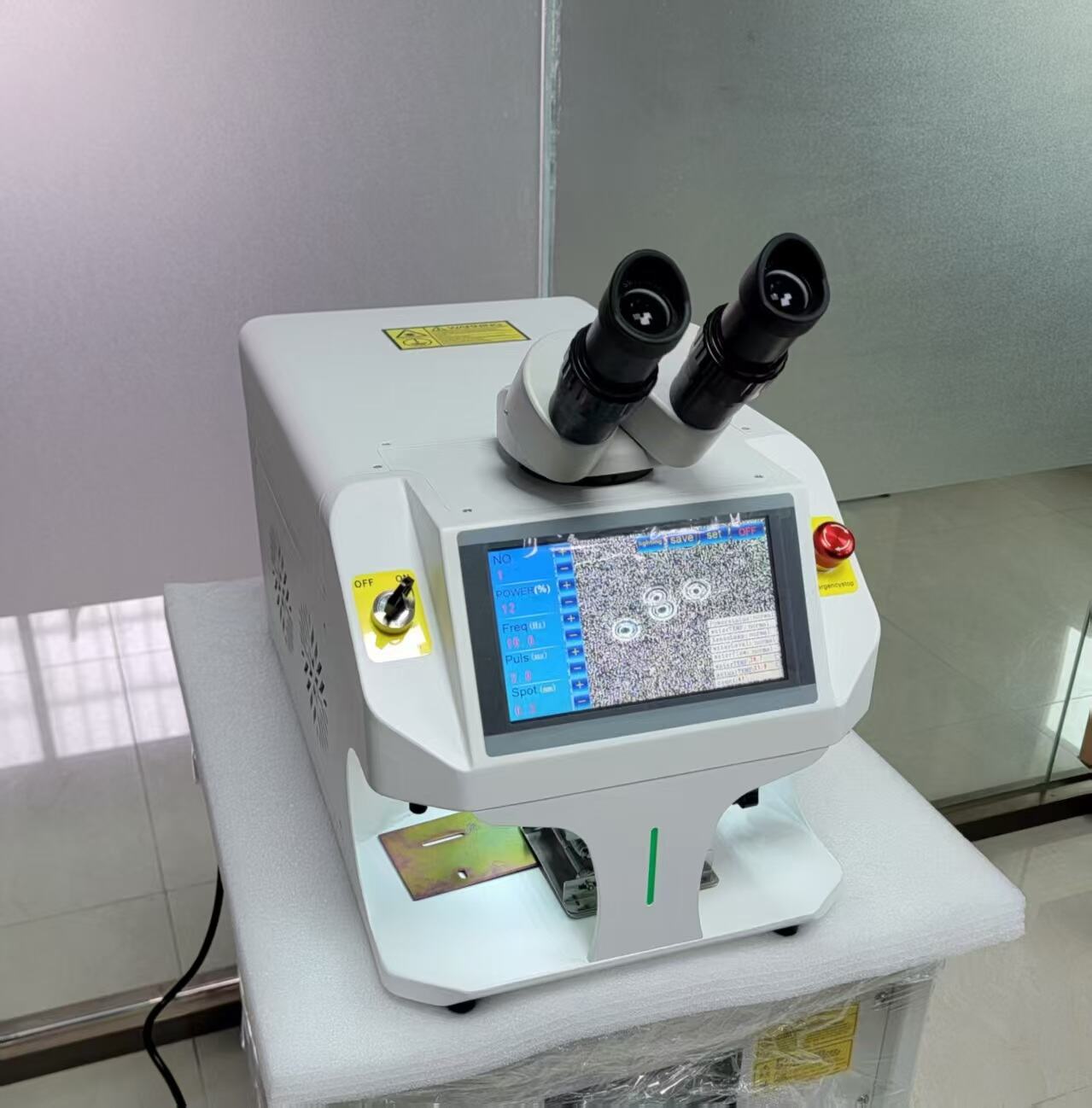
Clean Optical Components to Maintain Beam Accuracy
How lens and mirror contamination causes beam distortion and weak welds
When dust, oil fumes, or metal bits get onto those optical surfaces, they basically mess with how the laser works, cutting down on focus power somewhere around 40%. What happens next? The beam gets all messed up, so it doesn't deliver proper heating to those tiny jewelry connections. Take something like delicate filigree designs or chain links for example. Without full fusion, these parts just don't bond properly. And if the mirrors themselves are contaminated, even a slight angle change of half a degree can send the laser beam off track from its super small target area. Real problems start showing up then too: welding depth varies all over the place, we end up with holes in the welds, and pieces break when twisted or stressed. This matters most in rings and clasps where strength simply cannot be compromised at all.
Safe, step-by-step cleaning protocol for coated optics in jewelry welding machines
Every day when changing electrodes, start by turning off the machine completely and grounding oneself properly to avoid any static shocks. Take off those protective covers and look closely at the optics through polarized light so we can figure out what kind of contamination we're dealing with - whether it's just tiny particles floating around, some sort of film buildup, or maybe even splatters from previous operations. When dealing with actual particles, grab that optical grade air blower first before moving on to cleaning the coated lenses. The best approach? Use antistatic microfiber swabs dampened with at least 99.9% isopropyl alcohol. Remember to move in gentle spirals from the center outward without applying too much pressure. A word of caution here: absolutely steer clear of acetone based cleaners since they'll ruin those precious anti reflective coatings over time. Once everything looks clean, check the beam alignment using the special target paper provided by the manufacturer. We want to make sure the spot shape stays pretty close to perfect circles, ideally within about 3% variation either way.
Optimize Cooling System Performance for Thermal Stability
Why water conductivity and coolant freshness directly impact electrode life and weld repeatability
The quality of coolant has a major impact on thermal stability, which affects how consistent the welds are in jewelry welding systems. When there's high water conductivity due to minerals building up or other contaminants, it speeds up electrode corrosion through galvanic reactions. This can lead to pitting that increases by as much as 40%. If the coolant becomes degraded or sits around too long, it creates insulating layers inside those cooling channels. This causes temperature variations that can swing over 5 degrees Celsius. Such fluctuations really mess with the weld pool stability, resulting in weak spots at critical areas like prong settings and chain links where strength matters most. Keeping the conductivity under 50 microsiemens per centimeter and changing out the coolant every three months helps maintain good heat transfer, prolongs electrode lifespan by about 30%, and keeps that fine level of precision needed for thousands of weld operations without compromising quality.
Monitor and Replace Critical Consumables Proactively
Electrode pitting and nozzle wear: visual indicators and replacement thresholds for jewelry welding machines
When electrode surfaces develop those telltale pits or irregular spots, it can really mess with arc stability once they get deeper than 0.2 mm or cover more than 15% of the contact area. Nozzles show their age too through internal scratches, oval shapes instead of round ones, or when their diameter grows just 0.1 mm beyond what's specified, which lets in bad gases during welding. Keep track of how long these parts last before needing replacement - usually around 10,000 pulses for electrodes and about 5,000 cycles for nozzles according to most manufacturers. Shops that stick to regular inspection schedules tend to see about 30% fewer problems with welds on expensive metals, according to recent research from 2023 on micro-welding performance. Recording how different parts wear over time helps set up good maintenance routines that matter a lot for getting reliable results when working on sensitive components where mistakes cost money.
Calibrate and Control the Operating Environment for Consistent Results
Beam alignment recalibration: frequency, tools, and humidity-sensitive drift correction
It's important to check and adjust beam alignment every three months with tools like autocollimators and beam profilers. When the air gets too humid (over 45% relative humidity), it actually changes how light travels through the atmosphere. This can shift optical paths anywhere between 0.1 to 0.3 millimeters, which might seem small but is enough to mess up measurements at the micron level. Most shops see about two thirds of their thermal drift problems coming from poor moisture management in the workspace. For best results, keep humidity levels under 40% using closed loop systems, and always run tests on gold coated samples first when preparing for anything that requires extreme precision work.
Dust management and ventilation strategies to prevent arcing in precision pulse welding
Particle contamination exceeding ISO Class 5 increases arcing risk by 300% during micro-welding. Mitigate this with:
- HEPA-filtered downdraft tables positioned within 30 cm of the work zone
- Negative-pressure ventilation at 0.1–0.2 m/s airflow
- Ionized air knives to neutralize static-attracted particulates
Conductive dust on electrodes disrupts current flow, causing inconsistent penetration in chain links. Conduct monthly particulate counts using laser aerosol monitors to proactively prevent this failure mode.
FAQ Section
Why is it important to clean optical components regularly?
Regular cleaning of optical components is crucial because contamination can reduce laser focus power, leading to beam distortion, weak welds, and inconsistent welding performance.
What is the recommended method for cleaning coated optics?
It is recommended to use antistatic microfiber swabs dampened with at least 99.9% isopropyl alcohol, cleaning gently from the center outward, and avoiding acetone-based cleaners to protect anti-reflective coatings.
How often should coolant in jewelry welding machines be changed?
The coolant should be replaced every three months to maintain thermal stability and prolong the lifespan of electrodes while ensuring consistent weld quality.
What are the signs that electrodes or nozzles need replacement?
Pitting over 0.2 mm deep on electrodes or a diameter increase of 0.1 mm for nozzles are clear indicators for replacement to maintain arc stability and prevent welding defects.