 EN
EN



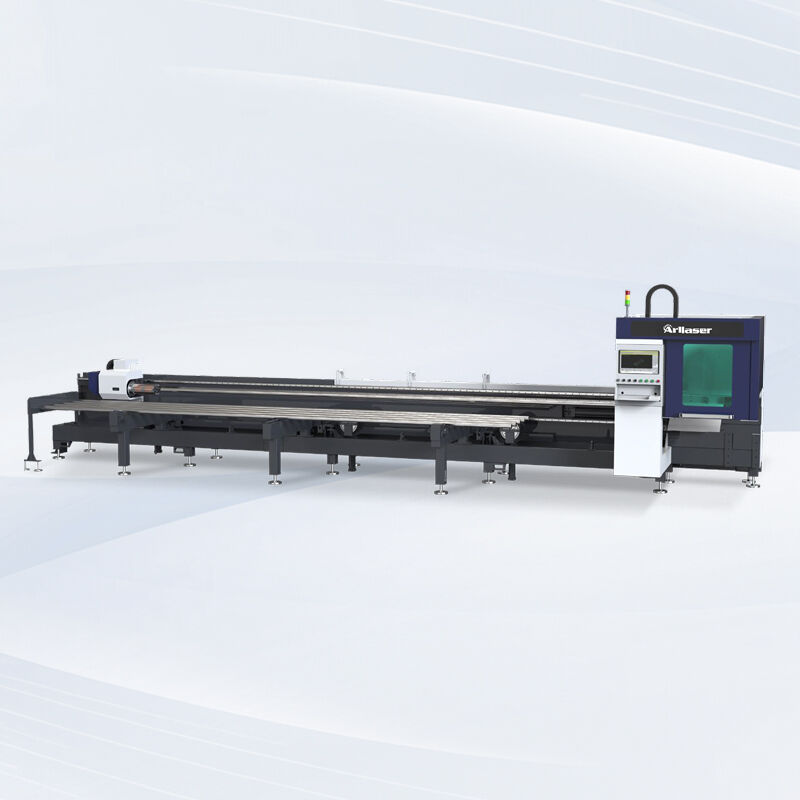
Precision and Edge Quality for Tubular Components
Tolerance, Detail Resolution, and Surface Finish on Complex Tube Geometries
Laser cutting machines working with tube systems typically hit around ±0.1 mm positional tolerance. That kind of accuracy works great for things like micro holes, sharp corners, and clean edges on all sorts of shapes from squares to ovals. When parts need to function properly like pressure tight welds or look good in places such as building railings, this level of detail cuts down on extra work after cutting. Plasma cutting isn't nearly as precise, usually maxing out at about ±0.3 mm. Plus, the heat from plasma creates problems like leftover material buildup, altered surfaces, and uneven angles that require additional grinding or machining afterward. Fiber lasers don't touch the material during cutting so there's no warping or tool wear issues. This makes them ideal choice when appearance matters or when components must meet strict dimensional requirements.
Heat-Affected Zone and Distortion in Thin-Walled Tubes (≤3 mm)
Thin walled tubes measuring 3mm or less benefit greatly from laser cutting since it cuts down on heat input by around 60 to 70 percent compared with plasma methods. This results in a much smaller heat affected zone, typically staying below half a millimeter wide. The reduced heat means there's less chance of warping happening in materials such as stainless steel and aluminum which tend to buckle badly when subjected to the intense heat of plasma arcs that reach temperatures between 1500 and 2000 degrees Celsius. Another advantage comes from the lasers extremely narrow cut width ranging from 0.1 to 0.3 mm. This helps maintain the circular shape of round tubes and keeps them dimensionally stable. Such characteristics are particularly important for things like fluid handling equipment where even small deviations can cause problems, hydraulic systems needing tight tolerances, and structural components that must fit together precisely during assembly.
Material Compatibility: Thickness, Conductivity, and Reflectivity
Optimal Wall Thickness Ranges: Laser Cutting Machine Tube (0.5–12 mm) vs Plasma (3–40 mm)
Laser cutting machines work best when dealing with tubes between 0.5 mm and 12 mm thick walls. They deliver pretty consistent results within about ±0.1 mm thanks to those super focused beams of light energy. Plasma cutting tells a different story though. It needs at least 3 mm thickness just to get the arc going properly, and really starts showing its strength above 6 mm material. But there's a tradeoff here. Plasma cuts leave behind wider gaps compared to laser cuts on similar materials, sometimes even triple the width. Why does this happen? Well, lasers basically zap tiny spots with intense heat, melting them away precisely. Plasma works differently. It creates these wider streams of hot gas that aren't as pinpoint accurate, which explains why it lacks the same level of detail control as laser technology.
Challenges with Reflective and Conductive Metals: Stainless Steel, Aluminum, and Copper
Metals that are highly reflective and good at conducting heat like copper, aluminum, and some types of stainless steel create special problems for manufacturers. When working with standard near infrared lasers below 1 micrometer wavelength, both copper and aluminum bounce back over 90 percent of the laser energy they receive. This means either getting hold of specialized fiber lasers in green or blue wavelengths or applying temporary absorption coatings becomes necessary. Aluminum's thermal conductivity stands at around 235 W per meter Kelvin, which actually requires about 30% more power density compared to mild steel just to start and maintain clean vaporization. Plasma cutting systems run into different troubles altogether. Too much heat applied to thin conductive parts speeds up nozzle wear and creates uneven bevel angles often going beyond 5 degrees because the arc doesn't stay stable where it should. Laser cutting machines get around these obstacles through pulsed waveforms, carefully selected assist gases such as nitrogen for stainless steels and argon-helium mixtures for aluminum, plus real time adjustments to power levels. These approaches allow consistent results when working with common alloy grades like 304/316 stainless and 6061/6082 aluminum where plasma cutting tends to produce inconsistent edges.
Operational Performance: Speed, Cost, and CNC Integration
Cycle Time Comparison Across Common Tube Profiles (Square, Round, Oval)
When it comes to cutting through thin to medium wall profiles (up to about 3 mm thick), laser cutting machines generally outperform plasma systems when looking at cycle times. For square tubes measuring less than 50 mm across, we typically see processing times drop somewhere between 15% and 25%. This happens mainly because lasers don't need to slow down or speed up like plasma does, plus there's no hassle with adjusting torch standoff distances. Round tubes also get similar benefits from laser technology. But oval shapes really shine here since lasers can maintain steady cuts even around complicated curves without those annoying angular restrictions that plague plasma cutting. And let's not forget the constant stopping and starting required with plasma equipment. Plasma still holds its ground though for thicker materials over 6 mm where it can cut through faster thanks to its ability to transfer more energy into the material all at once.
Total Cost of Ownership Over 5 Years: Consumables, Power, Maintenance, and Labor
A five-year total cost of ownership (TCO) analysis reveals divergent economic profiles:
| Cost Factor | Laser Cutting Machine Tube | Plasma Cutting |
|---|---|---|
| Consumables | $3,200 | $18,500 |
| Energy Consumption | $28,000 | $15,000 |
| Maintenance | $9,500 | $14,200 |
| Labor Efficiency | 30% reduction | Baseline |
Switching to laser systems can slash consumable costs by around 80% and cut maintenance expenses down by about a third when compared to plasma cutting. Why? Because these lasers use solid state technology, there's no electrode or nozzle wearing out over time, plus they need far less gas for each individual part produced. Now while it's true that plasma does consume slightly less electricity overall, what makes lasers stand out is their better cut quality combined with automated processes. This means workers spend less time fixing mistakes, doing inspections, or getting involved manually in the process. For shops dealing with lots of different products but not massive volumes, this translates into roughly 19% savings on total cost of ownership according to industry studies. Makes sense when looking at long term operations rather than just upfront power consumption numbers.
3D Tube Fabrication Capability and Multi-Axis Flexibility
CNC Nesting Depth: Laser Cutting Machine Tube Enables Full 3D Contouring vs Plasma’s Limited Angular Range
Modern laser cutting machines for tubes actually allow real 3D fabrication thanks to those fancy multi-axis CNC platforms most often equipped with five or even six synchronized axes (linear X/Y/Z movement combined with rotation and tilting). These systems can cut all sorts of complex shapes in one go - think beveled edges, chamfers, countersunk holes, and those tricky Y-branch intersections on round, square, or weirdly shaped tubes. The big advantage here is that there's no need for extra steps or changing fixtures between operations, which means better consistency and fewer errors building up over time. Plasma cutting systems just don't stand a chance against this kind of precision because their torches have mechanical limitations and unstable arcs, making it tough to get anything steeper than around 45 degrees without manually moving things around or doing multiple setups for anything more complicated than basic miters. What really sets lasers apart though is their ability to keep things stable during long cuts on heavy materials with those dynamic support systems, delivering accuracy down to the millimeter throughout entire workpieces. This level of precision matters a lot in industries like aerospace where parts need to fit together perfectly, robotics frame construction, and any project involving custom structural steel components.
FAQ
What is the main advantage of laser cutting over plasma cutting?
Laser cutting offers higher precision with ±0.1 mm positional tolerance, making it suitable for intricate details and clean edges, without the warping and extra finishing required with plasma cutting.
How do laser cutting machines handle thin-walled tubes?
Laser cutting greatly reduces heat input, resulting in a smaller heat-affected zone and minimizing the risk of warping in thin-walled tubes, preserving their dimensional stability.
Which metals are challenging for standard laser cutting?
Highly reflective and conductive metals like copper and aluminum can reflect a significant amount of the laser energy, requiring specialized lasers or coatings to effectively cut them.
How do laser and plasma cutting compare in terms of cost over five years?
Over five years, laser cutting can significantly reduce consumable and maintenance costs despite slightly higher energy consumption, offering a more economical total cost of ownership compared to plasma cutting.
What 3D capabilities do laser cutting machines provide?
Modern laser cutting machines with multi-axis CNC platforms can achieve full 3D contouring, making them suitable for complex shapes without the need for additional steps or fixture changes.
Table of Contents
- Precision and Edge Quality for Tubular Components
- Material Compatibility: Thickness, Conductivity, and Reflectivity
- Operational Performance: Speed, Cost, and CNC Integration
- 3D Tube Fabrication Capability and Multi-Axis Flexibility
-
FAQ
- What is the main advantage of laser cutting over plasma cutting?
- How do laser cutting machines handle thin-walled tubes?
- Which metals are challenging for standard laser cutting?
- How do laser and plasma cutting compare in terms of cost over five years?
- What 3D capabilities do laser cutting machines provide?