 EN
EN



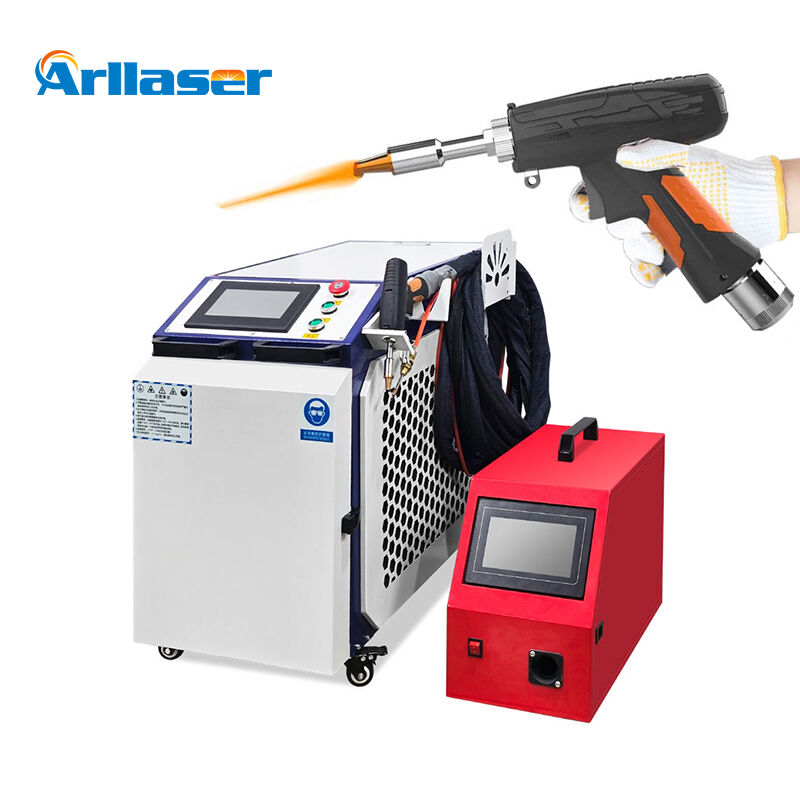
Laser Welding Machine Price Tiers by Power and Application (2026)
1000W–1500W Handheld Laser Welding Machines: Entry-Level Precision & Small-Business Affordability
Laser welding machines that fall between 1000W and 1500W offer good enough precision for most small operations. They work great for things like making jewelry, fixing thin sheet metal, and doing basic maintenance tasks around the shop. The machines themselves are pretty compact and have controls that make sense even for new operators. This means less time spent training staff and not taking up too much valuable floor space in already crowded workshops. Most portable models handle mild steel, stainless steel, and aluminum sheets right up to 3mm thick without breaking a sweat. When it comes to upkeep, these systems generally don't require much special attention. Parts tend to last longer than expected, and when something does break down, replacement components usually snap right into place. Air cooling systems built into the machine cut out the hassle of dealing with separate chillers, though they do push the price tag up by about 20%. For many local repair shops, this extra expense is worth it just to skip expensive modifications to their existing setup.
2000W–3000W Benchtop and Integrated Systems: Mid-Volume Manufacturing Cost Balance
For medium volume manufacturing needs, mid power benchtop and integrated laser welding systems offer what many manufacturers are looking for: a good mix of production speed, accuracy, and reasonable upfront costs. These systems typically operate around 2000 to 3000 watts and can penetrate about 6mm into materials like stainless steel or aluminum. They come with features that make life easier on the shop floor too, including semi automated part loading options, programmable seam tracking capabilities, and better optics for delivering the laser beam where it's needed. Some models actually do double duty by combining welding functions with cutting abilities, which saves money on equipment purchases and frees up valuable factory space. Real world experience shows that these systems can cut down cycle times anywhere from 18% to 35% compared to traditional manual TIG or MIG welding methods. Energy usage stays pretty low too, usually below 10 kilowatts when running. Most units have water cooling built in to keep things stable during long production runs, but that does mean setting up proper plumbing ahead of time. And let's not forget about shielding gas expenses either since this tends to fluctuate quite a bit depending on usage patterns. Factory managers need to account for this variable cost when planning budgets and validating their overall production processes.
3000W+ and Multi-Process Laser Welding Machines: Heavy-Duty Automation and Niche Material ROI
Industrial laser welding systems rated at 3000 watts or higher get built specifically for those tough jobs where standard methods just won't cut it. These systems handle tricky materials like refractory metals, copper alloys, and titanium which give regular welding techniques a real headache because they either reflect too much light or conduct heat away too fast. When companies go automated, they typically pair these lasers with robotic arms equipped with cameras that track movement in real time. The beams also move around dynamically during welding, which helps create clean welds without all that pesky spatter. This works great for complicated parts found in aircraft manufacturing or pressure vessels that need to meet ASME codes. Some shops have combined laser welding with other processes like brazing or surface hardening, spreading out the initial investment across different production needs. Factory floor reports show anywhere from 45 to 60 percent less waste when working with titanium parts, and some operations claim saving as much as 70 percent on labor costs once everything gets fully automated. Sure, adding AI-based seam tracking sensors bumps up the price tag by about 15 to 25 percent, but most manufacturers find it worth the extra cash since these sensors dramatically improve first pass success rates and reduce costly rework. With quality control requirements getting stricter every year, this kind of upgrade is becoming essential for staying competitive in 2026 and beyond.
Key Technical Factors That Influence Laser Welding Machine Pricing
Fiber vs. CO₂ Laser Sources and Oscillating Beam Technology Premiums
Fiber lasers have become the go-to choice for most metal welding jobs these days because they absorb energy better in conductive materials, run more efficiently, and need less maintenance overall. But there's a catch: fiber lasers typically cost 20 to 30 percent more than traditional CO2 systems. This price gap comes from the sophisticated diode pumping technology and specialized beam delivery components required. Meanwhile, CO2 lasers still work well for certain applications, especially when dealing with non-metals or thick sections of material. However, they face challenges when working with reflective metals such as copper or aluminum, which can lead to problems down the line including more rework and wasted consumables. Some shops are now investing in oscillating beam technology despite the extra 15% cost. The benefits are real though. This tech essentially moves the laser focus around during welding, keeping the molten pool stable even in tricky shapes. Industry tests published last year showed this approach cuts down on scrap caused by spatter by almost 20% in many cases.
Cooling Method, Fiber Optic Cable Length, and Integrated Safety Compliance Packages
Three technical specifications consistently influence final system cost—and long-term operational viability:
- Cooling Systems: Water-cooled units maintain ±1°C thermal stability essential for high-duty-cycle or automated operation but add 15–20% to acquisition cost versus air-cooled equivalents. Air-cooled models suit intermittent use but may throttle output during sustained welding.
- Fiber Optic Cables: Standard 3m cables meet most benchtop needs; extending to 10m+ for robotic or multi-station integration increases cost by 8–12%, with ~2%/meter power attenuation requiring careful optical path design.
- Safety Integration: ISO 13857-compliant enclosures, interlocked access points, and Class 1 laser safety certification—including automatic shutdown on door breach—are no longer optional under OSHA’s 2026 enforcement guidelines. These packages add 7–10% upfront but mitigate regulatory exposure: OSHA’s 2023 penalty data shows average fines exceeding $740,000 for unmitigated Class 4 laser incidents.
True Cost of Ownership for a Laser Welding Machine in 2026
Beyond the purchase price, accurate financial planning requires accounting for recurring expenses that define long-term equipment viability—especially as 2026 brings stricter energy reporting, safety compliance, and supply chain transparency mandates.
Hidden Operational Costs: Shielding Gas, Consumables, Maintenance Contracts, and Freight/Installation
- Shielding gas (argon, helium blends, or nitrogen) ranges from $500–$2,000/year depending on duty cycle and joint complexity
- Consumables—including collimating lenses, protective windows, and nozzle tips—require quarterly to biannual replacement, costing $1,000–$5,000 annually based on usage intensity
- Preventive maintenance contracts, covering calibration, optics cleaning, and software updates, typically run 10–15% of machine cost per year
- Freight and installation vary significantly: $2,000–$5,000 for benchtop units; $8,000–$15,000 for fully integrated robotic cells requiring structural reinforcement, electrical upgrades, and laser safety commissioning
Measurable ROI Drivers: Labor Reduction, Scrap Rate Improvement, and Energy Efficiency Gains
Precision laser welding delivers quantifiable returns across three core metrics:
- Labor reduction: Automated systems cut direct welding labor hours by 50–70% versus skilled manual processes—freeing personnel for higher-value tasks like programming, QA, or setup optimization
- Scrap rate improvement: Near-zero spatter, minimal HAZ, and precise energy deposition reduce rework and post-weld finishing by 30–60%, particularly on high-margin components like medical implants or aerospace brackets
- Energy efficiency: Fiber lasers convert 30–50% more electrical input into usable beam power than CO₂ systems, lowering kWh demand and supporting ESG reporting goals
When aligned with production volume and material mix, these factors routinely generate $60,000+ in annual net savings—delivering payback in 12–30 months despite higher initial investment.
FAQ
- What are the key benefits of using a laser welding machine? Laser welding machines provide precision, reduce rework, and are energy-efficient. Depending on power, they can perform a variety of tasks from jewelry making to heavy industrial applications.
- Are fiber lasers more cost-effective than CO₂ lasers? While fiber lasers are generally more expensive upfront, they offer greater efficiency and lower maintenance costs, making them more cost-effective in the long run.
- How does laser welding help in reducing operational costs? Laser welding reduces labor costs, improves scrap rates, and boosts energy efficiency, offering significant savings and prompt ROI.
- What should be considered when purchasing a laser welding machine? Considerations include the power level, material type, cooling system, safety features, and long-term operational costs such as maintenance and consumables.