 EN
EN



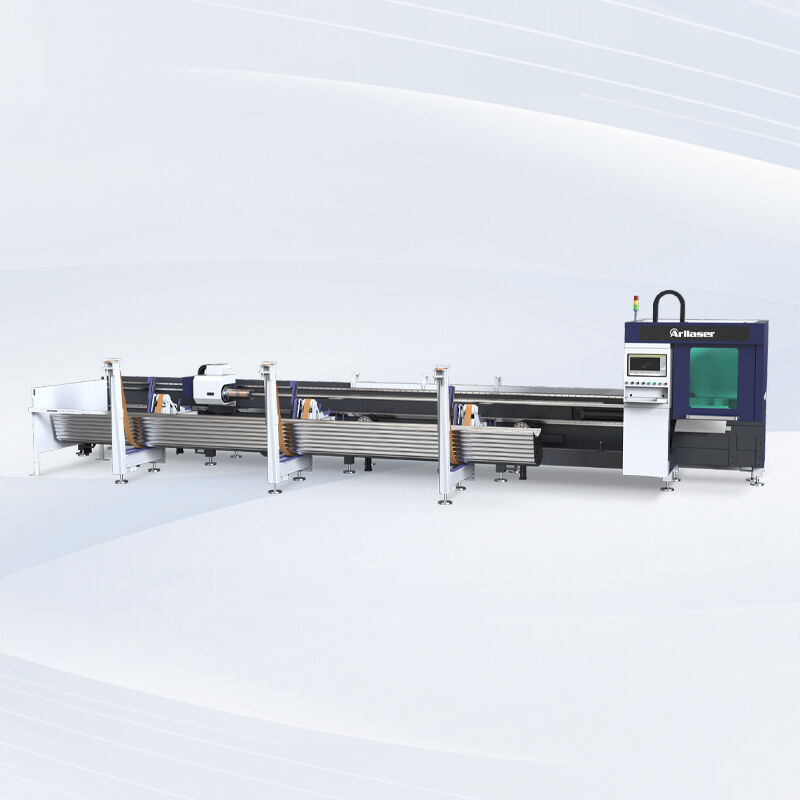
Mechanical Foundation: Pre-Calibration Setup for Tube Laser Cutting Machine
Verifying Tube Clamping System Stability and Rotational Axis Alignment
Having a good clamping system is essential for keeping tubes from moving out of place when they're being cut, which helps maintain accurate dimensions throughout the process. To check if everything is aligned properly, workers should use those little dial indicators placed at right angles to where the tube sits. If there's even a tiny deviation beyond 0.1 degrees, it can really mess up how the cut turns out. When testing how reliable these setups actually are in practice, many shops run tests that mimic actual cutting conditions while monitoring vibrations through special sensors called accelerometers. Industry experience tells us that once vibrations go above 0.5g, we start seeing about an 18% difference in the width of our cuts. And let's not forget about automatic chucks either. These need to hold onto parts consistently tight throughout their entire rotation cycle, staying within around plus or minus 2% of desired pressure. Otherwise, parts might slip just enough to cause problems downstream.
Inspecting Linear Guides, Bearings, and Chuck Runout Tolerance (±0.02 mm)
Worn linear guides introduce positional errors exceeding 0.1 mm over 3-meter spans. Use laser interferometers to verify ball-screw backlash remains <5 μm. Under 10× magnification, inspect bearing races for brinelling—micro-dents accelerate wear by 40%. Chuck runout is critical:
| Measurement Point | Max Allowable Runout | Calibration Method |
|---|---|---|
| Proximal End | ±0.015 mm | Dial indicator |
| Distal End (1 m) | ±0.02 mm | Laser alignment |
Reject components showing >5 μm wear beyond OEM specifications to sustain precision.
Confirming Laser Source Cooling, Gas Supply Integrity, and Electrical Grounding
Keeping laser coolant temperature around 22 degrees Celsius with a margin of plus or minus 1 degree is really important because when it gets too hot or cold, the wavelength starts drifting and materials just don't absorb energy as efficiently anymore. For gas line pressure tests, run them at about 1.5 times normal operating pressure, which usually means somewhere between 20 to 25 bars for most systems, and let them sit for half an hour. If there's more than a 0.5 percent drop in volume every minute during testing, that indicates leaks which will definitely mess up the quality of cuts being made. Grounding checks are another crucial step too. The resistance should measure under 0.1 ohms when tested with the four point method. Poor grounding creates all sorts of electrical noise problems that interfere with CNC signal integrity, leading to positioning errors that can jump as high as 27 percent according to various electromagnetic interference studies conducted over recent years.
Optical Precision: Laser Beam Alignment and Focus Calibration
Step-by-Step Laser Beam Alignment Using Target Cards and CCD Profilers
Start by aligning the laser beam with the crosshair on the target card at the exit point. Adjust the first mirror so the beam hits the center of the crosshair, then work through each subsequent optic in sequence, keeping everything within about 0.1 mm of position. After that setup, bring in a CCD beam profiler to check what's happening with the intensity distribution as it goes. We want to see circularity above 95% and make sure the centroid doesn't drift more than 5 microns from where it should be. Getting both these checks right is really important because when the tube rotates during operation, any instability in focus will mess up the cut quality. For round profile cuts especially, this kind of precision makes all the difference between good results and wasted material.
Focus Point Accuracy Calibration: Measuring Spot Size Variation Across Focal Length
To get the best focus, measure the spot diameter every 5 mm along the Z axis with thermal paper as a guide. The sweet spot for focus happens when the spot reaches its smallest size, usually between 0.1 and 0.3 mm for fiber lasers. If measurements drift more than plus or minus 0.05 mm from this range, it's probably time to check for dirty lenses or alignment issues. When working with tubes specifically, make sure the focal point stays stable throughout a full 360 degree rotation. Cut some test rings and look at how straight the edges are after cutting. Any angle deviation greater than half a degree means the focal head needs adjusting again. Keeping that spot size consistent makes a real difference too. According to recent studies from laser processing labs in 2023, maintaining proper focus can cut down on heat affected zones by around 22% in stainless steel tubing applications.
Process Optimization: Cutting Parameter and Assist Gas Calibration for Tube Laser Cutting Machine
Power, Speed, and Frequency Tuning for Stainless Steel, Aluminum, and Carbon Tubes
Getting good results means setting specific parameters for different materials. When working with stainless steel between 1 and 6 mm thick, operators typically run around 2.5 to 4 kW power at cutting speeds between 0.8 and 1.2 meters per minute. This helps keep heat distortion under control during the process. Aluminum is another story altogether though. The machine needs to move faster here, usually 3 to 4 m/min at about 3 kW power levels to prevent those annoying melt pools from forming. Carbon tubes present their own challenges too. Most shops find they need pulse frequencies below 800 Hz to stop HAZ cracking issues. A recent study published last year showed that getting the frequency wrong can actually widen the kerf by as much as 18% in carbon alloy workpieces. Proper calibration isn't just about avoiding waste material either. It makes all the difference when manufacturing parts that require tight angles and dimensional accuracy for structural applications.
Nitrogen Pressure Optimization for Burr-Free Cuts: Empirical Data from 3mm–12mm Wall Thickness Tests
Nitrogen pressure must scale with wall thickness to achieve burr-free cuts:
| Wall Thickness | Nitrogen Pressure | Burr Reduction |
|---|---|---|
| 3–5 mm | 0.8–1.0 MPa | 92% |
| 6–8 mm | 1.2–1.5 MPa | 87% |
| 9–12 mm | 1.8–2.2 MPa | 78% |
Exceeding 2.2 MPa induces turbulence, destabilizing melt ejection and raising dross adherence by 40% in 12 mm stainless tubes. Titanium alloys require 15% higher pressure than steel benchmarks. Always validate settings via cross-section microscopy before ramping to production.
Validation and Quality Assurance for Production-Ready Tube Laser Cutting
Getting products ready for mass production requires thorough testing procedures. Techs run trial cuts on actual production materials and check key measurements using those fancy coordinate measuring machines (CMMs) to keep everything within tight ±0.05 mm tolerances. When assessing cut quality, they look at things like how straight the edges are, the smoothness of surfaces, and whether any burrs form that exceed what's acceptable for parts where precision really matters. For detecting hidden problems in metal components, eddy current tests spot internal defects in conductive materials, while smart camera systems watch over part shapes as they're being made. All these checks together help meet those strict ISO 9013:2017 requirements for geometry and materials without having to do extra finishing work later on, which saves both time and money in the long run.
FAQs
What are the critical aspects of laser beam alignment?
Laser beam alignment involves ensuring the beam hits the center of each optic precisely, maintaining circularity above 95%, and preventing the centroid from drifting more than 5 microns.
Why is clamping system stability important in laser cutting?
A stable clamping system ensures that tubes do not move during cutting, preserving dimensional accuracy and preventing downstream issues.
How does nitrogen pressure affect the quality of cuts?
Nitrogen pressure optimization is crucial for achieving burr-free cuts; incorrect pressure can cause turbulence and increase dross buildup.
How is focus accuracy maintained across focal lengths?
The optimal focus is achieved by measuring the spot diameter along the Z axis, ensuring the focal point remains stable and spot size consistent during operation.
Table of Contents
- Mechanical Foundation: Pre-Calibration Setup for Tube Laser Cutting Machine
- Optical Precision: Laser Beam Alignment and Focus Calibration
- Process Optimization: Cutting Parameter and Assist Gas Calibration for Tube Laser Cutting Machine
- Validation and Quality Assurance for Production-Ready Tube Laser Cutting
- FAQs